
Rating: NR | Runtime: 100 minutes
Release Date: October 21st, 2026 (USA)
Studio: PBS Distribution
Director(s): Itab Azzam & Jack MacInnes
We are heading into the unknown.
There’s a great moment during their first year in Germany where Tarek talks about experiencing democracy at work after having endured oppression in Syria for his entire life. He acknowledges the differences in cultures and appreciates all the parts of Europe that he wishes he could bring back to the Middle East to help evolve past the violence. But he adds a caveat. He wants to adopt the “good” differences. Well, “good” is subjective. Especially for a product of patriarchy.
Itab Azzam and Jack MacInnes’ One in a Million (the couple met eleven-year-old Israa and her family in Turkey while they were leaving Itab’s Damascus to go to Jack’s London) is full of these collision points between where its subjects came from and where they are now. That shift in perspective wherein Tarek’s abuse was his right in Syria and a crime now. Or his wife Nisreen finding a taste of freedom of choice in Germany she never believed possible in Aleppo.
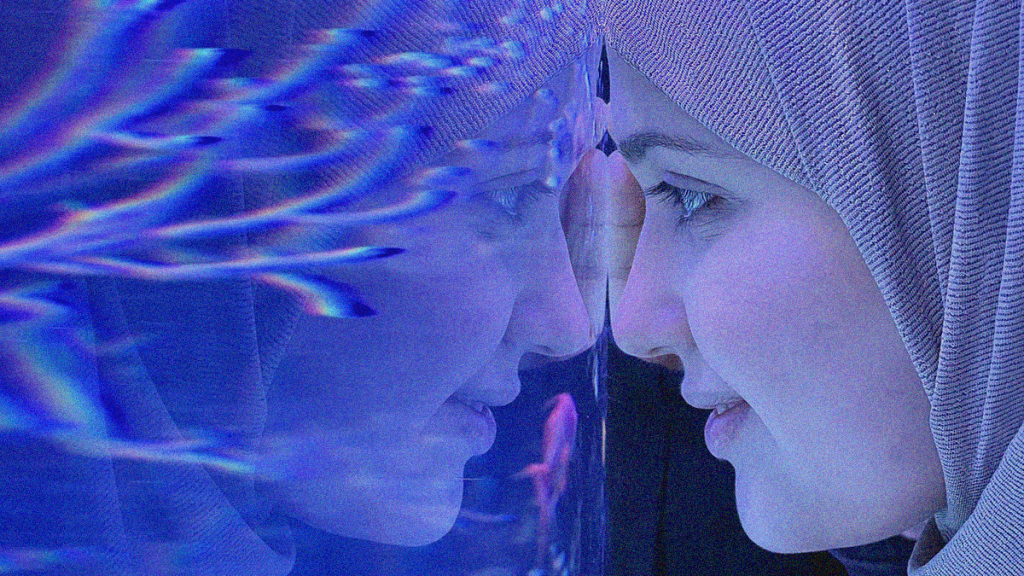
The most glaring example for this American, however, is the trajectory of Israa’s life from daddy’s girl to independent European to hijab-wearing wife. I preface this with me being American, because I couldn’t help but cringe when she decided to wear the scarf. Not the choice itself, but the circumstances that led to it. From an outsider perspective, it’s easy to project cynicism that Israa might be leaving one abusive relationship for another. But it’s also unfair.
To the filmmakers’ credit, they do well to present the facts without getting too involved (beyond the edit, of course, since we have no idea how much the narrative was massaged to distill a decade into less than two hours). This fact allows me to wince with worry while also demanding I listen when the people on-screen refute my assumption. That’s not to say Nisreen isn’t trepidatious too. It’s only to agree that Israa earned the right to make her own decisions.
We must simply also understand the role trauma plays in doing so. Because this family survived war. They survived an almost two-thousand-mile journey from refuge in Turkey to settling down in Germany. They survived the culture shock of awakening to new possibilities and sometimes choosing to embrace the past. It’s a crisis of identity that cannot be solved overnight and there’s no better proof then following their evolution together and, more crucially, as individuals.
Israa in ONE IN A MILLION.





Leave a Reply