
Rating: R | Runtime: 105 minutes
Release Date: October 23rd, 2026 (USA) / October 30th, 2026 (UK)
Studio: Black Bear
Director(s): Alex Huston Fischer & Eleanor Wilson
Writer(s): Alex Huston Fischer & Eleanor Wilson / Ursula Wills (short story The Wicker Husband)
Mother Nature provides. I merely augment.
The Fisherwoman (Olivia Colman) has no interest in marriage. She’s lived her entire adult life alone after being orphaned at a young age and deals with her neighbors’ ridicule (the persistent smell of fish and ratty clothes) while enjoying quiet evenings at home mending the traps and nets she wields to earn a living. So, when she commissions The Basketmaker (Peter Dinklage) to weave her a husband, it’s not about love. It’s actually about retaliation.
Adapted from Ursula Wills’ short story The Wicker Husband, husband and wife duo Alex Huston Fischer and Eleanor Wilson are quick to reveal the world in which they’ve created for this fable by opening with a wedding. While the concept is steeped in patriarchal traditions on its own, they’ve embellished things further to that end to ensure the satire resonates. Instead of a ring, the bride gets a collar. Instead of love, she embraces duty.
The decision for all the characters in Wicker to be named after their occupations is part of the commentary too since The Fisherwoman is the only woman who has an occupation to be named for. The others are either “daughter” of their father’s job or “wife” of their husband’s. They don’t resent it, though. It’s quite literally their identity. So, when The Tailor’s Wife (Elizabeth Debicki) is called The Doctor’s Daughter, she’s the first to demand a correction.
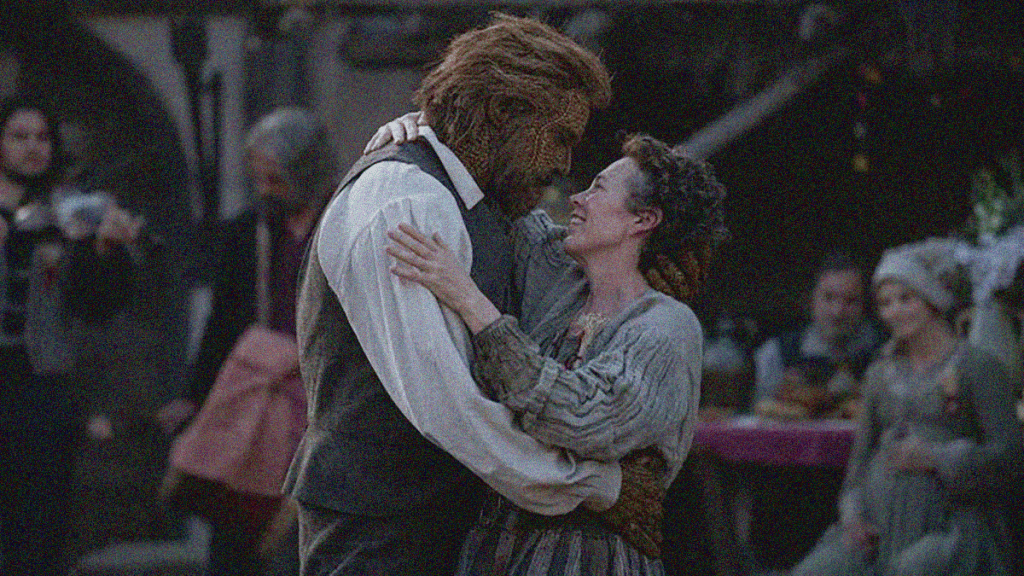
That’s why The Fisherwoman’s plan is so good—better than even she could conceive. The point was to mock the very institution of marriage by pretending to marry an inanimate object. The fact that The Basketmaker was able to craft a living creature (Alexander Skarsgård’s The Wicker Man) with his own wants and desires therefore changes the game. Not only by letting his client experience real love, but also by showing the villagers what love is.
The Wicker Man satisfies his wife sexually and emotionally. Yes, his literal existence is to serve her (the exact opposite of what this village holds to be true for marriage), but that doesn’t mean his love doesn’t also make him want to serve her. The Fisherwoman maintains her autonomy. She continues to work while he fixes up the house. She keeps her “name” and identity while also allowing happiness to alter her hygiene and demeanor. External jealousy is inevitable.
The women (Ella Bruccoleri’s Baker’s Wife and Emily Lloyd-Saini’s Innkeeper’s Wife) fantasize about this new “man” and yearn to feel the joy and respect he gives The Fisherwoman with every breath he takes. The men (Ben Ashenden’s Baker and Kiell Smith-Bynoe’s Innkeeper) become enraged with shame because it’s easier to hate The Wicker Man for exposing the one-sided nature of their unions than it is to actually prove their love the way he does.
There’s one exception to this rule: The Bottle Washer (Gustav Lindh) and his new bride, The Bottle Washer’s Wife (Marli Siu). They are still young enough to want more from their lives. Young enough to still want to show love as much as receive it. Unfortunately, while the time period is as ambiguous as the fantastical is made real, the era is far enough in the past that we know trying to be better isn’t necessarily safe. So, anger abounds either way.
And that’s sadly where the true damage of this archaic existence (that’s still all too familiar to our own today) appears via paranoia. As one chapter heading states: it’s easier to believe the bad than it is the good. Cue the justified yet petty indignation of The Tailor’s Wife. Here is a woman who knows more about medicine than her father (Richard E. Grant) and wants to apply herself to help her husband (Nabhaan Rizwan) run the business. Alas, she’s just a woman.
The Tailor’s Wife proves a tragic figure as a result. Rather than covet what The Fisherwoman has in a husband like the others do, she covets her freedom to be someone outside of any man’s shadow. So, she tries to change things. She proves her worth with a doctor’s stitch. She asks her husband to let her learn his trade like The Fisherwoman has let The Wicker Man learn hers. But these men were taught about life from their fathers. They can’t comprehend her desire.
So, she does what humans have for millennia. She seeks to bring The Fisherwoman back down to their nightmarish existence rather than keep working to reach hers. And, since this man’s world has fostered a healthy distrust in even the closest people to their hearts, The Fisherwoman is helpless from believing the lies. It’s why the most profound words spoken on-screen are from The Basketmaker explaining how The Wicker Man is different.
The only world he’s ever known is through The Fisherwoman’s eyes. He wasn’t corrupted by entitled and greedy men to believe a woman’s entire purpose was to serve him. The Wicker Man knows only a woman’s kindness and his own pleasure in pleasing her. He knows only the desire to co-exist as equals and enjoy the beauty life has to offer rather than languish in the depression that mankind has wrought for itself. It’s the heart-warming core of this hilarious lark.
Because the message arrives through the comedy. It makes sense when Fischer and Wilson admit a large portion of the writing process was roasting each other in the context of our society’s failings. Add a remarkable cast carried by Colman and Debicki (with Skarsgård and Dinklage providing fantastic support) and the sort of awe-inspiring practical effects we’ve come to expect from Weta and Wicker is truly firing on all cylinders to entertain and edify in equal measure.
Olivia Colman and Alexander Skarsgård in WICKER; courtesy of Black Bear.





Leave a Reply