
Rating: R | Runtime: 109 minutes
Release Date: May 22nd, 2026 (USA)
Studio: Black Bear
Director(s): Daniel Roher
Writer(s): Daniel Roher & Robert Ramsey
It’s about feeling.
Oscar-winning director Daniel Roher says he lost his artistic inspiration after Navalny‘s victory. I don’t think that’s necessarily a surprising reality. To hit peak success in your industry and wonder what comes next. That’s when he met a Los Angeles piano tuner named Peter White to light a spark. While one would assume that would lead to a documentary about the man, his profession, the instrument, etc., it led to his fiction debut instead.
Roher has already released two more documentaries since 2022, so the creative juices appear to be flowing freely once again. Was Tuner a big part of turning that tap back on? It definitely appears that way. He talks about how personal this film is and you can sense it on-screen insofar as its lead character being an artist whose ability to create his art disappears. Niki White (Leo Woodall) might have resigned himself to this fate, but the art might not be done with him yet.
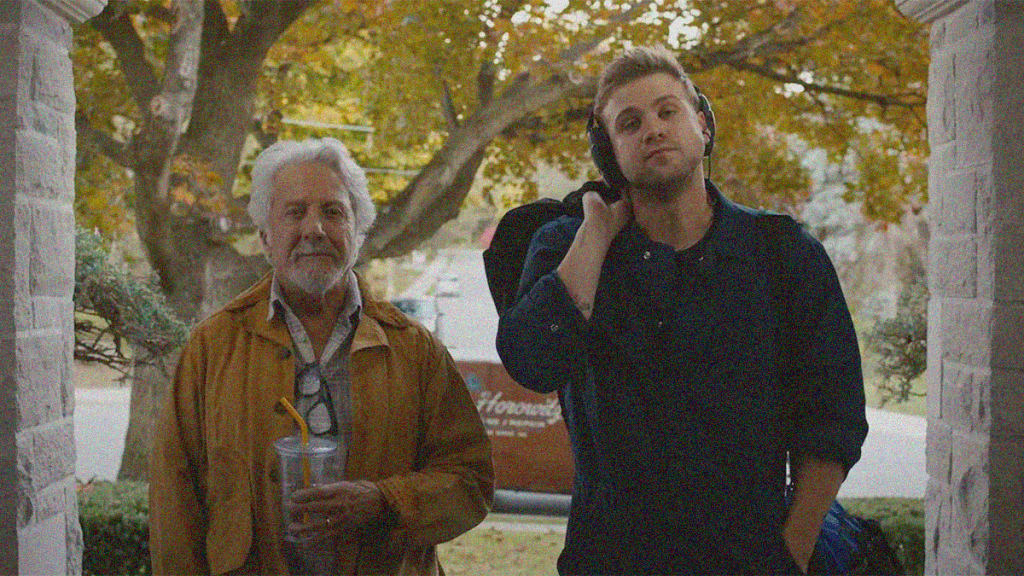
Co-written with Robert Ramsey, Roher introduces this former child prodigy turned piano tuner through the eyes of his biggest fan and mentor Harry Horowitz (Dustin Hoffman). We never learn exactly how they’re connected beyond mentions of Niki’s late father and his indisputable talent, but talk and evidence of dementia surely make us wonder if we should believe anything he says. Was Niki really that good? Does Harry really know Herbie Hancock?
The film plays this angle well because the notion that Harry embellishes stories about things and people he loves is extremely endearing and potentially more interesting than finding the truth. Because none of it is doing anything for Niki now. Nothing about who these men were means anything to the wealthy clientele that owns the never-used baby grands they fix each day. Most of those customers think it’s okay to ask them to fix the toilet too.
Reality is therefore discovered in bits and pieces as we spend more time in their world to experience it rather than hear about it. Part of that stems from Harry falling ill and Niki’s need to keep the business going for himself and his friend once Harry’s wife (Tovah Feldshuh’s Marla) discovers mounting debt from his medical bills and stubbornness. The apprentice is forced to work alone, meet new people, and stumble into a life of crime that’s not as “victimless” as he hopes.
Peter White surely influences the artistry of the often thankless work of a piano tuner. Roher’s own struggles with identity and inspiration influence Niki’s internal war to find his place in a world that’s stolen the spot he thought was guaranteed. And the heist aspect born from a chance meeting with Uri (Lior Raz) is surely just an influx of dramatic flair to raise the stakes and fun. Intent and execution might not always align, but it’s an entertainment ride, nonetheless.
Hyperacusis is the reason Niki no longer plays piano. It’s a condition wherein his brain’s perception of sound causes debilitating pain. Rather than use hearing aids like the ones Harry needs but always forgets, Niki wears plugs that muffle his hearing in general and carries headphones to drown everything out when noises we think are loud prove deafening to him. What he discovers, however, is that this natural amplification of sound has one particular benefit: safe-cracking.
Niki is desperate for money to help Harry and Uri is desperate for a way into the safes he installs in rich people’s houses. The latter knows when his clients are gone, the homeowners often possess way too many valuables to clock when something is missing, and Niki can hear and “feel” the tumblers of a combination lock to procure said items. He suddenly feels indispensable again. The “curse” that stole his dream is now his means to better assist others in achieving theirs.
And that’s where the real character drama enters considering neither Marla nor Niki’s new girlfriend (Havana Rose Liu’s Ruthie, a composition student whose life revolves around the piano) would approve of his means. Marla wants Niki to find worth in the tuning business her husband taught him. Ruthie wants him to find worth in being back in the music world (albeit tangentially) through her studies and aspirations. He strives to be useful, but he craves feeling valuable.
Questions abound. What’s the connection between value and self-worth? When does not caring about the consequences of your actions spill over into causing problems for your loved ones as a result of them? Because Niki isn’t building anything for himself through these extracurricular activities. He’s simply walking closer to the edge of an inevitable cliff. He’s conversely built something with Harry and is building with Ruthie—if only he can escape his own head.
So, expect the inevitable fallout once Uri’s jobs become morally darker. Expect it once his stress meets Ruthie’s in ways that ignite the anger he’s only barely covered with the thinnest layer of psychological wallpaper. And expect the answer to whether all this frustration is a product of being told he was special or actually knowing he was—not that either is better considering both options are predicated on his talent rather than his humanity.
The script’s machinations might conveniently draw lines connecting Niki’s professional, personal, and hidden lives together to push him into a corner to face his insecurities, but the emotion that results is authentic in large part to Woodall’s performance and those around him (especially Liu and Feldshuh, even if they serve his character more than their own). His progression is as heartbreaking as it is funny before culminating with a stirring exhale.
This is a man who’s lost his way. An artist who’s lost his voice. A kind soul who’s let anger and self-pity (no matter how justified) rule his interactions with the world and outlook on the future. Someone who gives one hundred percent of himself to everything in ways that might ultimately hurt more than help due to a desperation for external validation above internal peace. So, maybe this path towards self-destruction is necessary to reset and fight for himself again.
Dustin Hoffman and Leo Woodall in TUNER; courtesy of Black Bear.




Leave a comment