
Rating: R | Runtime: 100 minutes
Release Date: June 11th, 2010 (USA)
Studio: Roadside Attractions
Director(s): Debra Granik
Writer(s): Debra Granik & Anne Rosellini / Daniel Woodrell (novel)
Never ask for what ought to be offered.
Adapting a novel by author Daniel Woodrell (the self-coined writer of “country noir”) means making certain you get the look and feel of the Missouri Ozarks correct regardless of how dark, dirty, or devastating the hellish journey to do so proves. I haven’t seen Ang Lee’s attempt with Ride with the Devil, but I did catch Debra Granik’s Winter’s Bone at the 360|365 George Eastman House Film Festival with a Q&A by co-writer and producer Anne Rosellini. I’m pretty sure this duo did everything necessary to make their film true to its source.
Not only did they want to get the aesthetic right by showing the beatdown lifestyle of meth cooks and the shattered lives left in that vocation’s wake, they also wanted the real residents of the town they filmed to accept them and trust their depiction would be as authentic and non-exploitative as possible. Knowing they would stick as strictly to the novel as possible, Granik and Rosellini made copies available to the community near Springfield and Branson, Missouri. And after an almost three-year process, they finally made the movie they hoped on the land and in the households of Missourians who willingly opened their doors.
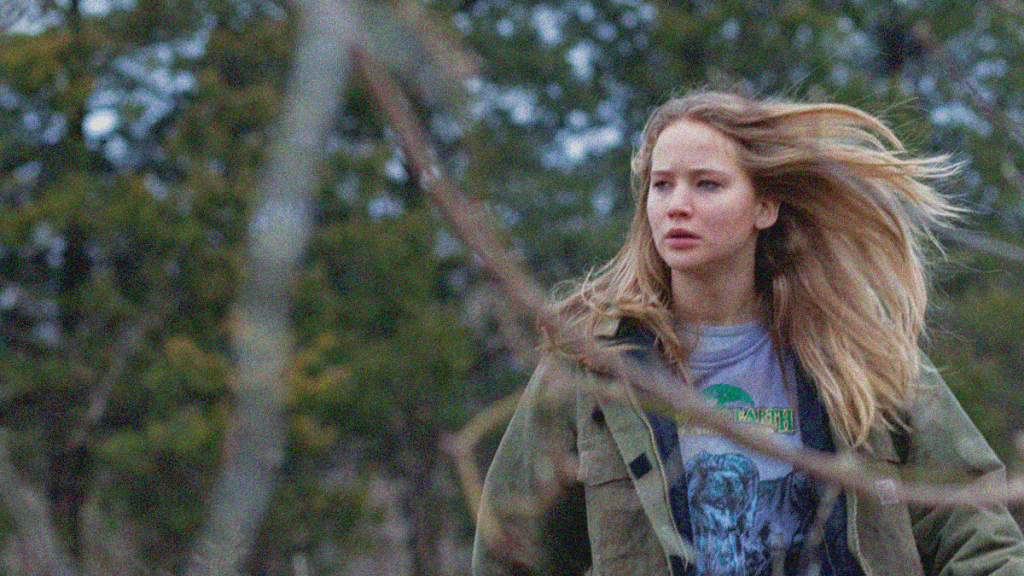
Described as a western, Winter’s Bone‘s main focal point is seventeen-year-old Ree. Taking care of her young brother and sister along with a nonverbal mother trapped inside her own head, her father’s absence is nothing compared to the fact that he posted their house for bond in order to avoid jail. Ree and her helpless wards will therefore become homeless if he misses his impending court date. So, she takes it upon herself to venture out and find the elusive Jessup by asking his old drug buddies and anyone else who might have seen him the past few weeks.
While almost everyone asked is related by blood somewhere down the line, that sacred bond is only worth something if the guilty party hasn’t already broken the collective’s laws. So, anyone Ree contacts either lies to her face, pleads the fifth, or ignores her altogether. She’s the only resident who’s unwilling to forget him—not because of love or familial obligation, but to ensure her siblings have a roof over their heads. And this unwavering resolve seems to drag her further from the truth. Standing tall within a desolate wasteland, Ree won’t give up until either the house is theirs or they’re kicked out and forced to part ways.
Reminiscent in subject matter to Frozen River‘s portrayal of one mother doing everything necessary to keep her family from starving, Winter’s Bone utilizes the many tenuous connections between resident factions and the sheriff. Because something has happened to Jessup. You can tell by the demeanor of those Ree questions and the brutality used to threaten and prevent her from finding out the details. If Thump and his men did achieve justice for some transgression, they could never come clean.
Yes, a dead body would be enough to dissolve the bond and keep the Dolly family housed, but evidence of murder would kick-up bad blood and necessitate Ree’s uncle Teardrop to seek his own form of retribution. This is a cult of stern stoicism wherein information is only divulged when necessary. Questions are frowned upon and cause more trouble than they’re worth. Most feel Jessup made his own bed and to Hell with the children left behind. Others refuse to lay it to rest. Trust is key to whether enough truth will be revealed to help Ree stay afloat before the law comes in to tear everything apart.
This dramatic thriller is so tightly wound that you become ensnared in the mystery and discovery that murder is common practice here to preserve the greater good. Each resident was brought up with farmhand mentalities like learning how to cook, shoot, skin, and survive off the land to be self-sufficient. And the community thrives on its underground economy of drug manufacturing to render any communication with law enforcement a violation of their code and punishable by extreme measures. Ree is admittedly a Dolly to the core, so she imparts her knowledge onto Sonny and Ashlee just in case her search for answers goes so deep that her way out becomes sealed.
The sheriff (Garret Dillahunt) is afraid of these unflinching outlaws and their hardened and protective women standing as sentries to relay messages and inflict “educational” lessons. Seeing Dale Dickey in a role like Merab—tough and feisty to epitomize this way of life—comes as a welcome surprise after “My Name Is Earl”. As does those leaning on both sides of the fence to help Ree including Sheryl Lee and Lauren Sweetser. Beyond the wonderfully constructed tale of courage in the face of monsters nextdoor that won the Grand Jury prize and a screenwriting award at Sundance, however, the most power is wielded by the film’s two leads.
Jennifer Lawrence is fantastic as Ree. She shows the mettle a girl at seventeen can have by making each and every move hold the thought of her siblings and mother close to heart. Fearless in her quest and willing to say and do things that will only get her beaten and possibly killed, the film’s strength can only rise as high as she’s willing to take it. To think that Granik and company auditioned an Olsen twin for the role is unbelievable, but thankfully they found their Ree in an actress possessing the tools to fit naturally in the country while also projecting a youthful innocence inherent to her age.
But this character only goes so far without an antagonist demanding enough respect within town to make Thump and his men take pause. Teardrop is a force to reckon with—someone they hope to avoid confronting if the truth of what’s happened to his brother gets out. John Hawkes has always shined, but he’s never been this imposing on-screen. Rosellini says he was excited from day one about getting dirty, weathered, tattooed, and angry. Hawkes’ Teardrop is the epitome of this Ozark town and, like his niece, is willing to do what’s needed to survive.
Where that fervor ultimately leads is unknown during this final chapter of the Dolly family’s central mystery surrounding Jessup. But that’s okay. We don’t need manufactured exchanges or finite answers. Winter’s Bone is an authentic view inside a world most of us will only ever hear about. A place of tough choices and rough lives where every human soul is worth just as much as yours.


Nominee:
Motion Picture, Adapted Screenplay, Lead Actress, Supporting Actor
Jennifer Lawrence as Ree Dolly in WINTER’S BONE, directed by Debra Granik. Photo Credit: Sebastian Mlynarski.




Leave a Reply