
Rating: NR | Runtime: 74 minutes
Release Date: May 21st, 2026 (USA)
Studio: Antenna Releasing
Director(s): Joshua Bailey
Writer(s): Joshua Bailey & Matthew Serrano
Take nothing but pictures. Break nothing but silence. Leave nothing but footprints.
I visited Disney World during the 1980s. I only know because there are photos of my sister and I eating ice cream popsicles on a bench somewhere inside the theme park. I went back a couple more times at ages that allowed me to actually remember the experience, but we weren’t going to Epcot anymore. In fact, we pretty much avoided that section altogether because we didn’t care about the food or the more education-oriented rides.
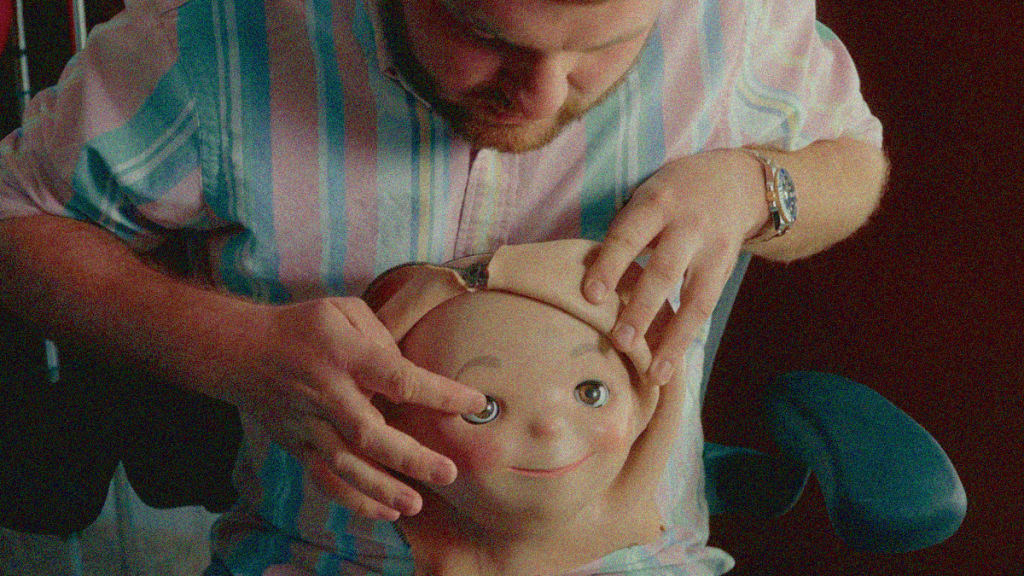
So, I don’t know if I ever knew about or saw Buzzy the animatronic kid sitting on his perch inside Cranium Command. Active inside the Wonders of Life pavilion between 1989 to 2007, the character was a “military” recruit training to pilot the brain of a hyperactive teenage boy. Was he popular enough to leverage nostalgia into making him a cult Disney icon? Not really. Not until the allure of a criminal investigation sparked a cultural reappraisal.
Joshua Bailey and Matthew Serrano’s documentary Stolen Kingdom uses the mystery surrounding the unsolved 2018 theft of Buzzy to interview “urban explorer” hobbyists known for filming and photographing the backstage areas of live and abandoned attractions. Because, while Cranium Command would eventually be gutted and refurbished for future plans in 2019, it had simply been closed off to the public like a tomb for twelve years prior.
The movie explains how dismantling and disposing of old sections of the park is too exorbitant a cost to spend if the area isn’t going to be flipped right away. So, Disney just walks away instead. They board them up and block them off to be forgotten by time. Their ethos centers on the idea that theme parks are living organisms in constant motion rather than museums—a sentiment many fans take umbrage with due to a belief that every ride possesses historical significance.
This is why those like Dave Ensign and the late Ed Barlow (known in Disney lore circles as “Hoot and Chief”) began to test the boundaries of their access as card-carrying employees of the Mouse House. Unable to accept that Horizons (their favorite ride) could be destroyed overnight on a financial whim, they decided to exit their cart and roam the stages to capture every inch of detail and artistry. It was dangerous fun that turned them into unwitting archivists.
Not everyone getting into the trespassing game for internet notoriety and YouTube views are as lovingly motivated, however. We meet Adam the Woo (via archive footage), The Dark Side of Disney author Leonard Kinsey, Matt Sonswa, and Patrick Spikes too. Each craved the excitement of satisfying their curiosity. Each was inevitably banned from Disney Parks for life. And one became Orange County’s prime suspect in Buzzy’s disappearance.
The videos and photos shared by these men prove a treasure trove of illegal access to places like the defunct Discovery Island. We hear their working manifestos as far as giving audiences what they want and/or “helping to ensure Disney strengthens their security measures.” And we stare slack-jawed at the hubris necessary to not only publicly post evidence of their transgressions but also antagonize the law enforcement agencies they barely escaped.
Sonswa is the nonchalant rebel of the group who’s as unapologetic about what he did as he is adamant that his only crime was trespassing. Ensign is the pioneer with an actual attachment to the place who only ever started this trend as a means to honor the past (and his story surrounding Ed’s death is heartbreaking). And Spikes is the villain forever sneering as he goes on record to admit he stole a lot more than he was ever convicted of stealing.
Buzzy is therefore an entry point into the origins of a growing subculture of fans willing to put their freedom on the line to experience that which they are barred from experiencing. Sure, the logistics necessary to even think about taking this estimated six-hundred-pound robot intrigues while its journey leading to an ex-NBA star fascinates, but Stolen Kingdom‘s real draw is the combination of these men’s personalities and pathologies.
It’s also a must-see for so-called “pixie dusters” (the Disney-heads who make Walt’s legacy their whole identity, not the motorcyclist fairies in Onward). From images of old manuals stolen and sold on the black market to a look at Joel Magee’s “largest privately owned collection of Disney Parks memorabilia in the world” (a very specific title he’d trademark if he was able), it’s an extensive catalog. Sure, a lot of it’s already on YouTube, but it’s nice to see everything in one place.
Despite Bailey and Serrano’s inability to get a confession on the record, it’s also not difficult to hypothesize what happened to Buzzy by the end (just wait for the final camera zoom towards a key smoking gun). Most of the interviewees either assume or outright know who the culprit is while also admitting the truth will probably never be revealed. And that’s okay. Locked away and/or destroyed by Disney or hidden in a collector’s attic, the story holds the real value.
Patrick Spikes in STOLEN KINGDOM; courtesy of Antenna Releasing.




Leave a Reply