
Rating: R | Runtime: 110 minutes
Release Date: May 29th, 2026 (USA)
Studio: A24
Director(s): Kane Parsons
Writer(s): Will Soodik / Kane Parsons (web series)
Tables don’t bleed blood.
The success of Kane Parsons’s debut feature Backrooms (as expanded/adapted by screenwriter Will Soodik from the web series Karsons originated at age sixteen) is a testament to curiosity. A four-hundred-million-dollar haul on just a ten-million-dollar budget for a cinematic sequel to a niche creepypasta most audiences surely didn’t watch before sitting down is insane. It’s one piece to an ongoing puzzle. More defined than its predecessors, but still just one piece.
Think of this film as a corner of the picture. Incomplete yet foundational. Floating by itself but firmly set in its placement amongst the rest of the pile. Because it does kind of work as a standalone story. The themes of isolation, listlessness, nostalgia, and PTSD are given shape by its two main characters (admittedly one-dimensional in service to the plot) who are stuck living in their past traumas, but Clark (Chiwetel Ejiofor) and Mary’s (Renate Reinsve) true worth is how they infer on what we already know.
As an ASYNC employee (Mark Duplass’s Phil) states, the thing everyone wants is clarity. We crave new tiny details that may or may not serve as a Rosetta Stone to decipher the origins and meaning of the liminal space his company stumbled upon in the 1980s. And this chapter is as close to a decoder ring as we’ve received—if only for one brief descent through the floor of a single room being stripped down via De Stijl parameters (with a dash of Cubism).
What is it that we learned? Well, through Clark’s unspecified time inside and Mary’s extremely volatile yet quick stint within those yellow-green walls, we discover that these “backrooms” might actually be built in real-time via those with the misfortune of noclipping in from reality. That the horrors inherent to this surreally off-putting labyrinth are brought to life by our fears—whether specific to our current mental state or, more broadly, of the unknown.
It’s a wasteland of misremembered memories. A mausoleum of faded glimpses and nightmarish embellishment. Bobby (Finn Bennett) didn’t see a shirt like his. His knowledge of that shirt and his investment in its cause manifested it as a token from reality. They are feeding this place with their varied emotional states of wonder and terror. So, when something does suddenly arrive with malicious intent, one could posit that it’s a version of you hunting yourself.
I love that this additive curio to an existing cult property somehow blew up to become part of the mainstream zeitgeist even if just as something to hate for its seeming obtuseness. I think it succeeds on mood alone regardless of being able to process its narrative (if you find the underlying conceit of liminal spaces to be scary and/or intriguing), but it demands to be considered in context with the series. Is it a great movie? Maybe. Is it an integral episode? Yes.
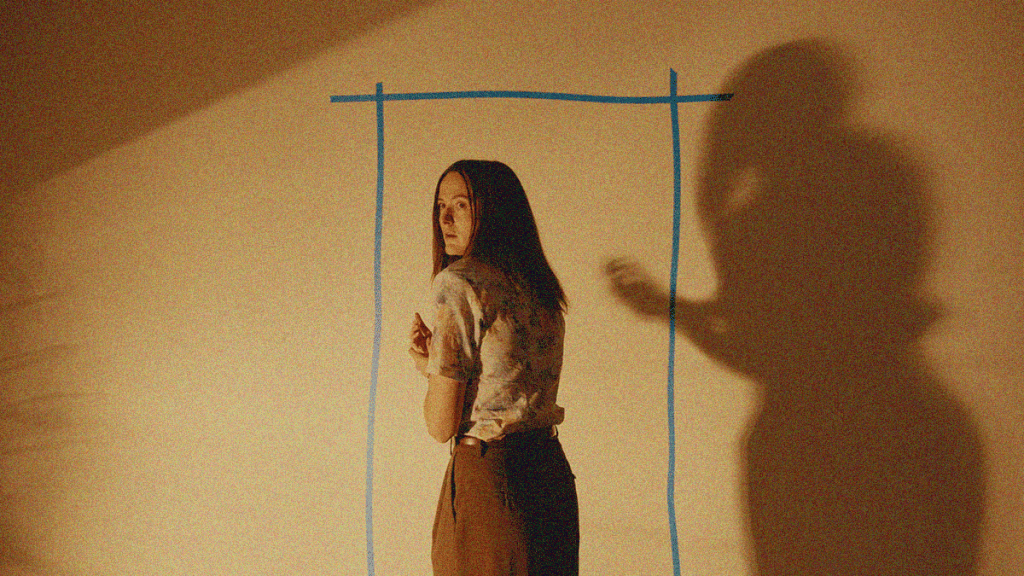
Renate Reinsve in BACKROOMS; courtesy of A24.



Leave a Reply