
Rating: R | Runtime: 120 minutes
Release Date: November 6th, 2026 (USA)
Studio: Independent Film Company / Sapan Studios
Director(s): Kelly O’Sullivan & Alex Thompson
Writer(s): Kelly O’Sullivan
Neither did you.
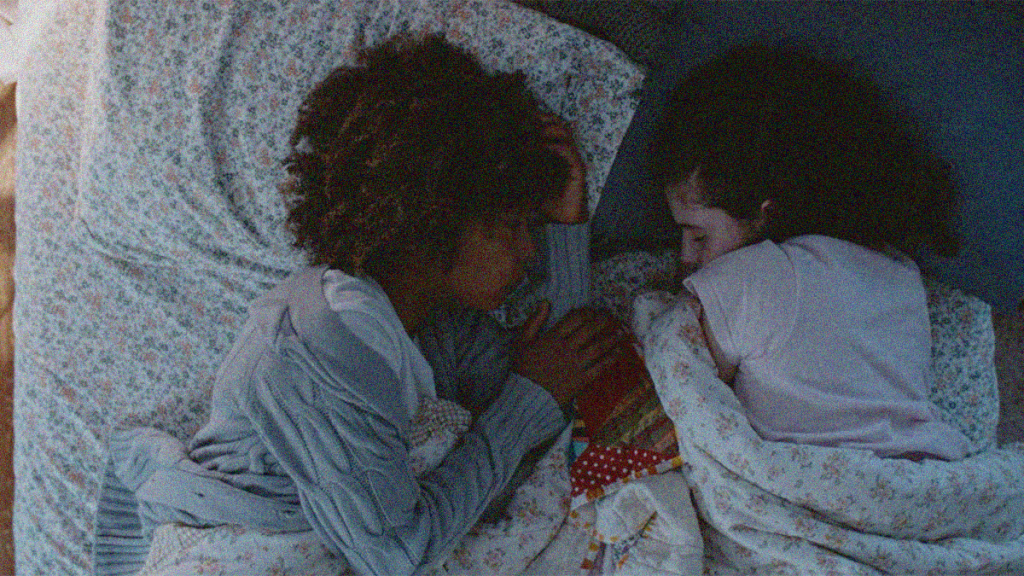
With someone as full of life as Callie Bell (Chloe Coleman) beside you, it’s easy to fall prey to the belief that your own identity is better suited to being a byproduct of theirs. A lot of that comes from admiration, but there’s no shortage of jealousy too. A mother (Sophie Okonedo’s Helen) living out the life she might have led if she hadn’t had children through her daughter. A best friend (Katherine Mallen Kupferer’s Minnie Dunn) finding fulfillment in being her support.
So, what happens without her? When that infinite joy and potential are suddenly replaced by a bottomless well of grief? Add outsiders who didn’t mean as much to Callie as she did to them exploiting (performative or not) this loss for their own benefit and it’s enough to drive a person insane. All their hollow platitudes and awkward pity as they go back to their lives only proves their anguish isn’t the same. They lost an accessory. Minnie and Helen lost a piece of themselves.
What makes Kelly O’Sullivan and Alex Thompson’s Mouse so good, however, is that they understand the complexity of this scenario enough to callout this truth while also never forgetting the others’ pain remains real regardless. That distance might allow them to move forward and talk about it without an issue, but their reaction being construed as flippant doesn’t automatically mean they are being flippant. We all deal with death in different ways.
This reality leads to messiness because our intrinsic impulse is to judge when someone goes too far or not far enough. Because it’s easier to be angry at the reactions of others than it is to be sad about your own feelings. But it’s also messy because a desire for normalcy often sees us blurring the line between what was and what is. We are so desperate for the distraction of routine that we don’t recognize when our actions are making things worse.
That’s where the real meat lies here. Yes, it’s fun to watch Minnie seethe as Cara (Audrey Grace Marshall) tries to rewrite the history on who was Callie’s BFF, but it’s the devastation of Helen and Minnie finding themselves returning to the roles they served for Callie that resonates. The former is able to lose herself to her maternal urges for the latter’s benefit and the latter can pretend her best friend is still there by filling the space she left by herself.
It’s an intense dynamic that’s brilliantly written by O’Sullivan and performed by Kupferer and Okonedo (with crucial assistance from Tara Mallen as Minnie’s mom Barbara—this real-life family that were so good in O’Sullivan and Thompson’s Ghostlight are made whole with a Keith Kupferer cameo as a giant poster in an early video store scene). For every bit of calm being together brings them, there’s an exponentially worse reminder of their pain lying in wait.
Because Minnie isn’t Callie. One could say their bond was so strong precisely because they were complete opposites. To try and forget that (unconsciously or not) is a disservice to her memory, but also a disservice to who Minnie and Helen are outside of her shadow. They need the time to find themselves in this new world. Not by forgetting what was or by refusing to acknowledge what is, but by allowing themselves the room to shatter the illusion of Callie’s perfection.
This aspect astounds throughout Mouse by mostly arising via rage. Too many films dealing with grief find themselves lost in a desire to provide comfort without diving into the pain first. I think the part I’ll remember best is a wordless moment when Minnie sees Callie’s handwriting on the drama room’s wall and angrily rises to deface it before being interrupted. There’s nothing more honest than this urge to erase her friend completely in hopes of erasing her torment.
That it’s followed by an unforgettable exchange with David Hyde Pierce’s Mr. Murdaugh only makes it better. Because he isn’t written to chastise her. He doesn’t even realize what she was doing. No, O’Sullivan and Thompson let their supporting characters talk in ways that relate to a given situation rather than call attention to it. Same with a funny and heartbreaking moment of Brad (Beck Nolan) breaking down in tears or Cara constantly lashing out.
Everyone on-screen is a raw nerve and they are given the humanity to allow that vulnerability, selfishness, and insanity impact their actions in horrible ways. Not to judge them, but to understand. There’s no better example than Minnie’s romantic interest Kat (Iman Vellani) having just lost her mother. It’s not a trait to impart wisdom or become her therapist. It’s so Kat has the tools to know when to walk away. Because there’s no state of being healed. Only a perpetual healing.
The journey towards that clarity is what Helen and Minnie are traveling. It’s a bumpy road that sees them depending on each other for more than they should and lashing out upon realizing they’ve gone too far or, worse, that the other isn’t giving them what they need. Barbara, Murdaugh, and Kat (amongst others) see it, but they can only do so much. Helen and Minnie must find their own way forward. Towards acceptance, help, and rebuilding themselves.
Sophie Okonedo and Katherine Mallen Kupferer in Kelly O’Sullivan and Alex Thompson’s MOUSE. Courtesy of Nate Hurtsellers and Luke Dyra. An Independent Film Company Release.





Leave a Reply