
Rating: NR | Runtime: 91 minutes
Release Date: September 18th, 2026 (USA)
Studio: Rich Spirit
Director(s): Walter Thompson-Hernandez
Writer(s): Walter Thompson-Hernandez
But everything changed after that.
Writer/director Walter Thompson-Hernandez taps into the fear we have that our children will inevitably suffer the same mistakes and hardships we faced rather than believing lessons can be learned from them to break the cycle. Big Ant (J. Alphonse Nicholson) returns home from his latest stint in prison to find his son (Bodhi Dell’s Lil Ant) at the age he was when things turned and his innocence was lost. Instead of getting closer to protect him, he pulls further away.
It’s a complex subject touching upon generational trauma and the notion that we don’t deserve to be redeemed. You see it in the way Big Ant rejects his son’s view of him as a heroic God. The fact itself doesn’t anger him as much as it makes him afraid Lil Ant is lionizing his actions rather than presence. The last thing he wants is his child to follow in his footsteps. What he doesn’t realize, however, is that his refusal to be there to stop him is what might seal that fate.
The camerawork, editing, and score all lend this father-son dynamic a lyrical quality that blurs the line between reality and mythology until the price paid for Big Ant’s own insecurities and self-loathing threatens to sever Lil Ant’s joyous fantasies with a swiftly violent smack. It’s a beautifully heartfelt experience that never sacrifices the authenticity of the struggle inherent to thinking we must sometimes protect our kids (literally or figuratively) from ourselves.
Add a wonderful supporting turn from Danielle Brooks as Lil Ant’s mom Lozita and a mirror for Big Ant to see what’s possible via best friend JJ (Myles Bullock) and Thompson-Hernandez leans into difficult truths that augment how fragile our lives prove. He also highlights the crucial role interpretation plays in understanding the world. Where Big Ant sees a vision of boys flying as portent, Lil Ant sees the freedom of possibility. (Don’t let Weapons ruin the metaphor.)
The boy craves being able to share that potential while the father retreats or, worse, becomes self-destructive in a desperate bid to erase it—and perhaps himself—from existence. That’s what’s happening. Big Ant loves his son so much that he’s removing himself from the equation through intentional absence and actions that force his family to want to leave him behind. He sees their happiness as a product of his absence rather than a gift earned despite it.
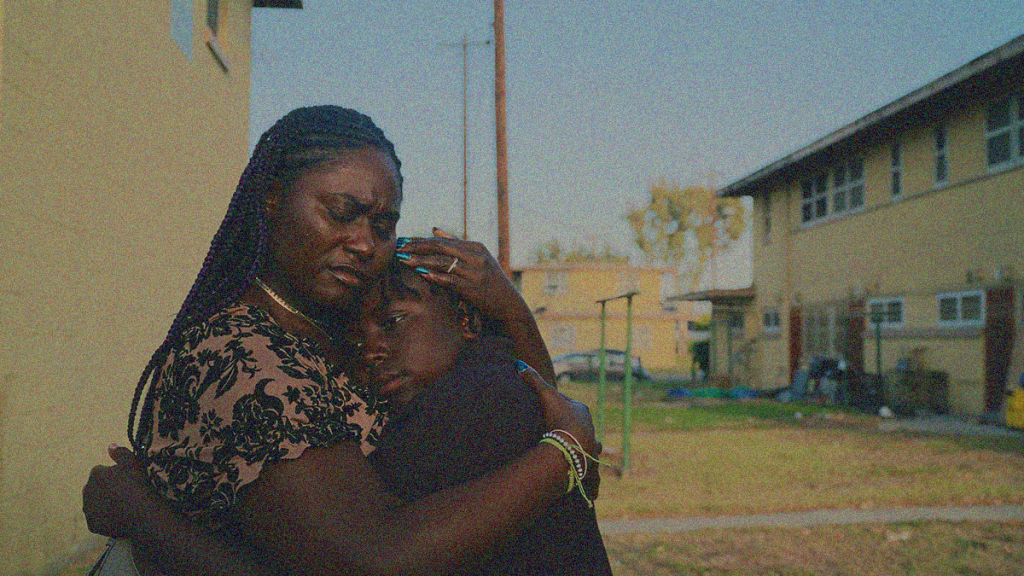
Danielle Brooks and Bodhi Dell in IF I GO WILL THEY MISS ME; courtesy of Rich Spirit.




Leave a Reply