
Rating: NR | Runtime: 355 minutes
Release Date: October 9th, 2026 (USA)
Studio: MUBI
Director(s): Julia Loktev / Anna Nemzer (co-director)
We were all doing the right things in the wrong order.
Starting with a montage of quick glimpses at all the main players from the previous film, Julia Loktev’s My Undesirable Friends: Part II – Exile does a nice job ensuring that audiences who haven’t see Last Air in Moscow can dive right in. It’s two days after the government shutdown of TV Rain and everyone is rushing to pack whatever they can before heading to the airport to travel to wherever they can on such short notice. How will they continue their fight?
The result is a very different beast due to logistics alone. Whereas Loktev was right there in the thick of the chaos as no one knew whose house was being surveilled and if/when their workplace would be raided, a lot of the craziest developments in exile must be documented in the aftermath. Poisonings, death threats, arrests in absentia. We’re bouncing around the globe to hear about what already happened, but it’s honestly just as compelling.
Because we’ve invested in these characters. Those who witnessed everything leading up to their escape feel like they know them and those just entering their stories now can’t help empathizing with their current arduous plights. Not only because they don’t know what’s next upon arriving in their hastily chosen but not necessarily safe sanctuaries, but also because of their shared internal struggle to process what occurred. The survivors’ guilt is strong.
The imposter syndrome is too considering them facing this life-altering change doesn’t negate the fact that they are still alive. Their exodus was ignited by Putin’s invasion of Ukraine, after all. A war that still wages on and has taken upwards of two million lives while causing unfathomable destruction. That’s not to say these journalists didn’t face the possibility of death and the certainty of jail time if they stayed. It’s not the same, but it’s also not nothing.
Loktev’s footage is therefore very concerned with how they grapple with their personal nightmares set within the larger fascist nightmare. It’s an extremely tenuous balance between action and perception from both external and internal sources. Yes, it’s about needing to operate on Ukraine and Latvia and Europe’s terms due to the obvious fears inherent to platforming Russian voices, but it’s also about accepting their own unwitting complicity that created those fears.
Alesya Marokhovskaya and Irina Dolinina talk about the reality that seeing the horror wrought by Putin and reporting about it might not have been enough. That they were working a job that afforded them a salary through objectivity. Just because their editorializing condemned what was happening doesn’t mean that they didn’t do nothing while it was happening. That their in-action—no matter how reductive the point proves—contributed to Putin’s impunity.
This candidness is what makes Loktev’s project so profoundly important since it means she’s capturing unfiltered and impulsive reactions in the here and now. These aren’t interviews being set-up in a studio wherein the subjects have days to prepare and coach themselves on what to say and how. No, these are intimate moments between friends operating with heightened emotions. There’s no time to self-censor or calm down. Everyone is a raw nerve.
Chapters 1-3 (The Flies, Not Home, and Strangers Everywhere) compel us in this vein because the future is truly unknown. Anna Nemzer (who also earns a co-directing credit this time) heads to Israel with her family because they got passports in 2014 just in case. Ksenia Mironova and others head to Istanbul knowing they can’t stay long. Georgia seems promising, albeit not if they keep reporting against Putin. Europe is best, but you need a visa first.
Many tears are shed and awkward conversations had over phones with family back home. Elena Kostyucheko’s mother doesn’t understand why she can’t just come over for her birthday like always. Many parents and grandparents are so lost in the propaganda that they believe their loved ones can just stop reporting “fake news” and be fine. It’s a difficult duality to exist in since the work is why they left and their hope to one day return is why they must keep working.
This dynamic leads to tough and sobering epiphanies insofar as privilege, access, and security are concerned. Nemzer can’t stay in Israel when her gratitude might interfere with the truth that their regime is just as bad as Putin. Thinking back to how Russian propaganda was so effective causes them to see that it was never pro-Putin as much as pro-“look the other way.” And can you blame other nations for worrying you too might be a wolf in sheep’s clothing playing a long con?
Things do eventually settle to the point where work can restart with TV Rain even reopening in Latvia with much of the same crew. But nothing is solid enough to stop constantly looking over your shoulder. Even though the FSB isn’t in Prague to knock on Irina and Alesya’s door, they still feel that possibility. Even though Valeria Ratnikova goes on air to speak to a Russian audience, being in a foreign country with its own rules risks one slip tearing it all back down.
Beyond these logistical struggles, however, are also just unforgettable human moments that better help contextualize why things have gotten here. Yes, it’s fun watching Mironova interview Trump supporters in New York City on January 20th, 2025, but it’s the harrowing story of her boyfriend’s ongoing case and Kostyucheko’s girlfriend Yana Kuchina’s tales of growing up disabled in Russia that stick to our bones. The lives beneath the careers.
New main characters are introduced in the husband-and-wife duo of Russian Peter Ruzavin and Ukrainian Nataliya Gumenyuk, who go to an unexpected but commendable place as the years progress. Utter chaos erupts when a political mistake on-air causes a firestorm of backlash that risks years of hard-earned allyship. And the reaction to Alexei Navalny’s death in 2024 is as much about what he stood for as it is a segue to a new poisoning.
Chapters 4-5 (Our Army and The Normal Not Normal) dig into the complexity of loving Russia while hating Putin and the delicate topics arising from that contrast like the issue of Russian boys being drafted into the war. Can you discuss them as innocents and therefore additional casualties of this regime’s oppression? It’s tough since doing so could make you seem sympathetic to the aggressor. When is it okay to admit many Russians are victims too?
It all culminates in an extended finale that moves through the last few years to show where everyone ultimately landed (a surprisingly large number in the US to cause them to see how similar our country is to pre-war Russia) and why even those locations can never become “home” since integration means giving up on the country they never wanted to leave. It’s why Loktev and the journalists pray to one day make this project a trilogy with a long-awaited Return.

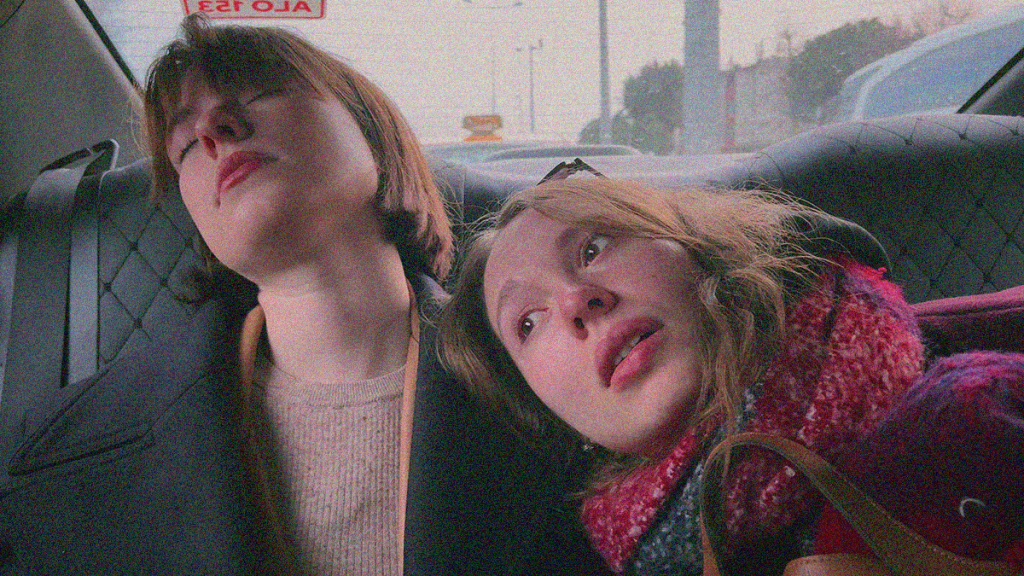
Ksenia Mironova and Valeria Ratnikova in MY UNDESIRABLE FRIENDS: PART II – EXILE; courtesy of MUBI.




Leave a Reply