
Rating: NR | Runtime: 87 minutes
Release Date: November 6th, 2026 (USA)
Studio: Alamo Exclusives
Director(s): Scott Tinkham & Michael Woloson
Writer(s): Scott Tinkham
Just keep being amazing.
Chester (Oliver Woolf) is returning home on his helicopter when a bloodied and battered stranger (Joey Bader) stumbles out of the woods. Rather than just fly away, however, he coaxes this man to come with him before subsequently nursing him back to health. Chester teaches him how to speak. Gives him a name (Liam). And introduces a merit system of commerce wherein good deeds and effort earn tiny silver tokens called “nifties” that can be traded for fun activities.
It’s therefore a weird and uncertain world that Scott Tinkham (co-director and writer) and Michael Woloson (co-director and cinematographer) usher us into at the start of Littermates. Why does Liam have amnesia? Why does Chester treat him like a child? Is this whole idea of “playing house” an altruistic endeavor to save lost souls during an ongoing chemical war? Or is something more sinister going on with Chester feeding Liam that lie to hold him captive?
The truth could honestly go either way considering how the two act after settling into this new domestic dynamic. Chester is always leading with positivity to make Liam smile and Liam has grown desperate for that affection. Both are happy to exist in the confines of this large English estate, so does it matter if the war is real? They have their karaoke parties, soak in the hot tub, and paint rocks to pass time. It’s a simple life, but neither seems to crave more.
Enter Mel (Kaylee McGregor), another bloodied and battered stranger who arrives in a much funnier manner thanks to the camera angle shooting it and Bader’s wonderful physical comedy while screaming for Chester to save him from the intruder. She also re-learns speech and embraces the “nifty” market while introducing a point of jealousy to this delicate ecosystem by way of being smarter and more talented than Liam. Competition becomes inevitable.
This is where the filmmakers’ primary goal of exploring the “primal relationship between siblings” begins to shine through. Liam and Mel aren’t actually brother and sister, but their circumstances lead them to adopt those roles while vying for the affection of their de facto parent. There’s also a sexualized component in an Adam and Eve sort of way, but it’s more about Liam’s fascination than romance. And where lust drives his ambitions, Mel is ruled by exploration.
What’s beyond the gate? What else has she forgotten? Mel pushes boundaries by daring to break rules while Liam confirms her “pipsqueak” description by tattling to “Dad.” She seeks answers through patience. He chases pleasure through instant gratification. And Chester attempts to find a balance by explaining that they are allowed to want different things. As long as they all agree to look out for each other, he’s willing to listen to their troubles and help alleviate them.
Tinkham and Woloson create a psychological examination of childhood sibling rivalry in a surreally comic way by doing so with adults. They use the yet unexplained chemical gas (don’t worry, you will find out if it’s all real) to reintroduce a fresh innocence and curiosity into this grown man and woman before thrusting them into a controlled space to figure out if they can learn to co-exist. It’s all tough love, petty frustrations, and insecure fears.
Bader and McGregor are both up to the task. They run goofily with arms flailing behind them. They push and shove and call each other names. They try to persuade the other to think more like themselves so as not to upset the applecart they want Chester’s protection to be before inevitably working even harder to fight back against the other’s wants when they fail to do so. It’s only a matter of time before those differences risk them going too far.
The script knows it must inject an added source of conflict to this equation to create a path towards a viable endgame and does well finding one via the mystery surrounding its characters. There’s bound to be another stranger in the forest. Whatever happened to Liam and Mel is feasibly always one bad decision away from happening to Chester. The most captivating scenario to test their resolve is objectively flipping their role from protected to protector.
Much like Moorhead and Benson’s debut Resolution (Woloson and Tinkham separate their duties the same way), Littermates looks great despite its budgetary restrictions and single-location setting. Credit the cinematography for never feeling static or banal as well as the script for knowing just how much outside information we need to stay invested in each new morsel. It’s a wide world shown through a tiny window of big personalities.
While it leads with humor and absurdity, don’t be surprised by how dark things get in the process. There’s a nature vs. nurture element revealing successful actions demand effective teachers as well as the existential need for survival that drives us to act with fear or aggression depending on impulse and context. When is love better served by letting go? When does curiosity turn to futility? Answers only arise after leaving the nest to decide to go back or keep flying.

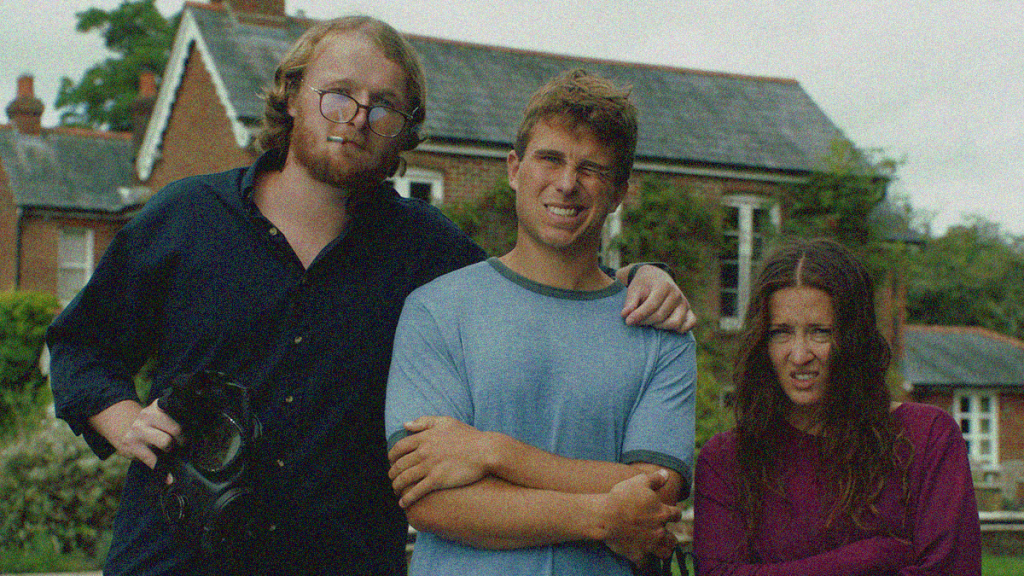
Oliver Woolf, Joey Bader, and Kaylee McGregor in LITTERMATES.





Leave a Reply