
Rating: NR | Runtime: 120 minutes
Release Date: June 20th, 2025 (Japan) / May 29th, 2026 (USA)
Studio: Happinet Phantom Studios / Film Movement
Director(s): Chie Hayakawa
Writer(s): Chie Hayakawa
Long time no see.
While Renoir is not an autobiography, Chie Hayakawa was also eleven years old when her father was dying from cancer in 1987 Japan. So, while the events that transpire for young Fuki Okita (Yui Suzuki) are fictional, the writer/director is quick to explain that the emotions are real. The girl’s yearning to connect at a time when her parents couldn’t be there for her is real. And this fact is crucial to understanding the film since a lot of what’s on-screen is in Fuki’s imagination.
This is simultaneously one of the movie’s strongest attributes and one of its most confounding characteristics. Because it’s one thing to open with a prologue of Fuki being violently murdered only to reveal it’s all an essay she’s written for school. It’s another to blur the line with a harrowing ordeal concerning a telephone dating service to which Hayakawa never gives a concrete separation. Did her father pick her up? No. Did the date happen? Maybe?
Despite any frustration in the moment, however, that uncertainty is a key part of Fuki’s psychology. Making friends with a college student over the phone feels just like making one with a classmate by singing a song to see if she joins in. We’re talking about a fifth grader here. Someone who’s old enough to know what she needs but not quite old enough to understand how to get it. That’s where one’s parents usually come in as guides.
But Dad (Lily Franky’s Keiji) is confined to a hospital bed awaiting a death sentence the doctors won’t give him (we learn that they didn’t even provide a diagnosis back then, leading him to research his own symptoms and medications to guess what cancer he has). And Mom (Hikari Ishida’s Utako) is struggling to cope with an inevitable future that’s always too far away to talk about. So, Fuki is often just left completely alone and to her own devices.
She takes an interest in hypnotism and telepathy. The latter proves to be a fun game she plays by “sending” thoughts about the card she pulled or object she’s thinking of into the minds of her audience. The former leads to an intriguing interaction with a neighbor (that may or may not have happened) wherein Fuki learns more about death and adulthood then she probably should … not that anyone else is being careful about shielding her from it.
Utako talks on the phone about her husband’s impending demise while Fuki is in the room. She purchases funeral attire to be prepared and often makes it seem like grief has been replaced by impatience. Hayakawa uses a deft hand to deal with these situations so that the woman doesn’t come off as callous. She’s also hurting. She’s confused and angry just like Fuki. And her desire for human connection leads her to find it in not so healthy ways too.
The result is a slow-moving glimpse at isolation from every angle. Utako yearning for romance outside of her caretaking duties. Keiji’s desperation for any activity to remind him what it means to live whether it be a visit to the horse track or a pile of work he doesn’t need to worry about anymore. And Fuki’s search for answers where it concerns reconciling the need to be sad with the childhood ambition to have fun. They’re all looking for an escape.
Sadly, their only real path towards it is for Keiji to finally die and release them all from the purgatory that we find them in. How could they live with themselves if they actually admitted that, though? He needs to keep fighting even if that means spending way too much money on a miracle cure he knows won’t work. Utano needs to keep being the dutiful wife even if she knows it won’t save him. They’re expending so much energy that Fuki is getting left behind.
But there’s also some great insight into Japanese cultural at the back of this story for westerners to experience. Whether it’s the idea that Utako needs to take training on how to better speak to her subordinates via a class that must be adapted to Japanese “modesty” or Fuki’s inability to “burden” others with her emotions to the point where she shocks her English teacher with a last-minute revelation, the psychological ramifications of death aren’t easily traversed.
It’s why I love what Hayakawa says about not writing this movie in her twenties before having children of her own. She says that version would have been “destitute and egocentric” insofar as depicting her pain as a product of everyone else’s indifference. But now she understands her parents’ solitude too. That they were suffering just as much as her due to the lack of finality inherent to their circumstances. If only they could have openly talked about it together.
So, while Renoir can feel a bit detached and confounding in parts, that’s kind of the point. It’s forcing us to feel what the characters feel. The constant waiting. The mixed emotions. The darkly violent potential of “death” that the news perpetually feeds us. The guilt of just wanting it all to end. But also the hope that Fuki and Utako can move forward once it does. That they can reconnect in the aftermath and live again on their own terms.
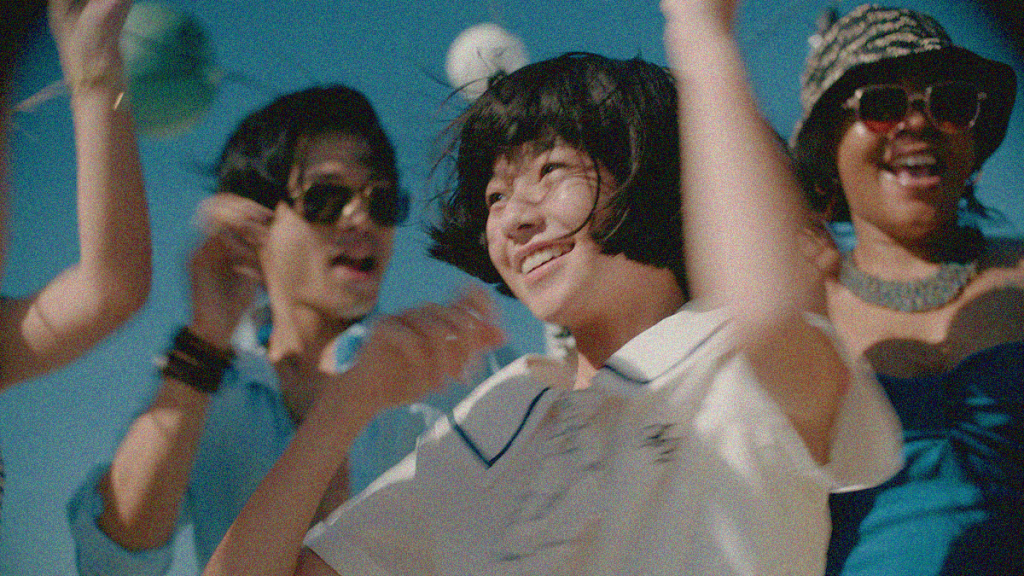
Yui Suzuki in RENOIR; courtesy of Film Movement.





Leave a Reply