
Rating: NR | Runtime: 90 minutes
Release Date: April 17th, 2026 (USA)
Studio: Brainstorm Media
Director(s): Chad Faust
Writer(s): Chad Faust
People like you do a much better job hating Americans than people like me ever could.
It’s a great line. Nance (Lena Headey) is fully off-the-rails and desperate to hurt anyone she can before finally realizing she truly just wants to hurt herself, and the Afghan translator who leads the army base’s grief circle (Hamza Haq’s Kahlil) is the current target of her ire. She berates him. Questions his humanity. She needs to see him as an enemy regardless of him wanting nothing more than to help. And those words are as good a rebuttal as any to stop her in her tracks.
Moments like this are what make Chad Faust’s Ballistic worthwhile. The pieces might not quite add up to something worth their potency, but you can’t deny the emotion, hypocrisy, and pain on display. Because we understand Nance’s rage upon discovering the bullet that killed her son in Afghanistan was probably manufactured in the factory where she works. The stat Faust shares is that ~30% of fallen soldiers return with American ammunition in their bodies.
The film therefore unfolds like a one-woman revenge tour sans physical carnage since Nance doesn’t actually like guns. It’s a fact established early on when her boss (Enrico Colantoni’s Rick) gifts her a certificate for the local gun range thinking that she should probably learn to use one to commiserate with her son (Jordan Kronis’ Jesse) when he returns home from deployment. This isn’t Death Wish, though, even if she craves Biblical vengeance for her boy.
Who’s on her “kill” list? Rick, of course. He’s the one signing military contracts to send their bullets to war zones so they can be stolen and sold to the enemy. No, he’s not arming the Taliban directly, but he knows the harsh reality of the business. He’s learned to live with it just like army liaison Galindo (Amanda Brugel), the woman charged with giving the bereaved just enough information to ensure they want more. Have they earned Nance’s anger? Sure.
They don’t deserve to die, though. She knows that. The script does too since it needs us to sympathize with Nance for its message to land. If she actually starts acting on her impulse to murder innocent people with an indirect connection to her son’s death, it will undercut the desire for her actions to expose a broken system by making her even worse than it. So, Faust uses them to deliver tidy theses on their portion of the assembly line before moving to the next.
Because there’s also a recruiter (Faust’s SSG Buchanan delivering the second most memorable exchange of the whole) sending kids to slaughter and Kahlil—two men who gave everything but their lives to this country while Nance sees fit to let her guilt defame them as traitors. Doing that to the latter feels pointed considering it seems Kahlil was made Afghan to justify rampant xenophobia, but it’s actually the opposite. He’s Afghan to prove Nance’s hate is unjustified.
Is he still a pawn? Yes. While a knock on the script, don’t sleep on Haq’s ability to make the role three-dimensional anyway. This is an actors’ showcase wherein every character (even Jesse’s widow Diana, played by Amybeth McNulty) is a superficially clichéd story beat for Nance’s unorthodox journey through grief that’s propped up by impressive performances. Those beats are obvious, but the responses are nuanced en route to an unavoidable conclusion.
So, it all follows Headey’s lead. Her anguish. Indignity. Desperation. She provokes the others to try and force them into hurting her to receive the punishment she thinks she deserves. That’s where Ballistic succeeds most: guaranteeing we know Nance’s actions are a projection. They’re the product of self-loathing and a belief that she’s no longer worthy of friendship, love, or empathy. It’s why Kahlil and Diana’s refusal to give up on her hurts even more.
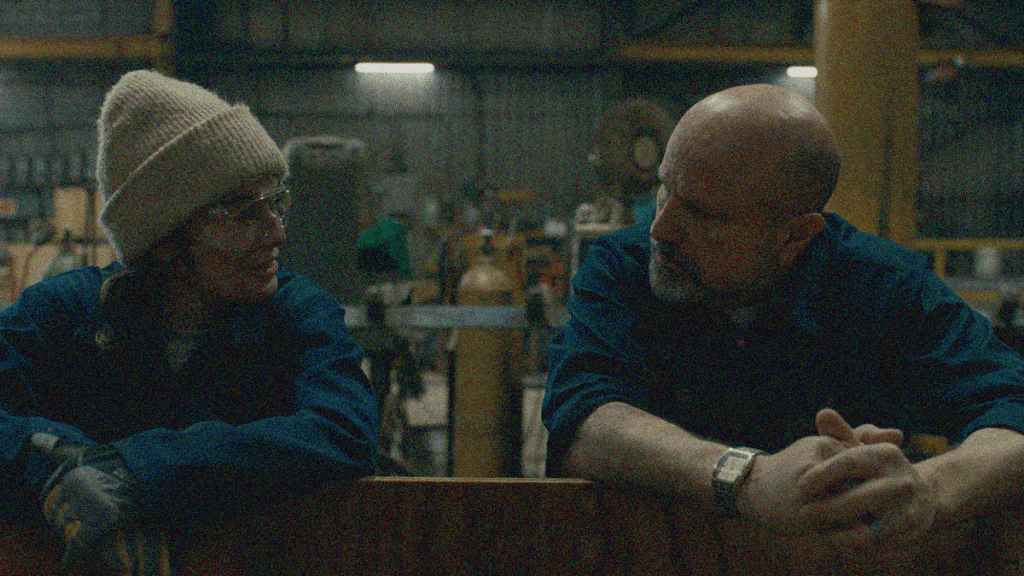
Lena Headey and Enrico Colantoni in BALLISTIC; courtesy of Brainstorm Media.






Leave a comment