
Rating: NR | Runtime: 73 minutes
Release Date: April 15th, 2026 (USA)
Studio: Factory 25
Director(s): Josh Heaps
Writer(s): Josh Heaps
How do I know I can trust you?
Sam (Diletta Guglielmi), a giallo-pilled budding filmmaker, discovers an abandoned thumb drive while roaming New York City only to find it houses images and information about a mysterious forgotten Italian horror auteur named Saturnino Barresi. With zero regard for privacy, she quickly begins to film her quest to discover more about him only to see the genre’s themes and violence take hold of her life. Is she somehow a character within his final masterpiece?
Writer/director Josh Heaps blurs the line between fiction and reality as he merges Sam’s story with Barresi’s unfinished script to create City Wide Fever as a sort of self-fulfilling prophecy. Think of it as a warped Tinkerbell. A growing belief in its existence becomes the catalyst for it to pop into existence. We can presume that all this happened in the past until enough people died to push it out of public consciousness. Sam has therefore brought it back to life.
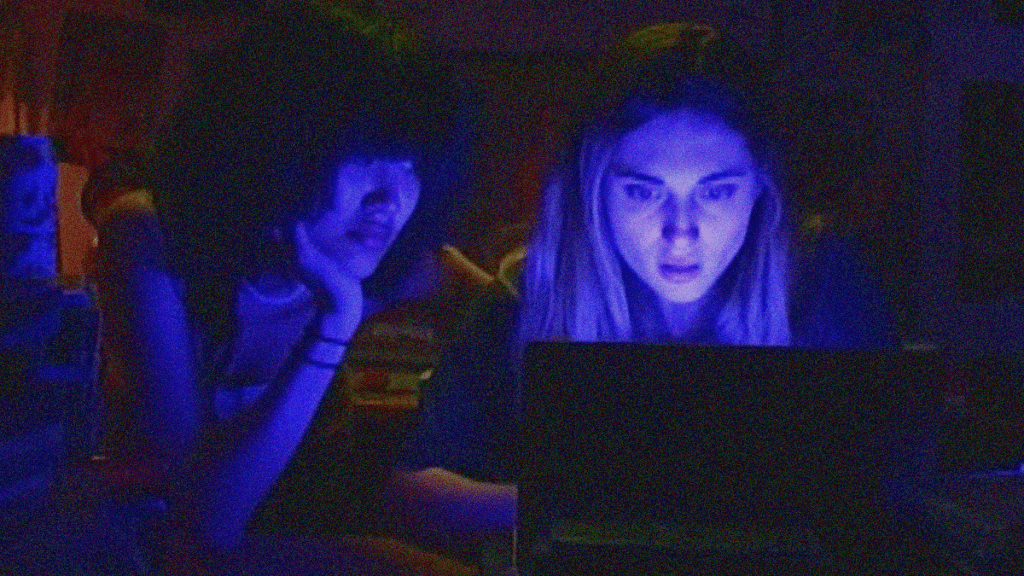
And now it’s airborne again. She mentions it to her film professor (Onur Tukel’s Keith) who directs her towards a Korean cinematographer (Stan Oh’s Hong) that forces her to enlist BFF Chloe (Angelica Kim) as an interpreter. The virus spreads. Raina (Hugo Alexander-Rose) finds out. Figures from the past (Rutanya Alda) remember. Sam herself begins to inexplicably transform (Nancy Kimball). We must question if we’re watching reality, dream, or lost footage.
Shot on an SD camera in full frame (I laughed every time we switched vantage point to Sam’s iPhone because the image suddenly gains clarity rather than losing it like most films wielding a diegetic lens), you really get the DIY guerrilla aesthetic of a filmmaker capturing scenes on the sly throughout the city. It’s very New York (comic Ian Fidance steals a scene), very indie (Tukel and Larry Fessenden cameos), and very much a love letter to 70s horror.
I admittedly have never been a huge giallo fan, so I’m certainly not the target audience when it comes to that part of what Heaps puts on-screen. I do, however, enjoy a willingness to play with the cinematic form and narrative cohesion. The first two-thirds of City Wide Fever does exactly that with zero interest in calling attention to it or explaining why before the final third leans all the way in for a chaotic pastiche of tropes that turn us all the way around.
What is real? What is a film within the film? What is the film itself when a fourth wall break adds yet another layer of artifice to the shifting identities, motivations, and desires flickering back and forth in front of our eyes? An example: that face clad in a spiky mask on the marketing materials is only ever seen in quick cuts. The actual murderer (albeit with multiple bodies) dons a bright pink ski mask with baby pins instead. Everything and nothing make logical sense.
There’s a nice commentary on fandom in this notion because it reveals just how blind we become to evidence that refutes subjects we hold onto so religiously. I think my favorite part of the entire movie is Rutanya dismissing Barresi’s work as trash (not in a pejorative way since she acted in it) only to ignite a monologue of pretentious babble from Sam that seeks to project a veneer of high art upon it. Alda’s blank, impatient stare in response is extremely relatable.
So too is Chloe’s frustration that she’s losing her friend to this obsession. Sam is so wrapped up in the mystery of this film that turns her life into a film that she won’t even let herself be distracted by a genre hallmark: sex. The blood and violence are all she craves. The joy of discovering a hidden corner of canon with a willingness to leave a trail of bodies as though their sacrifice was in pursuit of a greater good they didn’t volunteer to achieve.
And how can you not like an ending that seeks to give answers by asking more questions? If everything prior is nonsensically convoluted, why wouldn’t the solution lean in and reveal the murderer as someone it surely is not? Because if nothing we’ve seen is real, the reasons they aren’t no longer apply. And if they don’t, why not decide it’s someone else afterwards. Or, better yet, that it was everyone. Your infatuations and mine are just diseases ready for transmission.
Angelica Kim and Diletta Guglielmi in CITY WIDE FEVER.




Leave a Reply