
Rating: PG | Runtime: 101 minutes
Release Date: August 30th, 2024 (Japan) / January 24th, 2025 (USA)
Studio: Toho / GKIDS
Director(s): Naoko Yamada
Writer(s): Reiko Yoshida
It’s alright. I’ll confess later!
I can’t say it wasn’t a bit jarring to hear young Totsuko Higurashi (Sayu Suzukawa) reciting the Serenity Prayer at the beginning of Naoko Yamada’s The Colors Within considering it’s become such a staple in pop culture depictions of Alcoholics Anonymous, but it does play a big role in Reiko Yoshida’s script. The notion that you should accept what you can’t change yet still change what you can is an important lesson for Totsu and her new friends Kimi Sakunaga (Akari Takaishi) and Rui Kagehira (Taisei Kido) because they’re each trying to balance their desires with the expectations placed upon them. And while it might seem like one cannot occur without rejecting the other, few choices are ever so binary.
Totsu is beholden to her religion. Everything she does comes with the thought that she might have to confess later to make up for the potential sin. So, the mere thought of consorting with a presumed heathen (rumors swirl about why Kimi quit school), enjoying rock music, or talking to a boy (Rui) have her looking into the sky for lightning bolts sent to smite her. Thankfully, her heart has a way of guiding her towards the joy life can bring by allowing her to see the world in color—specifically the “color” of people. Call it an aura for lack of a better description, Totsu is drawn to those with a beautiful hue like Kimi, Rui, and Sister Hiyoshiko (Yui Aragaki). It helps that the latter is young and progressive enough to steer Totsu to the truth that spirituality isn’t an exact science.
While Totsu wrestles with her conscience, Kimi and Rui struggle with their own crises. She hasn’t yet told her grandmother that she left school and now works at a bookshop to pass the time. Her guardian talks so fondly about choir and uniforms and how proud she is of her granddaughter following in her footsteps that Kimi is afraid to shatter the illusion regardless of being certain her decision was the correct one to make. Rui hasn’t told his mother about his interest in music at all because the family is relying upon him to continue the tradition of earning a medical degree and running their island’s clinic. He hides his equipment in an old church, spending all his free time away from cramming for exams fixing second-hand instruments to hone his skills.
Anyone who has ever seen a coming-of-age tale about children gravitating towards the arts despite conservative upbringings and concrete expectations knows the initial reveal is generally met with anger before a thaw of acceptance, if not approval. Thankfully, Yamada and Yoshida are aware of this and don’t seek to rehash the same old clichéd story beats. They understand that the decision isn’t for the adults to make. Yes, they’re disapproval can make the journey forward impossible, but taking away their children’s resources only ever pushes them further towards their passion anyway. So, why not just let them foster it and worry about the rest later? Why not let them be their own support system to discover themselves on this path and grow the confidence necessary to explain?
By providing that space, Totsu, Kimi, and Rui are also able to reconcile the two halves of themselves together and see a way forward via compromise for both. These are three kids who are as hard on themselves as any parent—if not more—so we know (and Sister Hiyoshiko knows) that they only need the time to make the correct choice regardless of which direction they lean. Because even this nun realizes the only thing that matters is right versus wrong. Some sins aren’t really sins when you consider intent and context. And as long as the rock songs they are writing come from a place of honesty and authenticity: couldn’t they just as easily be labeled hymns? Maybe this trio’s bending of the rules will actually get them closer to God than if they blindly followed each to the letter.
Does the whole church aspect of The Colors Within prove somewhat preachy? You bet. At least it did for me. Not enough to ruin the message or the entertainment, but it can get cloying—even with its progressive filter through a “cool” Sister. I also think the whole “color” thing comes off half-baked since it doesn’t really add much beyond a compass for Totsu to gravitate towards “good” souls. I honestly forgot about her ability for most of the film since it plays such a small part besides the overall theme of “finding one’s true colors.” It is a young adult film at its core, though, so having a fun stylistic flourish is never a bad thing to keep that audience’s attention. It just sometimes feels like a lot of excess cluttering an otherwise simple story. Except for the songs. They’re great.
The Colors Within had an Oscars-qualifying run on December 13th, 2024.
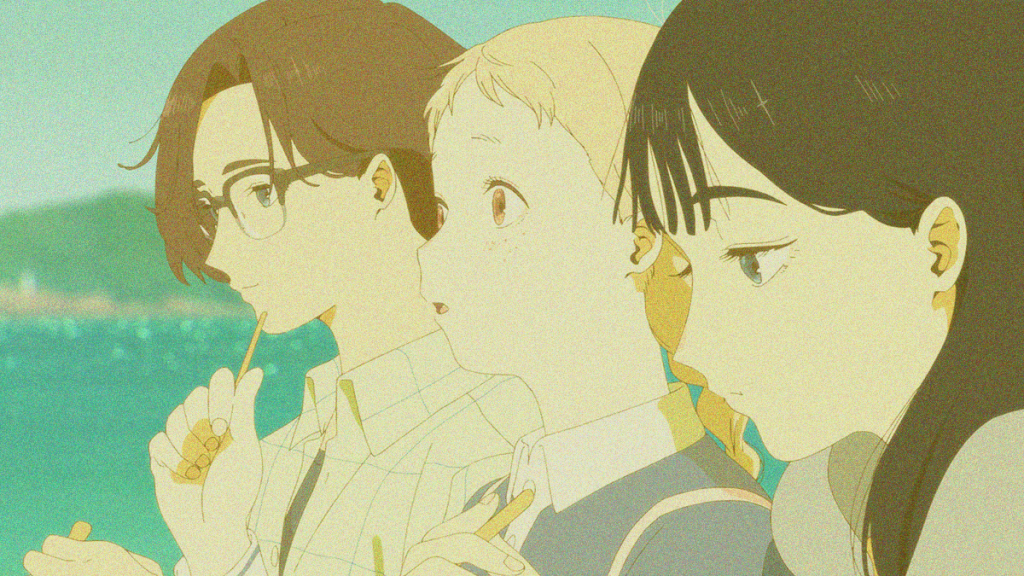
A scene from THE COLORS WITHIN; courtesy of GKIDS.






Leave a Reply