
Rating: TV-14 | Runtime: 97 minutes
Release Date: April 5th, 2024 (USA)
Studio: Apple TV+
Director(s): Amanda McBaine & Jesse Moss
We all work very hard on the image of ourselves that we want to show to the world. It’s exhausting.
After the success of Amanda McBaine and Jesse Moss’s Boys State, it truly was a no-brainer to go back to the well and document the other side of the room with Girls State. The question was therefore only whether the result would be the same movie. Yes, the gender divide would inherently change things—especially against the background of Roe v Wade being overturned. But would the experience be the same? The debates, elections, and schedule? The pressure, anxieties, and expectations? We shouldn’t be surprised to discover it’s not.
Whether it’s a nationwide problem or one specific to certain states like Missouri, the discrepancies between these programs is massive. So massive that the adults these girls speak to about them do everything they can to shut down the line of inquiry rather than provide acknowledgment let alone answers. The women have a dress code. They’re forced to have a “buddy” whenever they leave their designated indoor area. They must sing a song to start the day and constantly listen to declarations about supporting your fellow women in ways that make it seem the organizers are trying to foster a zero-conflict environment.
Anyone who saw Boys State knows the opposite is true there with the cutthroat nature and partisan politics boldly on display. But those who are in it? How would they even begin to wonder about the comparison let alone prove it? Well, as one of the girls says on-screen, the American Legion sparks the conversation itself by making history and staging the boys and girls programs at the same venue at the same time. These young women can’t help but see the hypocrisies on display. They can’t help but understand that all the calls for justice and equality ring hollow when the hottest-button topic in life and on campus centers on the female body while the funding for “tomorrow’s legislators” works to ensure it will always be men deciding what to do.
That’s the major intrigue here. Yes, it’s fun to meet these teens and see how they interact behind the scenes of mock court cases and elections, but the real drama lies in the silences outside of those activities. There’s the atmosphere of complicity and not wanting to ruffle feathers. There’s the rubber-stamped instillment of fear to keep these girls malleable and at arm’s length from finding positions for real change and argument. Even though it is women led by women, the baked-in monetary and philosophical misogyny of the program is unavoidable. So, it’s no wonder that the loudest cheers come as a result of a candidate calling out Girls State’s failings as opposed to talking about American policies.
It puts the experience under a completely different light because, like the boys Emily Worthmore interviews for her article about the inequality of their programs say, there’s so much more down time on this end of the spectrum. Where the boys are constantly being worked and put through the ringer, the girls find themselves wondering when the actual event is going to begin. So, they look beyond the program itself. Beyond the mock nature of bringing American politics into the classroom. They have injustices to call out here, today. They have the room to question whether their supervisors are as committed to this as they are.
To have all that swirling and still be able to focus on a few personalities is a great success for McBaine and Moss because these girls aren’t going to stay silent about what’s happening. They let Tochi Ihekona question the rigor of the experience. They let Cecilia Bartin home in on their dissatisfaction and use it to rile up prospective voters. They let Worthmore traverse the minefield of wanting to be herself while not alienating others to the point where she allows herself to be forgettable at the polls before then becoming integral to exposing the issue at-hand. Girls State proves an enlightening exposé on just how much further we need to go to give women a level playing field and an equal voice.
Because don’t forget: while Worthmore might be the one uncovering the issues that prove men have a leg up, she doesn’t (or, at least, didn’t) believe women are at a disadvantage. She tells us at the start that this thinking is a fallacy because she was raised to never believe she couldn’t do anything a man could as though her “luck” in that realm meant the countless other women struggling were doing so through no fault but their own. It’s why so many women continue to vote against their own best interests. They’d rather take the victories men give them than fight to ensure their place in the room to help write the new rules.

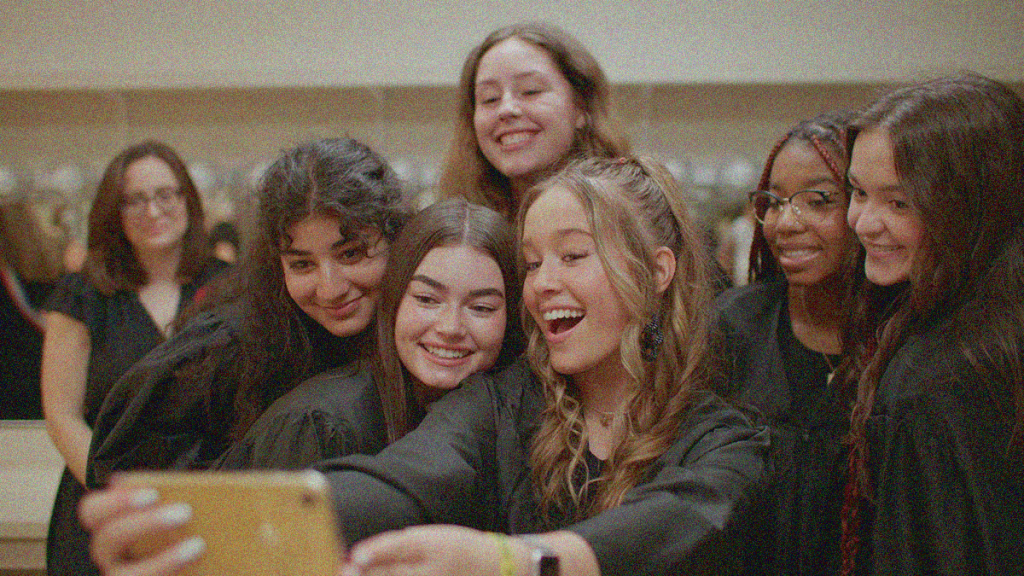
Brooke Taylor and additional “Girls State” participants in GIRLS STATE, premiering April 5, 2024 on Apple TV+.




Leave a Reply