
Rating: PG-13 | Runtime: 111 minutes
Release Date: April 8th, 2011 (USA)
Studio: Focus Features
Director(s): Joe Wright
Writer(s): Seth Lochhead & David Farr / Seth Lochhead (story)
I found her. She can’t speak English. She’s Sri Lankan.
Written on spec by Seth Lochhead in 2006, Black List alum Hanna finally reaches screens with help from co-screenwriter David Farr and director Joe Wright. If you thought Wright’s The Soloist seemed a bit out of his comfort zone after completing two period pieces, I can relate to the mix of confusion and excitement upon hearing he’d be tackling an action thriller starring a young, brutally violent killer.
Just as he stunned with quality storytelling and visual/aural aesthetic three times before, he’s done so again. A pulse-pounding score from The Chemical Brothers helps keep a sense of disorientation when juxtaposed against Saoirse Ronan’s titular girl’s anachronistic lifestyle—fearlessness, cunning, maturity, and complete rationality existing where romance, laughter, innocence, and fun should. Raised in a wintry forest by her father (Eric Bana’s Erik Heller), Hanna has been raised to fight, kill, survive, and ultimately murder Marissa Wiegler (Cate Blanchett).
She’s not devoid of all innocence, though. Hanna’s upbringing prepared her for so much, but it left out even more. Capable of speaking numerous languages, unfazed to walk dark streets alone, and able to spout facts about everything in a trained, monotone recall of encyclopedic information, this seventeen-year-old was bred for a mission. Little things like a first kiss or candor about how her mother died (“three bullets”) create an uncomfortable laughter as we watch her fish-out-of-water entrance into the real world.
Conditioned to lie about her heritage, a fictional background was created to deflect suspicion despite her breathless oration of it leaving all plausibility out the window. Never experiencing electricity firsthand, never hearing the sound of music, never having a friend besides her father—Hanna isn’t as equipped to handle the real world as she may think. Erik left going back up to her being just a throw of a signal switch away from being scooped up by Wiegler and her government cronies. But assimilation was never the purpose.
This return is all about retribution on the woman who drove the duo into hiding. As Erik’s old handler, Marissa’s involvement in Hanna’s life is much deeper than appearances let on. Yes, she has been looking to destroy this girl for many years, but the reasons aren’t as black and white as good versus evil. True motivating factors are revealed as the plot briskly moves along with memories and puzzle pieces being uncovered and put together. A DNA test result also looms large as an unknown factor causing the audience to question everything.
From the first frame of Hanna on a hunt in the snow and disappearing without a sound while trees block our view via quick camera pans, we can tell something is special about this girl. Her capture is methodically planned with the dead bodies in her cabin showing her calm acceptance to leave with armed men isn’t a matter of defeat. It’s only when confronted with the woman she’s been bred to kill that her hidden strength is released in a violent purge of aggression: gunshots, blood splatters, and an expressionless face of indifference replacing the one of a sobbing young girl in need of consoling.
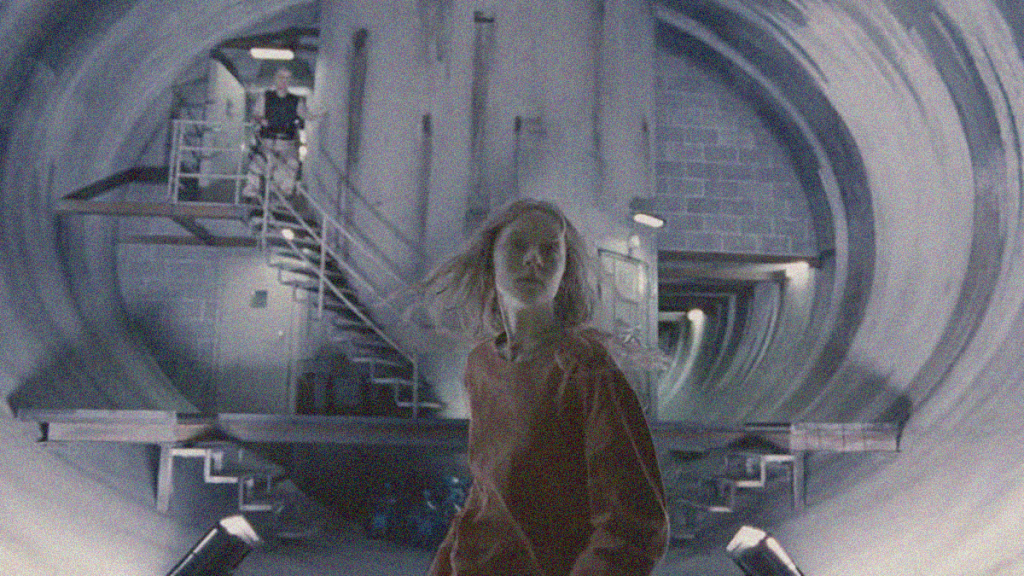
This sequence while trapped in an underground government facility is where the action begins. The staccato synth-beats crackle in concert with flashing tunnel lights and quick hand-to-hand maneuvers. No matter how heart-pounding any of the fight choreography proves at the start, however, nothing contends with the brilliant 360-degree exchange between Bana and five or so hopeful captors. Shot in one continuous take to capture each kick, punch, gunshot, and knife throw without edits, the battle will leave you as breathless as its victor.
But don’t think Hanna is all about the action. There’s an intriguingly taut story to go along with its explosive nature as well as an eccentric cast of characters to populate it. This young girl is on the run—alone and looking for safe haven with her father while using any means to reach her journey’s end. So, we experience her education in the ways of European outdoor living through hitching with a family of hippies in Jason Flemyng, Olivia Williams, Aldo Maland, and the wonderful Jessica Barden as Sophie. Barden should be annoying, yet her polar opposite demeanor to Hanna’s composed intelligence makes the character integral to the film’s dynamic as a mirror of what our heroine should be.
Bana is great as orchestrator for everything that occurs—nuanced in his anger-fueled motives and love for his daughter. He doesn’t have a huge role, though, and takes a backseat along with Blanchett and her hired dog Isaacs (Tom Hollander channeling his inner Udo Kier to go against type for this Euro-trash slime). Besides a scene with a red-haired Marissa Wiegler wearing rubber gloves that brings to mind the actor’s hysterical rendition of “Total Eclipse of the Heart” in Bandits, you do believe Blanchett’s maliciousness in the actions taken over a decade prior to spark Heller’s vindictive bloodlust.
She and Bana’s encounters are generally brief and destructive, but the filmmakers never pander to the audience by prolonging inevitabilities. Deaths occur quick and without much fanfare like they would in real life. As such, Ronan is haunting in her murders—her angelic face put to good use juxtaposed with measured violence. It’s a role that will open doors and set the stage for a fruitful career due to the seamless back and forth from frivolity (with Martin Wuttke’s magician Knepfler) and serious executioner en route to discovering her life was never her own.
Saoirse Ronan stars as the title character in Joe Wright’s adventure thriller HANNA, a Focus Features release. Photo credit: Focus Features.






Leave a Reply