

BMW recommends that you always wear your seatbelt
After watching the Parallel Lines series, my desire to revisit BMW’s The Hire was too much to contain. This thing was a cultural phenomenon that did what no one had before in a medium still untested at the time.
Households across America were still learning about the internet back in 2001, installing their dial-up connections to surf for news articles and sites without too many images for quick access. Looking to tap into a market that could target its demographic of wealthy, tech-savvy, young adults, the luxury car brand (along with producer David Fincher) hatched a short film series highlighting its new line of cars as the lead character.
Facilitating a working environment that attracted an insane level of talented directors had the money and support to wade into experimental waters and get in on the ground floor of what would soon become a gold mine for advertising, viral marketing, and international exposure no one quite saw coming.
While it’s pretty much a glorified commercial for BMW vehicles (these shorts all contain a car model that serves the plot to show off features like front/back seat temperature controls, expert handling at high speeds, and crash safety with its strong skeletal structure), each also proves to be a piece of art that fits within its respective auteur’s oeuvre. A couple wrote the scripts themselves. Screenwriter Andrew Kevin Walker (who wrote Fincher’s Seven) pens a couple. And David Carter provides most of the others with each script revealing a tightly wound adrenaline rush of sights, sounds, and action.
One could say the Transporter series owes a lot to Fallon Worldwide’s vision by revolving each chapter around a singular character with expert control over the BMWs at his disposal: Clive Owen’s Driver. Sticky situations are solved by the automobile’s maneuverability rather than Jason Statham’s kickboxing attitude, but you get the idea. Owen himself also reaped the benefit of his role, finally evoling him from British name to Hollywood celebrity trusted with carrying an epic like King Arthur fewer than two years later.
Lasting anywhere from five to ten minutes in length, they all wear the stamp of their creator proudly while showing first-hand what the product on display can do—something no amount of print advertising could hope to achieve via static imagery.
SEASON ONE
Produced by David Fincher with Anonymous Content and Fallon Worldwide
Ambush

Rating: NR | Runtime: 6 minutes
Release Date: April 26th, 2001 (USA)
Studio: BMW Films
Director(s): John Frankenheimer
Writer(s): Andrew Kevin Walker
One of the shortest installments, Ambush is also one of the most tonally effective. Beginning when a rogue van pulls up next to the BMW (requesting them to pull over at gunpoint), the action allows Owen’s Driver to do what he must in order to shake the bad guys. Gunfire aplenty and no stranger to explosions, we even get a nice exchange at the finale to lighten the mood and make you wonder what could have happened if Tomas Milian’s fence wasn’t quite so quick on his feet.
Chosen
Rating: NR | Runtime: 6 minutes
Release Date: May 10th, 2001 (USA)
Studio: BMW Films
Director(s): Ang Lee
Writer(s): David Carter
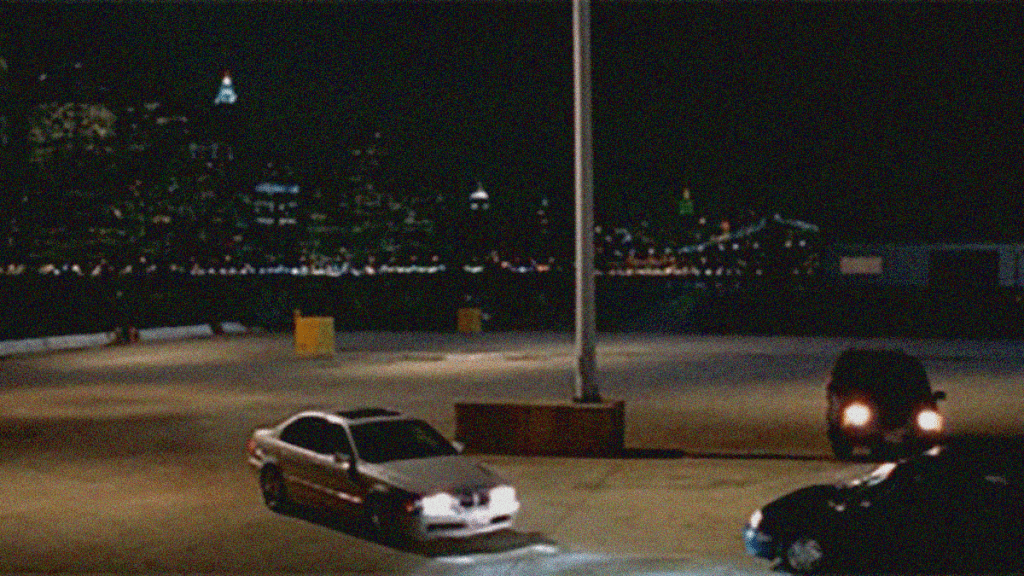
Chosen shows the series can be as beautiful as it is kinetically laced with gunpowder. The action is still prevalent with prospective kidnappers looking to take a young Tibetan boy the Driver is tasked to deliver safely to American handlers, but Lee also utilizes orchestral sounds and a choreographed dance of cars against the night skyline. Infusing his own Chinese culture via moments lingering on costumes and bronze statuary in close-up, don’t blink towards the end when young Mason Lee (Ang’s son) leaves a gift. It’s not only revealed as proof of the Tibetan people’s otherworldly powers, but also a cameo for the star of the director’s next film.
The Follow

Rating: NR | Runtime: 8 minutes
Release Date: May 24th, 2001 (USA)
Studio: BMW Films
Director(s): Wong Kar-Wai
Writer(s): Andrew Kevin Walker
This is the one that shows the full capabilities of advertising as art form. Like Lee before him, Wong Kar Wai’s use of music is stunning—especially when juxtaposed against his trademark frames of soft-focused beauty. Pitting Owen against Adriana Lima on behalf of her movie star husband Mickey Rourke (who believes she’s cheating on him), The Follow takes us through nightscapes of reflections and the effortless movement of Beamers on their winding city streets. High-octane flash isn’t necessary; it’s a stage upon which to show the machine’s mix of looks and cunning with Lima and her car doubling as the vanishing woman able to take care of herself.
Star
Rating: NR | Runtime: 7 minutes
Release Date: June 2001 (USA)
Studio: BMW Films
Director(s): Guy Ritchie
Writer(s): Guy Ritchie & Joe Sweet
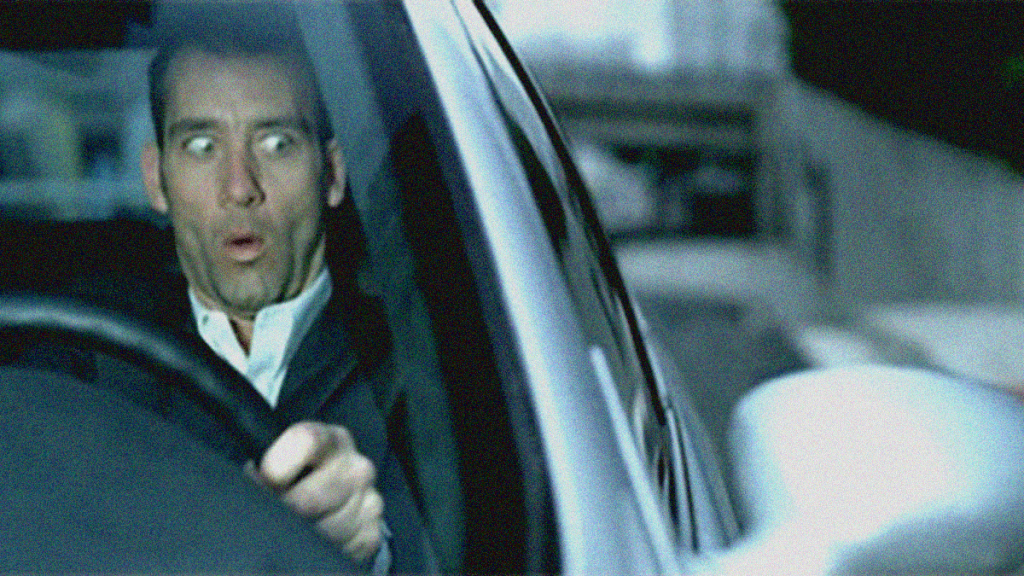
Always my least favorite of the bunch—partially due to the director (Guy Ritchie) and star’s (Madonna) courtship stalling his promising career—watching Star again shows how much is hidden if you pay attention. The job for the Driver is a sort of payback for his bitchy passenger’s lack of humanity towards her employees and the drive is one of bumps and speed changes that throw her around the backseat. Besides that simplistic summary, though, there’s also the allowance for Owen to be goofy. It’s a welcome change of pace that sees him donning broad facial expressions and one instance of driving without hands. I couldn’t help but applaud Ritchie’s ability to keep the fast-paced speed while also infusing a great sense of humor.
Powder Keg
Rating: NR | Runtime: 8 minutes
Release Date: June 2001 (USA)
Studio: BMW Films
Director(s): Alejandro G. Iñárritu
Writer(s): Alejandro G. Iñárritu, Guillermo Arriaga & David Carter / David Carter (story)
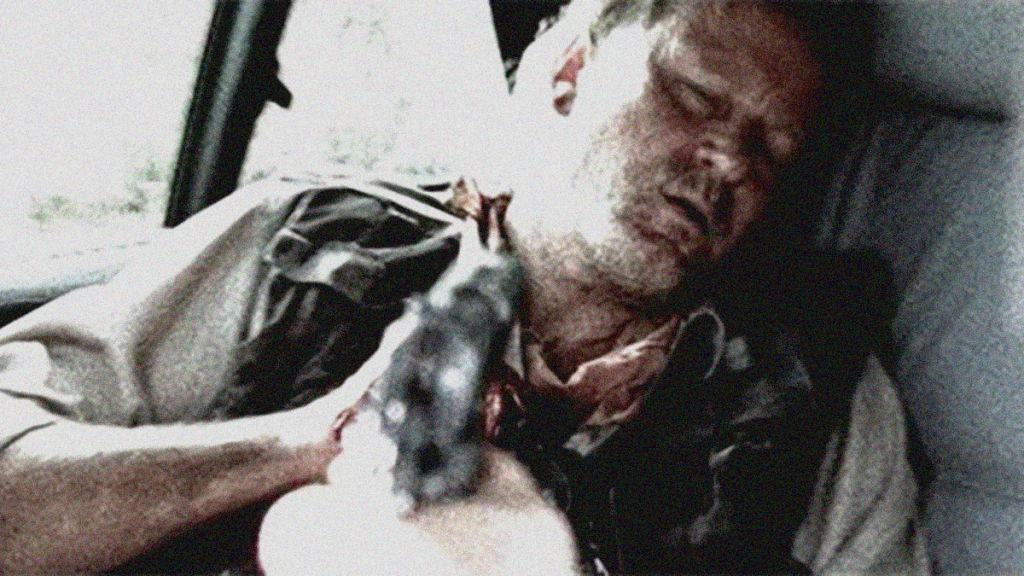
Powder Keg closes out Season One of the series with a gritty, grainy piece that fits perfectly into its director’s (Alejandro G. Iñárritu) filmography. Centering on a photojournalist named Harvey Jacobs (Stellan Skarsgård), Owen must transport him out of a war zone to the American embassy while also smuggling his new rolls of photographs. Dying of a gunshot wound, Jacobs begins to have an epiphany about his life and how his sacrifices could be meaningful if just one of those images do something to instill change. Powerfully dramatic in his words and heart-wrenching in its conclusion with Owen fulfilling the promise he made, Iñárritu does what he does best.
SEASON TWO
Produced by Tony Scott, Ridley Scott & Jules Daly with RSA USA Inc. and Fallon Worldwide
Hostage

Rating: NR | Runtime: 9 minutes
Release Date: October 24th, 2002 (USA)
Studio: BMW Films
Director(s): John Woo
Writer(s): David Carter, Greg Hahn & Vy Vincent Ngo
Season Two of The Hire pushes the envelope with even better production value—presumably due to only having three chapters instead of five. Not only are set pieces more impressive, but the stories also get darker and more cinematic in their ten-minute runtimes. Hostage includes an effectively orchestrated car chase between Owen’s Driver (searching for a woman slowly drowning) and the local police unaware he’s working for the law despite speeding away from them. Woo’s goal was to go bigger than all the previous films with high-risk stunts and an underwater scene, infusing blockbuster action to a script that pays off with its own little surprise at the end.
Ticker

Rating: NR | Runtime: 8 minutes
Release Date: November 7th, 2002 (USA)
Studio: BMW Films
Director(s): Joe Carnahan
Writer(s): Joe Carnahan / Joe Sweet (story)
If I were to choose an overall favorite of the eight entries, I do believe Ticker would narrowly beat out The Follow for me. Something about Carnahan’s use of flashbacks to tell intricate stories when one would assume pyrotechnics are the most important aspect has always endeared his work to me. Amidst the gunplay and Owen’s speedster driving at the behest of Don Cheadle and his handcuffed briefcase ticking and spouting fluid is a story that resonates on a political level as well as a human one. Containing the highest stakes by far, its hidden moral quandary pushes forth to force us to question how far we’d be willing to go to save one life—especially when the lives of so many others rely on that decision.
Beat the Devil
Rating: NR | Runtime: 9 minutes
Release Date: November 21st, 2002 (USA)
Studio: BMW Films
Director(s): Tony Scott
Writer(s): David Carter, Greg Hahn & Vy Vincent Ngo
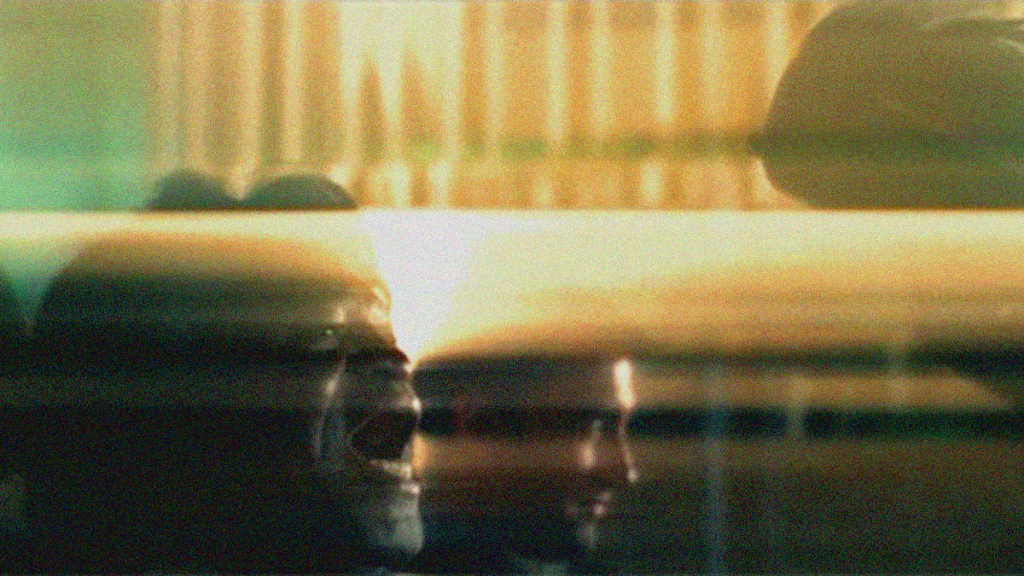
And here’s where it all culminates into a full-on assault of your senses. So, who’s better to show the BMW’s flashy speed than Tony Scott’s kinetic jump cut maestro? Beat the Devil is a definite precursor to his cinematic renaissance with Man on Fire and Déjà Vu that utilizes superimposed text, tempo changes going from fast to faster, seamless jumps from present to past, and a choppy fluidity that could only work in an MTV-generation of the attention deficient
Scott has put together an epileptic’s nightmare of action, comedy, and surrealism. James Brown is looking to restructure of the deal he made with the Devil (Gary Oldman) for fame and fortune. Telling his Driver that anything said is just crazy talk, the Godfather of Soul ropes Owen into a race to either lose his own soul or win his client eternal youth. With the BMW’s smooth shifts into full gear as the neon lights of Las Vegas blow past, not even the Prince of Darkness can match the precise engineering of Germany’s finest.
So, there you have it. BMW’s The Hire: a first of its kind endeavor that’s been used as a marketing template for almost a full decade. The technology has improved and the costs have made it possible for web-specific shorts to be helmed by up-and-comers rather than stalwart legends, but you can’t beat a trendsetter.
Watching the series right when I began to seriously invest myself in the cinema only put it on a higher pedestal due to an added bit of sentimentality and nostalgia. I’d love to see a return to the idea as a ten-year anniversary advertising push, but the expenditure probably isn’t cost effective anymore with so many movies and TV shows paying for product placement instead. It’s a shame … but it also ensures the original stands alone as a masterpiece of conceptual ingenuity.




Leave a Reply