
Rating: R | Runtime: 88 minutes
Release Date: March 28th, 2003 (USA)
Studio: Samuel Goldwyn Films
Director(s): Peter Sollett
Writer(s): Peter Sollett / Peter Sollett & Eva Vives (story)
I guess you wouldn’t know how it feels to get nervous around certain people.
I really enjoyed Nick and Norah’s Infinite Playlist. So, seeing it at the Toronto International Film Festival with director Peter Sollett in attendance made watching his acclaimed debut Raising Victor Vargas a must. While this fact did slip my mind for the next couple years, however, HBO’s new show “How to Make It in America” jogged my memory thanks to Victor Rasuk—the film’s newcomer lead.
Sollett’s second film is fun and endearing, but his first shows just how much talent he possesses. A true indie with unproven actors (how great that the end credits actually start with “Introducing” before letting all the cast names follow), it relies heavily on their performances and the unforgettable script behind them. Vargas proves to be a true gem: authentic and naturally funny with a simultaneous heartbreaking and uplifting tone.
What struck me by Sollett during his Nick and Norah Q&A was the exuberance he expressed for his hometown of New York City. The man lives and breathes that metropolis, using music from the bands he sees and filming everything on location. So, it didn’t surprise me to discover that Vargas’s cast is all born and bred there too. He plucked them from the neighborhood and therefore let them inhabit a world they were familiar with so the performances came from real lived experience.
All artifice is stripped away because we believe these actors are the characters they’re portraying without question. Sollett takes us onto these Lower East Side streets so we can become privy to the goings on of the Latino youth culture there. These kids are in their element at the local pool, walking to adjacent apartment buildings to call up for a friend’s attention, and passing by the miscreant lotharios attempting to pick up women in the most obscene ways. This is New York City.
Victor Vargas is like so many kids growing up within the constraints of a troubled upbringing. He lives amongst the crime and ambivalence towards humanity, but isn’t one of the monsters prowling the street thanks to a loving, albeit confused and out of her element, grandmother. She’s kept him and two of his siblings (the sister from a different father and the brother from a man who had up to five wives) in a lifestyle formed from love and God.
Nino is the youngest and still naïve to the world—a mama’s boy attending church and playing the piano for the one adult who ever really cared for him. Vicki is at the cusp of cutting through that façade and seeing the rough and tumble reality away from the couch she frequently inhabits. And Victor is old enough to be on those streets making connections with a desire to break through and create a life of his own. With his huge heart is also an ego that needs massaging, especially after an early revelation that he’s been sleeping with the local “fat girl.” He wants to be a ladies man, but his inherent nervousness and fear of rejection keeps him from being the jerk that title usually demands.
He’s at a crucial point in his life as a result. His grandmother is ingrained with the old-school customs of her Dominican upbringing and doesn’t comprehend society’s changing tides to see the gray areas between her black and white mindset. Ruling with a strict hand, she has the potential of being the cause that pushes Victor to the dark side without a chance to ever return. Throwing him on the streets due to advice he gives his siblings to help them grow (advice she thinks will pollute their pure souls) only causes him to break and become defeated.
You must eventually let go of the baby you wish you can have for eternity and trust that the children you raised are moral enough to keep love at the center of their actions. Victor does. Despite his transgressions and desire to be cool, he wants to live that way. Perhaps he goes after “Juicy” Judy to recover some credibility after the “Fat” Donna fiasco, but he’s persistent because his feelings for her are real. This image adjustment might be the catalyst to work up the nerve and finally say hello, but it’s not an act.
Sollett has a deft hand to let his cast take control. There are some stunning moments shot with static framing that prove beautiful for what the camera captures rather than any tricks being used. When the Vargas family goes to church to light candles for a rebirth to their family, you can’t help but feel the power of the scene and their connection together. Altagracia Guzman is fantastic as their matriarch doing her best in a country steeped in a culture she doesn’t understand. When maternal instincts take over, one must wonder if she’s even acting or really embodying what it means to keep these youngsters on the right path.
Melonie Diaz has come into her own as an actress recently and it’s wonderful to see the innocence and warm grace here from a pure sense of authenticity and Judy Marte (Victor’s love interest Judy) is very effective as the conflicted young woman who’s unable to trust men due to issues alluded to with her father. That’s another strength of the film: its simplicity to allow us to infer things without needing to hit us over the head.
The biggest reason for its success, though, is leading man Victor Rasuk. I’ll admit that his charisma almost goes too far in that new HBO show, but watching where it all began shows how good he truly is. Carrying it all on his shoulders, Rasuk does everything from being the cocksure smooth-talking comedian to the misjudged and pained young man who still needs his family’s love and approval. Grandma always tells him that she is all he has, but only when he turns the table and lets her know that they are all she has too do we understand the film’s themes.
She has done all she can to raise him to be a responsible adult. Due to Rasuk’s star-making central performance, Raising Victor Vargas is about Victor realizing that it’s time to grow up and do the right thing. Regardless of the missteps along the way, he eventually finds his potential for compassion and honesty—traits that will allow him to rise above the easy ways out that his inner city culture can provide and instead lead a life of familial obligation and happiness.
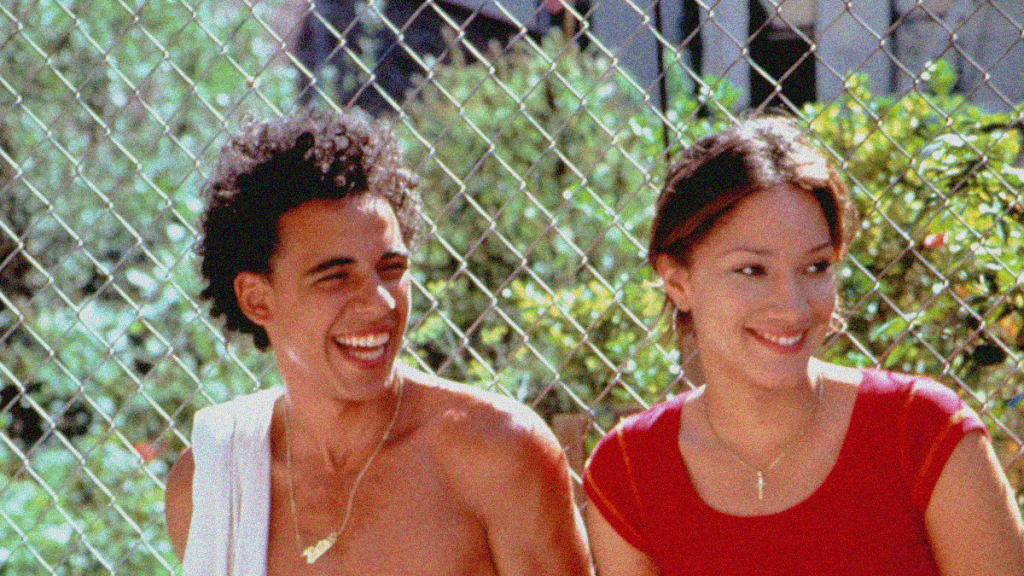
Victor Rasuk and Donna Maldonado in RAISING VICTOR VARGAS.





Leave a Reply