Rating: PG-13 | Runtime: 85 minutes
Release Date: January 18th, 2008 (USA)
Studio: Paramount Pictures
Director(s): Matt Reeves
Writer(s): Drew Goddard
Good luck tonight, Travis.
Cloverfield is a great time at the movies—something you can’t often say in January due to Hollywood’s penchant for dumping forgettable films while the previous year’s Oscar-bait is released. Watching the first teaser before Transformers back in July gave me goosebumps at the potential for what it could be, but interest did wane the past couple months as hype grew. The gimmick started getting stale and the TV spots began ruining the momentum its mystery initially held. Producer J.J. Abrams knew what he was doing, though, because the final result exceeded expectations by using the colossal monster genre as background dressing for a human tale of love and regret.
I just feel bad for director Matt Reeves and writer Drew Goddard because the entire marketing campaign and publicity tour keeps putting Abrams front and center. Well, they’re getting a ton of credit from me as every detail on-screen proves painstakingly considered with some genuine scares (usually hard to come by for me) and an emotionally weighty story with meaning. They’ve given their excellent cast something to play for rather than simply running for their lives while driven by ego and self-preservation.
My main fear was whether we would see the monster and ultimately have that visual ruin the movie. Stuff like this generally works best when the creature creating all the havoc is foreboding and unseen—always lurking and ready to attack. Surprisingly, we actually get a look at the behemoth pretty early. From its tail attack on the Brooklyn Bridge to its full visual on TV screens at a local electronics store, we know exactly what it’s causing all the destruction. The beauty of what the filmmakers have built comes from their realization that the monster isn’t the point.
No, this beast is a secondary character used as motivation for our lead Rob to search for his true love Beth as well as a means to prevent him from reaching her easily. The fight is always going on around them so that the world falling apart becomes the catalyst for their feelings to finally rise to the surface. It’s not therefore about defeating an enemy as much as it’s about living for something bigger then yourself. To do what you can for the people you love in a moment of extremely desperate need.
Cloverfield asks a lot of its actors as a result. Filmed via a first-person camera, there are many long takes and unbroken scenes to maintain the aesthetic choice that this is all a “real” primary account of the invasion found after the smoke settles. Emotions run high, death takes a realistic toll on both body and mind, and adrenaline flows forth to keep these heroes on the run in hopes of escaping Manhattan alive and intact. Each holds their own to make it seem authentic while also injecting humor so the bleakest moments can be broken with levity. Death is staring them in the face as they try to mask their fear with laughter in order to release some of the tension building inside them.
Michael Stahl-David’s Rob is by far the best of the group. He needs to go from deeply in love to tragically scorned and angry. Happily surprised by his friends to scared for his life and willing to risk it for them. His devastation while trying to explain someone’s death over the phone is a highlight as his emotions run the gamut and he pulls them all off with grace. Lizzy Caplan, Jessica Lucas, and Odette Yustman also hold their own with the intense pressure of their situation weighing down on them. When tragedy strikes, they must react realistically to every situation. Special mention to T.J. Miller as Hud Platt too—our surrogate guide through the mayhem as acting camera operator complete with commentary and comedic relief.
With strong performances and Goddard’s taut script that succeeds by getting the small things right, I must also praise Reeves’ work at its helm. He puts us right into the action early on and relies on human interaction rather than big budget effects. The filmmakers understand that the documentary feel only enhances the finished product by removing a layer of artifice. So, if you’re susceptible to motion sickness, be warned that the camera is very shaky. The askew angles and amateurish cropping of frame add to the fact that Miller might actually be holding the camera with it jerking around to the truncated action at the edges when something catches his eye.
All the monster effects are adequately rendered and the utilization of digital camera tricks is expertly done (see the fantastic use of night vision in the subway, an awesome instance of auto-focus confusion by Hud, and the ways in which we’re always reminded that this event is being taped over Rob and Beth’s day out in Coney Island from years ago). Complete with an ending that truly encapsulates what went on this fateful day in NYC, Cloverfield delivers on its promise to become so much more than mainstream Blair Witch Project. Every moment is real and touches you in a very personal way. It’s an experience. A spectacle. Unlike most monster movies that only show you what’s happening, this one puts you in the action to live it yourself.
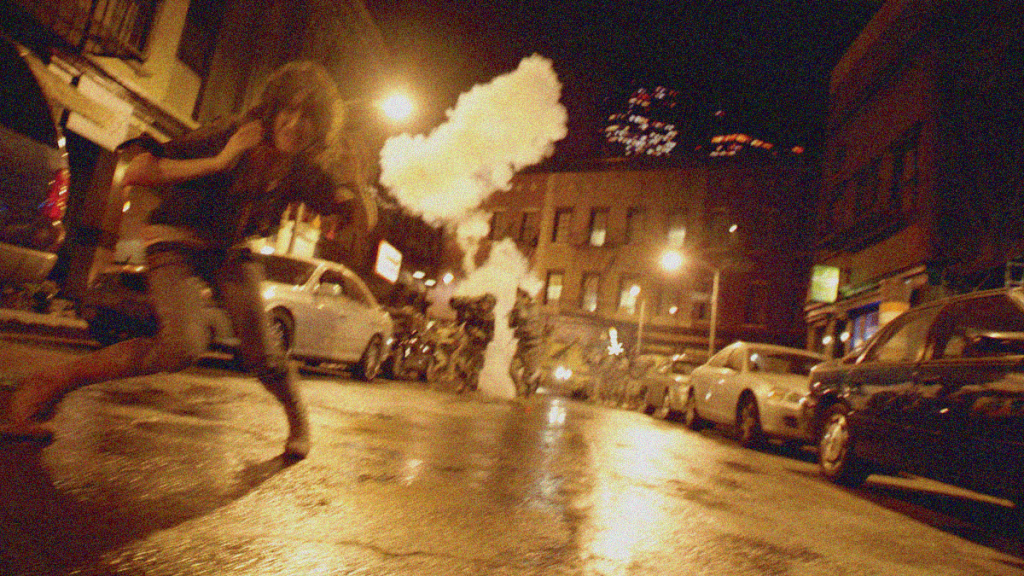
Lizzy Caplan in CLOVERFIELD.





Leave a Reply