
Rating: NR | Runtime: 108 minutes
Release Date: September 11th, 2026 (Poland) / October 28th, 2026 (USA)
Studio: 1-2 Special
Director(s): Michał Marczak
Writer(s): Michał Marczak
I just want it to end.
Director Michał Marczak got lost in the dark while scouting locations on the Vistula River when Daniel Dymiński came to his rescue. There was no one better suited for the task considering how much time he’d spent on that same water searching for his missing sixteen-year-old son Chris. It was months into what became a two-year obsession that loved ones feared might consume him whole with Marczak proving to be but one of many helped along the way.
Closure picks up around the one-year anniversary of Chris’ disappearance from a bridge that CCTV footage caught as his last whereabouts. Daniel has honed his skills and expanded his experiments with GPS dummies carried by the current, metal detectors to ping the teen’s braces, and detailed search protocols to ensure no stone, sandbar, or collection of driftwood goes unturned. He keeps looking while the whole of Poland prays Chris merely ran away.
It’s a captivating glimpse into grief’s many contradictions due to heightened emotions caring little for logic. Daniel is far enough removed from his past life to acknowledge work and money were no match for family and yet still so driven for answers that he’s simply swapped one distraction for another insofar as neglecting his wife and other son. He’s struggling to find the line between duty and compulsion—to save what he has and say goodbye to what’s gone.
In that same vein, however, there’s also an evolution of motive wherein he has become an expert at doing something the police obviously cannot. Daniel waxes on about how he might have found Chris had he known what he knows now—a likely notion considering the film opens on him finding a body minutes after the coast guard drove right by it. So, when a stranger asks him to find his daughter, will success help bring some peace or foster even more frustration?
That’s the duality inherent to such a tragedy. The loss is unbearable, but the journey can often lead to new truths and purpose. It’s just a matter of letting oneself exist in the space between. To understand that acceptance doesn’t mean relinquishing hope. Marczak does a great job capturing Daniel’s path to that understanding in a way that allows his potential for catharsis to spill over onto an audience in need of the same.
Because this isn’t a film about one troubled boy. It’s about looking inward at the youth suicide epidemic running rampant throughout the world and how we as a society can better appreciate what we have before needing to lose it first. It’s about seeing how the psychological ecosystem has changed with new technology and how “being present” is about more than physical proximity. It’s never too late to evolve even if it’s too late for those you’re doing it for to see it happen.
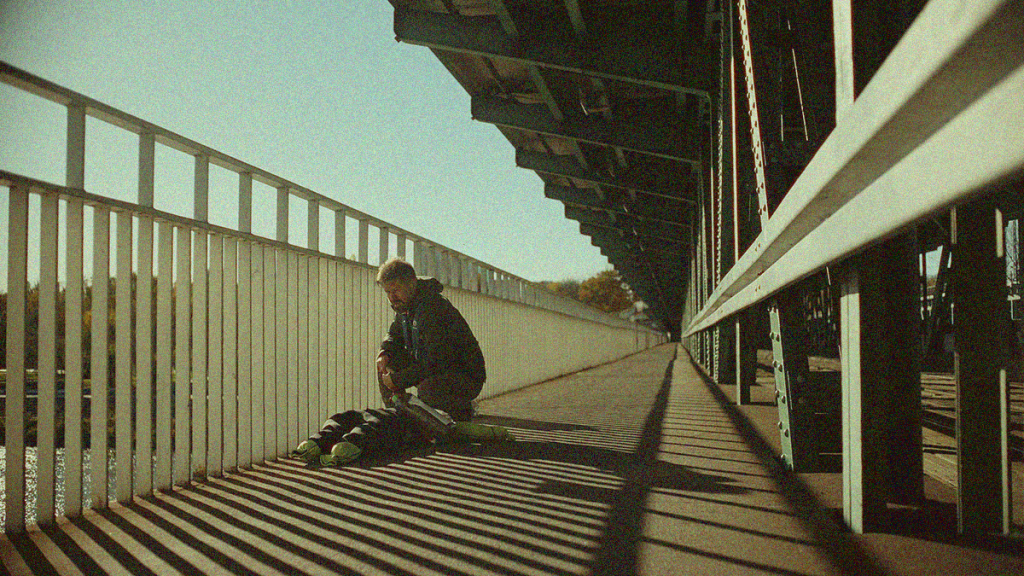
Daniel Dymiński in CLOSURE; courtesy of 1-2 Special.




Leave a Reply