
Rating: NR | Runtime: 86 minutes
Director(s): Eriko Katagiri
Writer(s): Eriko Katagiri & Tomoko Shinozuka
Won’t go back in?
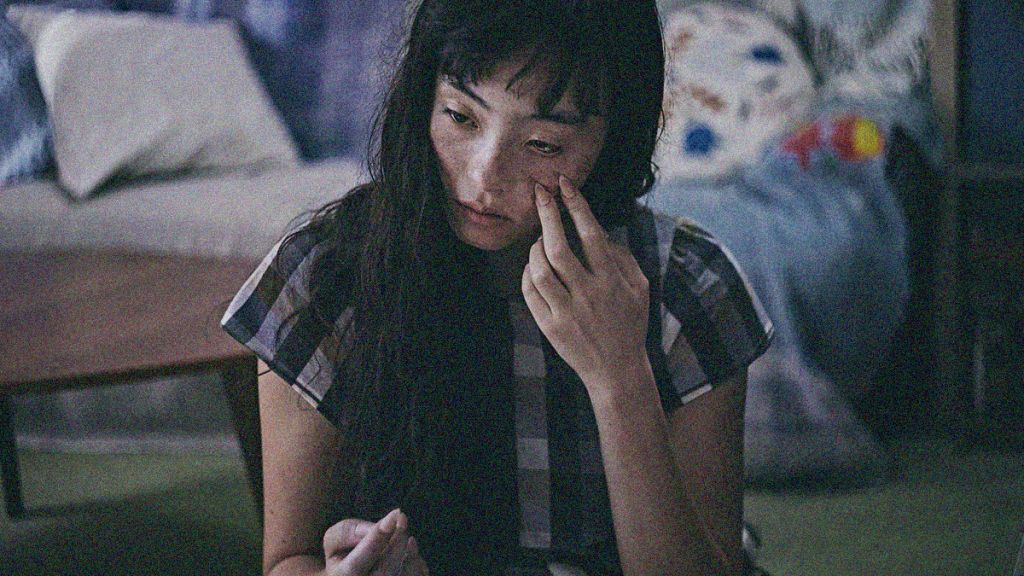
When Miki (Serena Motola) reads the note left by her morning toast reminding her to lock the door and delivering the news that it should be a sunny day, I assumed she’d stumble to a television and sit on the couch. I never expected to see her at an office drafting perspective drawings her boss doesn’t even seem to know about as though she just lets Miki pretend she’s actually working. And I definitely didn’t expect to find that note was written by her husband.
Why? Because Eriko Katagiri’s When You Open the Door presents this character as though she’s a child—whether in age or cognition. The reminders. The placations. The infantilizing. But the truth reveals that everyone is simply tiptoeing around Miki’s eccentric loner as if to create a projection of a world she can understand without ever asking if that’s what she wants. So, it all very quickly begins to feel like a prison. A cage just like the one holding her anxious parrot.
It gives her response to the bird escaping its enclosure a chilling resonance. Miki isn’t repeating her husband’s statement of fact that the creature won’t go back inside its cage because she doesn’t understand the scenario. She says it with confusion while considering the absurdity of thinking it would want to return. Food or no food, freedom is better than captivity. Rather than fear the danger that might lurk outside the door, we should consider the danger within.
Katagiri and co-writer Tomoko Shinozuka portray this notion with a steady stream of unsettling vignettes both via memory, hallucination, and action. The uncertainty as a child to open the door for someone who says she is her mother. The phantom bite of a wolf after following a rogue bun meant for lunch that intentionally rolled away to lead her to a darkened alley. The comforting embrace of a husband that’s soon implied to have turned into more.
Should we presume Miki is being abused? I think so. Maybe that’s why she’s so quiet. Maybe that’s why the bruising on her cheek is unveiled as a necessity to keep her inner “werewolf” at bay. Maybe that’s why their parrot’s inexplicable eggs eventually present as fertilized despite there never being another bird. And maybe that abuse started in youth. Maybe she remembers a different wolf bite when she was younger because she can’t face that truth either.
The implications turn everything that we see on their head from Miki’s husband’s desire to take charge proving less about help than his need for control to the compassionate understanding of a group of women who recognize someone who’s been victimized like them. Katagiri is using supernatural myth and fortune telling rituals to shroud reality under the guise of storybook monsters and more effectively expose the evils of man.
Because it’s not long before talk of Gods and communal howls show the wolves aren’t a metaphor for the predators. No, they’re the metaphor for the prey finding strength in the knowledge that they aren’t alone. That they can fight back and escape their chains. That they can choose to open the door and run with the strangers offering their hands instead of remaining locked inside with the real threat that’s whittled you down into a hollow shell.
All the usual tropes are therefore subverted to deliver this evolution from woman to beast as an awakening. At least that’s what I inferred. A lot of what’s happening is intentionally left to the viewer with Katagiri never tipping her hand. She knows her themes stand on their own. She knows that she doesn’t have to show Miki’s husband as a monster to think he might be one. She can leave the ghost of Miki’s mother as a voice of care rather than a force of neglect.
Even if I’m totally missing the point, however, you still have Akiko Ashizawa’s gorgeous cinematography and shadow work, Katagiri’s surreal vision to blur the lines between reality and fantasy, and Motola’s unforgettable performance that renders Miki as a zombie sleepwalking through life until given genuine praise by her boss or finding community with others that were “bitten.” Seeing her grin during the final shot is about more than freedom. It’s also about power.
When You Open the Door won’t be for everyone, though. Its glacial pacing can be difficult to stick with if you aren’t fully invested in the journey. You must accept that we’re placed inside Miki’s haze to sense her fear without a target and frozen inaction beyond following routine simply to survive. So, stick with it. Embrace the ambiguity of her dreams and the sisterhood of healing. You’ll be rewarded with a bloody climactic metamorphosis via dance to leave you smiling too.

Serena Motola in WHEN YOU OPEN THE DOOR; courtesy of Fantasia International Film Festival.




Leave a Reply