
Rating: NR | Runtime: 104 minutes
Studio: Rights Cube
Director(s): Yu Nakamoto
Writer(s): Yu Nakamoto
You live the life you choose.
The recession has everyone stuck in a state of uncertainty where it comes to financial security … yes, even the Yakuza. With new anti-organized crime laws making life difficult for the Mikami Clan to operate in public, Goto (Kenta Kiritani) and the Big Boss (Yoshihiro Kurita) have tasked their lieutenants to pick up the slack in other ways. For three heavies used to wielding violence at the tiniest infraction, however, the gig economy isn’t quite for them.
So, it’s not long before Kunio (Akito Fujii), Yamamori (Shigeo Osako), and Kazu (Atomu Mizuishi) are berated in their office for falling short where it comes to toeing that line. One more altercation with a civilian and the whole gang will have no choice but to disband. It therefore takes every ounce of patience Kunio has when an idiot on the street tests that resolve by getting in his face knowing he has no recourse. Well, no recourse besides dancing.
That’s right. Yu Nakamoto’s Break Free leans into the farcical nature of its conceit to put a huge smile on Goto’s face upon learning just how many viewers watched Kunio’s amateur “TikTak” debut thanks to an influencer (Ui Mihara’s Ririka) posting the ordeal on her account. People watched for its absurd juxtaposition of a big dude getting close enough with his dance moves to reduce his target to tears on the ground. Part of the allure was wondering if Kunio truly is a gangster.
This question is a crucial plot point considering it’s illegal for Yakuza to be filmed on television or social media platforms. Kunio must pretend it’s all “cosplay” to not get his account banned or make waves once he starts doing collaborations with established online personalities. It’s not easy considering his short temper or the fact that another clan decides to test the Mikami boys in ways that present numerous opportunities for them to slip up.
There’s a real soap opera flavor to the embellished acting and insane situations unfolding in the present and the past. You have flashbacks to Kunio’s little brother Akira (Shogo Yamamoto) dreaming of dancing lending some potential tearjerker vibes. There’s former clan member Jiro (Wataru Ichinose) now on the straight and narrow. A ten-year-old idol hopeful (Azuki Terada’s Uika) becoming Kunio’s friend and advisor. And, of course, sanctioned dance battles.
So, for every scene in Marie’s (Mai Fukagawa) studio training Kunio to learn the moves she perfected as a back-up dancer despite his “old age” (thirty-eight, gasp!) there’s also a glimpse at the Mikami Clan’s sadistic rivals (Takuya Negishi and Ryu Ichinose) doing normal, everyday activities covered in blood. The comedic possibilities of each given moment are always paramount. Yes, there’s still a narrative for Kunio to find his true self, but the laughs come first.
Some of it is broad (Kunio’s crime-specific improv on TV), some visual (Negishi and Ichinose’s bloodied faces), and some culturally specific (the film does well to ensure we understand subtle wordplay despite the subtitles, such as Marie saying she “likes” Kunio’s moves and everyone on-screen inferring she also “likes” him). And it’s also just funny to watch Kunio’s rough and tumble running mates approve of and champion his decision to pursue this new dream.
Except, of course, that it’s actually Akira’s dream. Kunio might be all-in now, but there’s definitely a psychological need to complete this journey to settle past regrets above believing that it’s a legitimate career pivot. You can take the guy out of the Yakuza, but you can’t take the Yakuza out of the guy. Because who he wants to be won’t erase who he was to a majority of Japan. And that’s okay. Kunio accepts himself and now he’ll know who his real friends are.
The whole cast is fully onboard with the over-the-top tone—especially Kiritani whether smacking his guys around or having his face light up after the stupidest idea bears fruit. Fukagawa, Mihara, and Terada are great as the “real world” pieces with the innocence to believe Kunio is just a regular guy and the ability to push his buttons. And Mizuishi and Osako lend a fantastic “new school” versus “old school” dynamic to augment Kunio’s unlikely journey into internet fame.
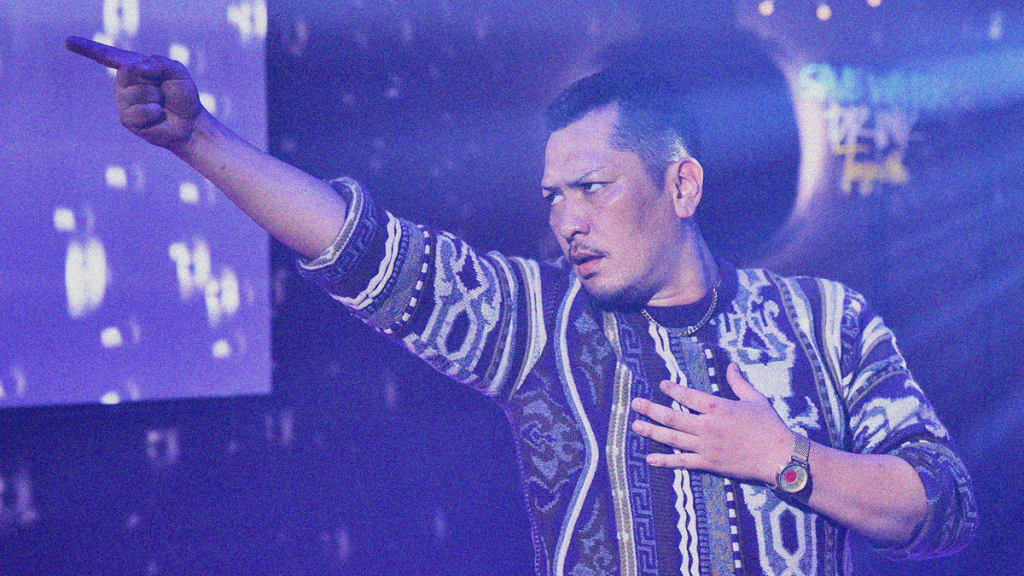
But the star is truly Fujii. He’s so committed to the bit of acting tough due to it literally being his personality after two decades in the Yakuza that it seems like an immense victory every time he does smile. Otherwise, he’s contorting his face into comical rage, calling little Uika a brat, or practically bending onto the ground to beg for forgiveness when his aggression inevitably gets the best of him. His Kunio epitomizes the humanity living behind the monstrous mask.
Does Break Free have a penchant for being too silly? Sure, but there are a lot worse things you can be instead. That’s the point. You don’t open your film with Kunio, Yamamori, and Kazu dressed like gullible nerds at a bar (Yu Nakamoto giving physical shape to the fantasy their adversaries manifest) before rising to reveal the bad asses they truly are by beating everyone up until a phone call demands they perform their daily TikTak if you aren’t trying to be silly.

Akito Fujii in BREAK FREE; courtesy of the Fantasia International Film Festival.





Leave a Reply