
Rating: NR | Runtime: 83 minutes
Release Date: January 27th, 2027 (France)
Studio: The Jokers Films
Director(s): Dimitri Planchon & Jean-Paul Guigue
Writer(s): Dimitri Planchon / Dimitri Planchon & Clémence Lebatteux (adaptation) / Dimitri Planchon (comic)
These are misunderstandings …
Low self-esteem runs in the family. From Jacques (Jacques Gamblin) finally realizing everyone around him knows he’s a mama’s boy with zero aspirations to Carole’s (Léa Drucker) desire to be liked by her subordinates to the point of letting herself fall prey to their misunderstandings so they stop being victimized by hers, it’s a wonder they were able to raise a child at all without second-guessing whether his existence took too much oxygen away from the world.
It’s therefore unsurprising that Blaise (Timéo) followed suit. He saw his father’s ability to walk over himself before others could and his mother’s constant need for admiration and decided to simply retreat into the background. No friends. No ambitions. No disruptions. Lucille Bluth would be proud as he’s everything a Milford man should be: neither seen nor heard. Except that human interaction is crucial to social development. He must escape his shell.
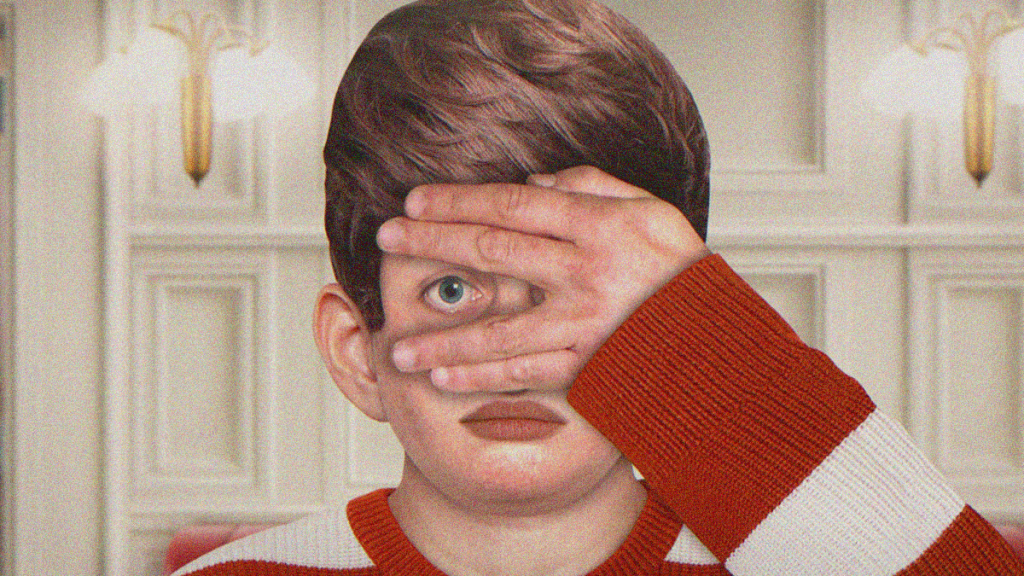
Based on his own comic strip (which was previous adapted into a television series too), Dimitri Planchon enlists the help of co-director Jean-Paul Guigue to bring Blaise to the big screen with a unique brand of animation that marries a cutout feel with the contoured aesthetic of a MAD Magazine. It’s a world of Alfred E. Neuman-like characters with big noses who move through their detailed environments via a polished “South Park”-esque assembly. All in a good way.
Beyond these refreshing visuals, however, the real draw is the infectiously dry wit of the script. Watching Jacques bare his soul to his therapist only to have the camera reverse to show Blaise’s school counselor wondering where the boy is. Smiling as an innocuous phrase like “I wish I could come over” forces Carole to backtrack and ultimately double-down by crashing an employee’s date. Relishing the inevitable fallout of Blaise’s compulsive lying to his new girlfriend.
The latter is the main thrust considering the film bears his name. Blaise’s knee-jerk reaction to being flirted with is to fall into the same patterns as his mother with his false reasons to extricate himself from the interaction only making Joséphine (Nina Blanc-Francard) latch on further. It doesn’t help that she’s doing the same from the opposite direction. Blaise doesn’t want her to know he’s a kid. Joséphine doesn’t want him to know she’s rich.
Planchon’s goal is to put as many anxieties on-screen as possible so his characters can respond in insane ways. Like when a revolutionary pivoting too hard into violence to compensate for his material lifestyle offers a young woman a grenade and she takes it because it’s the only thing she can think to do in the moment to be taken seriously. Or when a CEO accidentally implies he dated the country’s president and realizes it’s a cool rumor he’d love to go viral.
Every person is so preoccupied by what everyone else might be thinking about them that no one can actually hold an honest conversation. When Blaise presumes Joséphine is about to do something wild, he presents that wild thing to her as a question rather than an accusation so that she subsequently presumes he’s about to do it. She doesn’t want to let him down. He doesn’t want to seem lame. They’re ostensibly peer pressuring themselves.
Impulse rules the day with assumptions riding shotgun. It’s a merry-go-round of thinking “I need this person to like me, so I’m going to do what they want” except their awkwardness is what plants that “want.” They’re a bunch of sycophantic lemmings without anyone in power with whom to debase themselves. The punch line, however, is that the shared excitement of everyone surprising themselves might just make them realize they like it after all.
Like how Joséphine’s attempts to be chaotic to not let Blaise down eventually have her reveling in the chaos when all he wants is to go home. Or Carole trying to beat her employee’s (Nathalie Kanoui) accusation of sexual harassment by putting herself in positions that maintain the possibility causing her to wonder if maybe there is an attraction. So, it might be less about liking these new things than thinking they should want to like them.
Is that better? Worse? That’s up to you. Because Blaise isn’t trying to provide answers. It’s merely holding up a mirror onto our collective insecurities and the ease with which we can be manipulated into doing something we don’t want to do because it seems cool, moral, risky, or necessary. We trap ourselves in so many corners that we eventually stop being able to tell if we’ve escaped or just gotten so used to the fear that resignation has taken over.
It all boils down to our penchant to do stupid things to not look stupid. To embrace sin instead of appearing too virtuous. To overcompensate rather than save face by taking an out when it’s presented. The regret that oozes from every character is overwhelming enough to talk yourself out of whatever hair-brained idea you have in real life even as they dig themselves deeper on-screen. So, let their absurd choices entertain you, but also learn what they won’t.

A scene from BLAISE; courtesy of Fantasia International Film Festival.




Leave a Reply