
Rating: NR | Runtime: 90 minutes
Release Date: February 17th, 2026 (USA)
Studio: Tribeca Films
Director(s): Timour Gregory & Sasha Schneider
We wanted to play Star Trek.
While Stan Woo’s “Star Trek” fan film Yorktown: A Time to Heal is the jumping off point for Timour Gregory and Sasha Schneider’s Beam Me Up, Sulu, this is not strictly a documentary about its creation. Yes, we meet Stan and a handful of others from the project—namely director Austin Hunza (as Da Han), DP Gaston Biraben, and actor Steve Goodpaster—to explain its process and their experience, but we’re also provided an informed dissection of Gene Roddenberry’s legacy.
It starts with George Takei and what earning the role of Lt. Cmdr. Hikaru Sulu meant to him as someone who spent almost five years in a Japanese internment camp post-Pearl Harbor. It continues with his enthusiasm to pay his success forward for someone as passionate as Stan by agreeing to star in his student film and stretches even further to historians contextualizing Takei’s representation within the entirety of “Star Trek’s” treatise on diversity and equality.
That then spills over into the convention space and cosplay as a means to honor the show, meet new friends, and feel like you belong. Gregory and Schneider focus on the timelines of America’s struggles with the “other” when depicting Asian heritage, Hollywood’s penchant for racist stereotypes, and the shifting tide of politics moving from subtext to text. There’s also a brief look at the evolution of fan films from backyard fun to amateur sound stages.
Stan becomes the sort of poster child for all these things as an Asian American who took a shine to “Star Trek” and particularly the Sulu character as a symbol of a future worth striving to create. His ability to recruit like-minded creatives, roll the dice to approach Takei and James Shigeta into acting in his film, and unwittingly ride the wave that was born from his unfinished project’s almost mythical status in the Trekkie world before finally seeing the light of day.
As Woo muses via archived footage, the result is like “a fanzine in celluloid” that was never meant to win awards or make money (it’s legally unable to do the latter). It was always a means to play with phasers in costume in a way that justified doing so to outside viewers courtesy of a camera inherently legitimizing whatever crazy scene someone might stumble onto. So, he’s probably not mad when an audience member is captured saying he hated it post-premiere.
The cultural significance of Yorktown: A Time to Heal can never be reduced by its quality. Even Rod Roddenberry, the current steward of his father’s IP, admits as much since he knows the fans have kept this world alive for six decades. Let them have fun. Let them pass down their love of the characters and stories to their friends and families by way of inserting themselves into the mythology. “Star Trek’s” entire message is about finding ways to exist together.
These through lines make Beam Me Up, Sulu a relevant addition to the property’s expansive media footprint by contextualizing the big picture aspects of the show’s legacy with the personal impact necessary to help make its dream of a true meritocracy real. The talking heads connect Stan’s journey to the larger phenomenon and the interviews with the Yorktown players (including Takei and the late Shigeta’s friend to speak on his behalf) connect them back.
But there’s also a conscious effort to zoom out and give a platform to others indelibly marked by the “Star Trek” universe on-screen and off. Garrett Wang talks about admiring Takei before becoming the next generation’s Sulu on “Voyager”. Alexander Siddig, Christina Chong, and Gray Tal speak on how their characters fit that same mold. And I loved all the fans explaining how “Star Trek” impacted their lives for the better. It’s a wonderful display of cause and effect.
So, come for Stan’s anecdotes about how he schmoozed Takei at a political fundraiser and Shigeta’s manager with a VHS tape and stay for the reminder that anyone who says ‘”Star Trek” went woke’ has either never seen an episode or is devoid of even the most rudimentary notion of media literacy. The show and everything it spawned has always been about forging a diverse community upon a platform of acceptance, respect, and love.
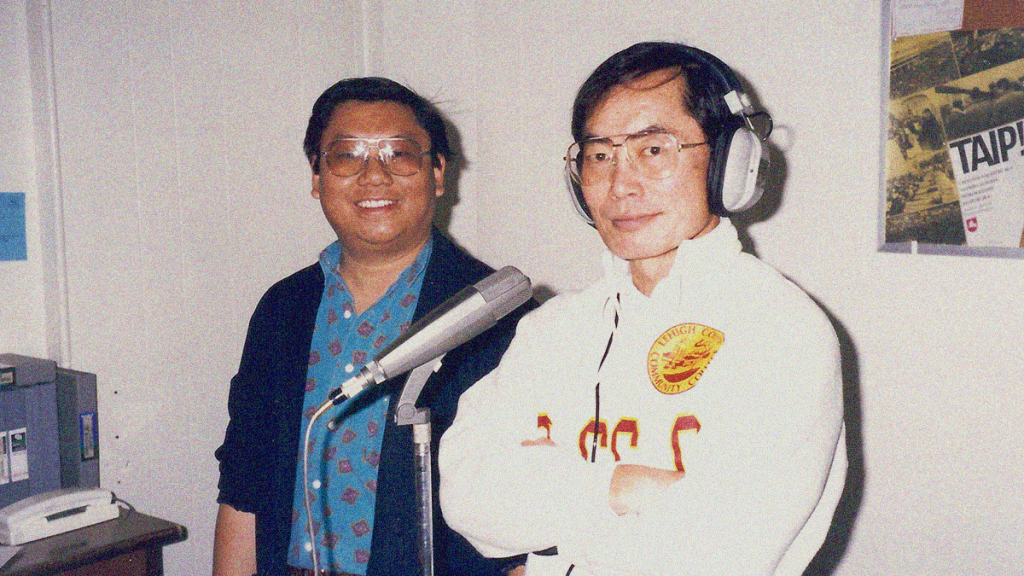
Stan Woo and George Takei in BEAM ME UP, SULU.

 jaredmobarak.com
Leave a comment