
Rating: NR | Runtime: 99 minutes
Director(s): Kogonada
Writer(s): Kogonada
What do you see?
It was fascinating to listen to Kogonada and his cast and crew speak about the process of making Zi during their Q&A because you can really understand how much of the film was about the experience of making it as opposed to the result. He introduced his six principal partners as producers on top of their roles as actors and department heads to share ownership and express the collaborative effort that went into flying to Hong Kong and shooting on instinct.
Because nothing was planned. They did not scout locations. There was no finished script. Kogonada explains that they spent the first three days running through what they had—finding the perfect spot in the moment, shooting in sequence (without a monitor and thus needing to trust each other that the footage was correct), and then rewriting at night to go again on the sly as the city’s true hustle and bustle carried on around them.
You can feel that energy on-screen and it was palpable with everyone on-stage remarking about how unique the project was considering they shot it over three weeks in October … yes three months ago. It’s not therefore about polish or narrative as much as emotion and vibes. There’s a reason it debuted in Sundance’s NEXT program despite Kogonada being a known commodity. This was an experimental exercise to let loose and risk everything for truth.
Is that a reliable formula for great filmmaking? No. The response pretty much proves that fact. So, while the context of their enthusiasm does help matters insofar as understanding the motives and aesthetic, it doesn’t necessarily render the finished piece better. It’s slow, messy, and often inscrutable in the sense that it seeks to wield a science fiction conceit as scaffolding without ever really paying off its purpose to the whole. In actuality, it might all just be a dream.
I say this because Zi (Michelle Mao) is in many respects watching her life flash before her eyes. What’s interesting about that, however, is the choice to make the midpoint of her life into the moment when it all floods back. More than just discovering there might be a neurological issue threatening her life is the introduction of a person she will, feasibly, spend the rest of it with. This is the pivot point. The fork in the road. And everything is folding in on itself.
The script contextualizes it as a temporal anomaly wherein Zi is reliving her past despite interacting with it as though it’s her present. That she isn’t seeing the future when she recognizes Elle (Haley Lu Richardson) on the street with another version of herself or an older version of them both sitting on a park bench (this Elle played by Richardson’s real-life mother). Everything is a memory. Zi’s reactions are simply so delayed that they feel like they’re being experienced now.
To add to the confusion is a stalker in Min (Jin Ha) who follows Zi with notebook in-hand. We’ll eventually learn who he is and his relationship to them as answers are gradually hinted at without any concrete declarations, but their unlikely trio is less about story than characterization. It’s about strangers trusting each other with their most personal truths and lovers traversing the idea of love as a continued state of mind regardless of it being over or yet begin.
Kogonada edits the whole as a hallucination with repeated moments cutting in as often as new flashbacks outside of time to create a visual poem for Zi’s life as though it was constructed by destiny. That her future is both dictated by her past and a cause of its own creation. That Zi and Elle meet because they have already met and must always meet. That the cause of that meeting will drag Min into their orbit to usher in what’s next by closing what was.
What we see cannot therefore be real. It’s like these three souls are removed from reality and looking down on themselves in ways that allow them to choose that which was already chosen. A sort of communal confirmation that provides them agency in hindsight over serendipitous situations outside of their control. There is something beautiful to that idea as well as the notion that Zi is catching a glimpse of what could be if she survives whatever diagnosis is forthcoming.
It’s as much a wish as a prophecy and the spontaneity of that uncertainty is the point. Kogonada and company are living in its ambiguity. They’re embracing the electricity of jumping into a void without a safety net to find honesty in the moment when so much of narrative fiction cinema is about preparation, purpose, and precision. While its empathetic performances and authentic mystique are undeniable, your enjoyment of the finished product will surely vary.

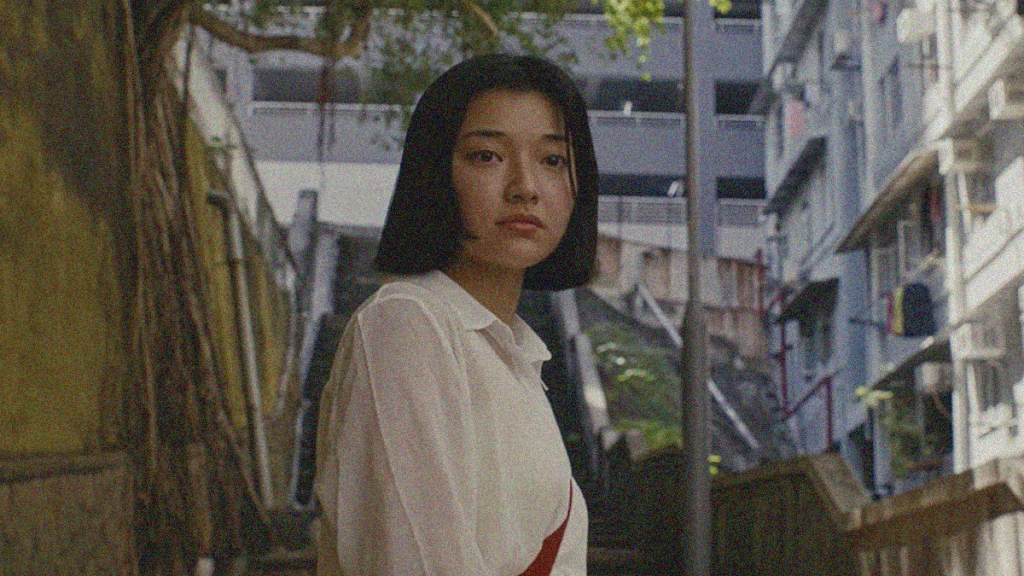
Michelle Mao in ZI; courtesy of Sundance.


 jaredmobarak.com
Leave a comment