

Rating: NR | Runtime: 123 minutes
Release Date: December 5th, 2025 (USA)
Studio: Film Movement
Director(s): Scandar Copti
Writer(s): Scandar Copti
I don’t buy this story.
The holiday referenced in the title of Scandar Copti’s Happy Holidays—the appearance of which doesn’t occur on-screen until the eighty-minute mark—is Purim. It’s a day that the majority of the characters don’t necessarily celebrate being that they are a Palestinian Arab family living in Israel, but Fifi (Manar Shehab) isn’t going to let that stop her from partying with her Israeli classmates from university in Jerusalem. It’s there that she gets into the car accident that lands her in the hospital where we meet her.
This is the point from which the film proceeds through varying perspectives and it’s her neck brace (or lack thereof) that initially renders Copti’s restarting narratives confusing. The next time we see Fifi is during the story of her brother Rami’s (Toufic Danial) struggle with having fathered a child out of wedlock with an Israeli woman (Shani Dahari’s Shirley) who has changed her mind about an abortion and now wants to keep the child. She’s not wearing the brace and is obviously romantically involved with his friend Walid (Raed Burbara).
That’s all well and good until the next chapter shows us following around Fifi and Rami’s mother, Hanan (Wafaa Aoun). Why? Because we arrive at her house to find Walid with flowers despite Fifi having zero clue why he’d know she was in an accident. It’s not until the third chapter that we recognize repetition since there is very little (if any) overlap between the first two. Now, however, we rewind to see Shirley’s side of the events followed in Rami’s tale. Suddenly things click into place. The accident occurs first. Everything else (mostly) occurs in tandem.
The reason is simple: oppressive situations foster lies. As a Palestinian born in Jaffa, Copti provides an egalitarian approach to the definition “oppressive situation” considering Israel’s militarization, propaganda, and Apartheid state as well as the ingrained patriarchal traditions staunchly upheld by many Arab Muslim families where it comes to pride, appearances, and sexuality. He pulls absolutely no punches to reveal just how damaging both cultures are to freedom when it comes to gender, religious, or ethnic equality.
As teased in its subtitle, Rami’s thread is intentionally “peculiar.” He loves Shirley but knows having a child out of wedlock would destroy his family’s reputation (one his father, Imad Hourani’s Fouad, has already detonated due to a potentially criminal business deal). Having a child with a Jew might destroy them even more if side-eyes about letting Fifi attend school in Jerusalem are any indication. Rami wants to discuss it, but Shirley refuses due to threats she believes are coming from him. Threats that soon target Rami as well.
The truth behind them is despicably exposed during the third chapter—not by following Shirley, but by following her zealot sister Miri (Meirav Memoresky). It’s one thing to see obvious anti-Arab sentiment in media and understand how terrorist groups foment hatred against each other (as one does while Fifi walks to her Purim party), but it’s another to hear and see the manipulative and evil ways in which people enact violence on their own families to maintain the purity of their derangement. Miri’s lie will make you sick.
Fifi’s lie is conversely born from self-preservation. She knows her life choices will actively harm her family’s archaic choice to put status above happiness (or, worse, believe the former is the latter), so she lies to protect them. By doing so, however, she unwittingly ensures the truth will be discovered due to her mother’s inability to scale back her other daughter’s impending nuptials. Despite Fouad’s indiscretion ruining their finances, Hanan refuses to compromise. And it’s this stubbornness that puts Fifi’s past into the public record.
How everyone reacts is par for the course in these types of scenarios wherein a woman must not only be subservient to men, but she must also be “intact.” The ways in which this impacts those around Fifi are extreme, but so is a society that forever holds decorum above reality. Because we know Fifi isn’t the only one. Look no further than Rami and how his similar circumstances are more easily shielded because he is a man. It’s less about the lie than it is being exposed. Hanan is mad at Fifi for what she did, but she’s enraged that others know.
You must feel for Fifi, Rami, and Shirley. Here are three young souls trying to do their part to live in a world where religion and race pale in comparison to humanity despite existing in one of the worst places for such lofty idealism to actually succeed. You can even feel for Walid too considering we see the struggle between his heart and mind when it comes to Fifi’s truth. Yes, his actions are irredeemable, but they are born from his indoctrination. He was raised believing an unspoken promise and feels betrayed when it’s taken away.
What I really like about Happy Holidays, though, is that Copti never forgets where all this animosity stems from. Why are Israelis willing to do what Miri does to stop the spread of Arab genetics? Why do Muslims in Israel hold so tightly to antiquated notions so as not to be corrupted by “modern living”? Because their shared country is built upon ethnic superiority. The film’s most disturbing part is witnessing what goes on in an Israeli elementary school classroom. It’s truly everything an evangelical MAGA strives for here.
Oh, and no one on-screen is a professional actor. Copti scouted people in the occupations (doctor, student, nurse, etc.) of his characters and cast accordingly so each performance already had that authentic aspect baked in. It’s an astounding fact to learn since they’re all so good. Raw, emotional, intense. Who better to understand the tragic nuance of a culture than those entrenched within?
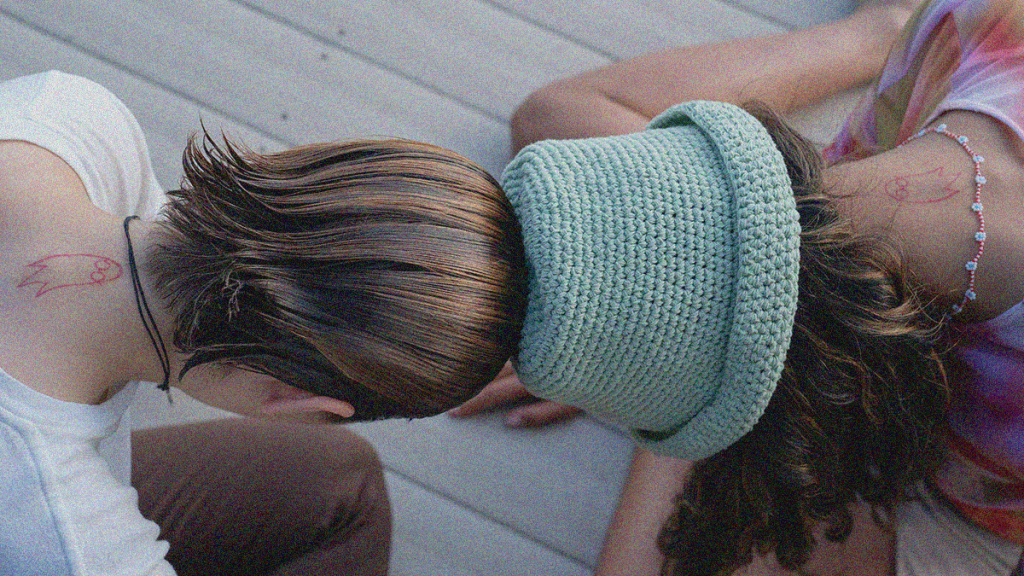
Raed Burbara and Manar Shehab in HAPPY HOLIDAYS; courtesy of Film Movement.

 jaredmobarak.com
Leave a comment