Rating: NR | Runtime: 90 minutes
Release Date: November 7th, 2025 (USA)
Studio: Grasshopper Film
Director(s): Klára Tasovská
Writer(s): Klára Tasovská & Alexander Kashcheev / Libuše Jarcovjáková (photographs & diaries)
Why can’t I live on my own terms?
While it might have taken fifty years to finally receive the recognition she deserved, Libuše Jarcovjáková always knew she was a photographer. It didn’t matter that her artist father never understood the worth of her work. Nor that the people she showed her photos to would always compliment her technique while denigrating her message by saying she had none. Jarcovjáková stuck to her ambition to capture the mundane and photograph the everyday. No matter where she went or how she survived, a camera remained in her hands.
How many photographs did Jarcovjáková take? Well, director Klára Tasovská explains that it took two full years of “daily work” to organize the extensive archive of prints and negatives before crafting what would become I’m Not Everything I Want to Be. Because the entire film is told via these images and Jarcovjáková’s voice reading from a script describing her life from Tasovská and Alexander Kashcheev that was inspired by her diaries. We watch her evolution, a Communist takeover, and the celebration of its fall.
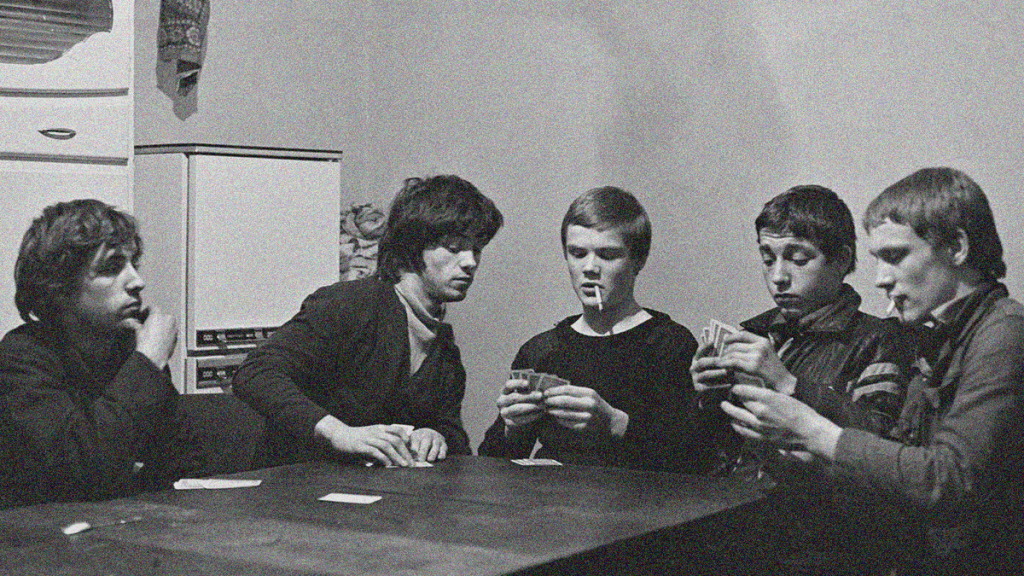
What start as self-portraits and personal documentation are therefore quickly transformed into historical artifacts. Jarcovjáková brings us into a print factory to capture the life of workers on the job and blowing off steam at night—so candid that the Communist party who ran the press forbid her from taking more. She takes us to Japan to provide a juxtaposition of a bustling city like Tokyo against her dark and solitary glimpses of Prague. And her desire to leave one totalitarian prison ultimately brings her to the outskirts of another via the Berlin Wall.
Amidst these moves we learn about the methods she was forced to exploit. A travel visa against her husband’s wishes that would be confiscated after overstaying its term. A paid marriage to procure another only to discover how different and isolating European capitalism was to life under Soviet rule. We meet the two men she married for utilitarian purposes and the women she loved with true passion. And from that duality comes the discovery that art intended to champion her friends’ lifestyles could be weaponized against them.
The political ramifications of her work is therefore paramount as far as its context to the era. Yes, that entails the machine of labor and power to which Jarcovjáková was a victim, but also to the constraints of gender, sexuality, and progressivism. So, there are shots of lovers in differing stages of undress alongside rebellious graffiti and hand-scrawled signs of defiance. There are portraits of working-class men and women in Prague, Tokyo, and Berlin alongside the lucrative marketing promos that paid her well but always felt hollow.
This autobiographical account of Jarcovjáková’s life and world around her is captivating enough, but Tasovská knows ninety-minutes of still photos and a single voice demands kinetic energy to keep our attention. So, she uses lighting effects and quick cuts to bring the static shots to life—strobing between alternate takes as though a flip book set to music and brought to life. Sometimes she tiles images to create progression within a single event. Other times see her repeating one image to crudely animate a figure moving across the screen.
It’s an informative and exciting piece that provides the parallel journeys of political oppression and individual awakening. The title epitomizes this notion by portraying its subject in flux and searching for who and what she does want to be outside of the demands of authoritarian regimes. Jarcovjáková admits she’ll probably never be fully satisfied, but the rapid montage of images between her return to Prague post-USSR and her 2019 Arles exhibition show us a woman and artist as close to being everything she’d hoped as she’ll allow.
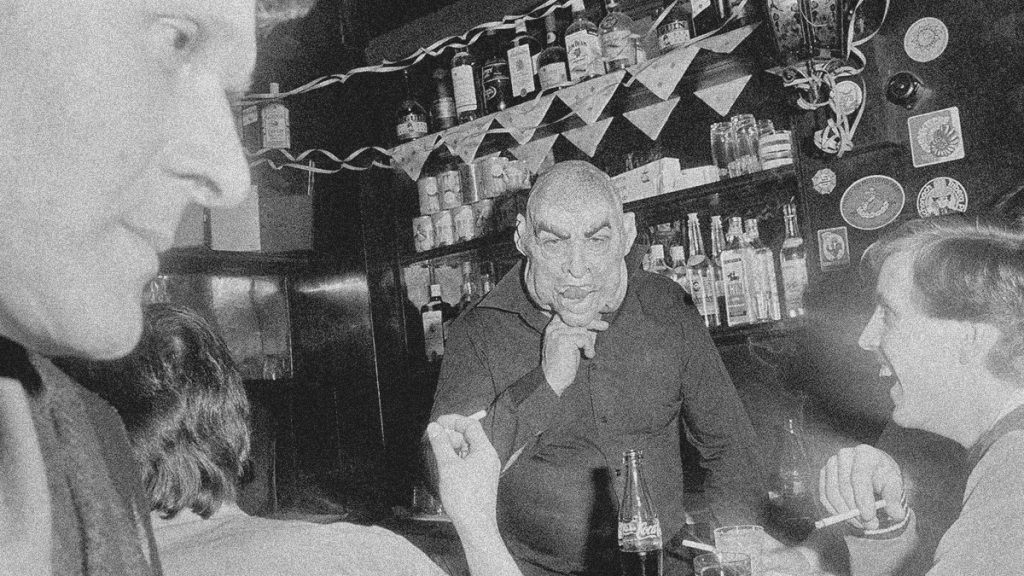
A scene at T-Club from I’M NOT EVERYTHING I WANT TO BE; credit: Libuse Jarcovjakova.

 jaredmobarak.com
Leave a comment