
Rating: NR | Runtime: 83 minutes
Release Date: October 17th, 2025 (USA)
Studio: Fourth Act Film / Grasshopper Film
Director(s): Sasha Wortzel
Writer(s): Sasha Wortzel / Marjory Stoneman Douglas (inspired by book The Everglades: River of Grass)
Nature doesn’t know what to do anymore.
I never got to visit the Florida Everglades as my family left Sunrise to return to Buffalo two years before the fourth grade trip my sister had just taken. It always seemed like a cool excursion, though. I was too young to remember details, but that area remained front of mind just by proximity. No one talks about the region here in New York because our schools customize their curriculum to the place in which its taught. So, it was nice to watch Sasha Wortzel’s River of Grass and think that I might have learned a thing or two more had I stayed.
This is as much a love letter to her Everglades home as it is an education on its history and importance to both the planet’s survival and our own as a species. When Wortzel is relaying her own thoughts, the words are heard above nature scenes and archival footage. When she’s reading from Marjory Stoneman Douglas’ book, the same occurs with the addition of the text superimposed above the imagery. And when she turns things over to her subjects, they are given our full attention to explain their respective missions.
Betty Osceola leads prayer walks to better inform the general populace about the water and the land being held as ancestors to the indigenous Miccosukee. Two-Spirit poet/activist Reverend Houston R. Cypress leads tours through the area while telling stories of the tree islands and spreading the same reverie they were taught by Osceola. Kina Phillips describes the toxic air pollution she’s inhaled for four decades living along the path of Big Sugar’s seasonal burning. And Donna Kalil takes us on a python hunt to save the region’s remaining natural wildlife.
These figures come and go to provide contemporary context to the impact mankind has had via climate change, commercialization, and technological advancements that unfortunately also lead to destruction miles away. We learn about alligators being a keystone species, the man-made levies around Lake Okeechobee, and the fight to stop a Nixon-era Miami airport expansion. And woven throughout is an eighty-year-old Douglas orating her own twenty-year fight to protect the Everglades as a National Park.
The latter leads to some captivating moments as Wortzel utilizes a lot of old outtake footage with off-camera voices directing Douglas in the frame. There’s also b-roll of nature shots with the cameraman berating animals to flap wings or move just right as other people use long poles to poke and prod them into doing the same. It’s an effective aesthetic choice insofar as showing just how much of what we see and experience is in fact manipulated by unseen forces. So much of what we know is actually what we’ve been told.
It’s not therefore lost on us to comprehend that what we see of the Everglades now isn’t what it was decades ago. It’s not even the place my sister visited in 1989 anymore either. Our country displaced indigenous populations to turn the swamp into farmland. They sacrificed freshwater reserves and blocked other sources from flowing back in. They’ve spent so much money and effort to drain the area that the loss of animal life and increased heat index risks putting it all back underwater as it was millennia ago.
That’s why centering voices like Osceola is important. Building around Douglas is a nice way into the subject (and Osceola admits the author was a friend of the native community despite unwittingly “stealing” the title of her book from them), but she was still a transplant. Osceola and Phillips have deep Florida roots. Their families have been there for generations and know the tenuous balance between man and nature. They understand the land and water are heading for a reset and hope we join in and help earn our place upon them in the aftermath.
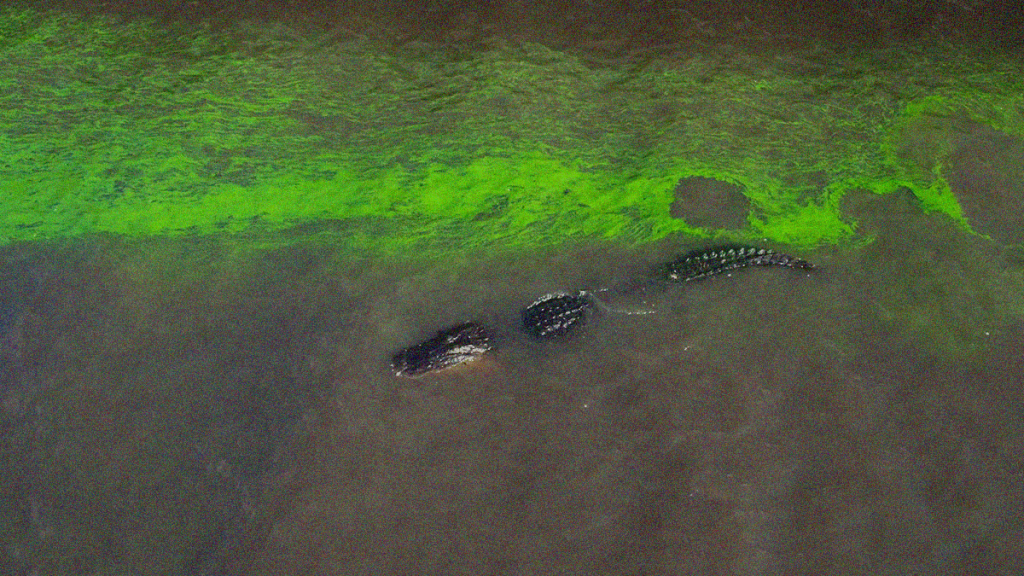
A scene from RIVER OF GRASS; courtesy of Fourth Act Film.



 jaredmobarak.com
Leave a comment