
Rating: NR | Runtime: 103 minutes
Release Date: September 19th, 2025 (USA)
Studio: Dark Sky Films
Director(s): Alexandre O. Philippe
Writer(s): Alexandre O. Philippe
Violence isn’t the goal, it’s the result.
Tobe Hooper’s The Texas Chain Saw Massacre is a film that leaves an indelible mark upon viewers when watching for the first time. You can’t help but be changed by its singular artistry and bold fearlessness to take us into Hell with no hope for escape … if you’re brave enough to watch until the end. It’s not therefore surprising that Alexandre O. Philippe could collect five subjects to talk in-depth about its impact on their careers and sensibilities. Nor that they would all come at it from a different direction depending on their own lives at the time.
Look no further than Takashi Miike explaining how he never liked horror films. A recollection of youth or not, that’s a wild statement coming from the creator of Ichi the Killer and Audition. He traveled forty minutes to Osaka to see Charlie Chaplin’s City Lights only to be turned away (it sold out). So, fifteen-year-old Miike stumbled upon Leatherface instead to ensure the trip wasn’t wasted. The rest is history as it instantly ignited a career in genre filmmaking to the point where he admits he probably wouldn’t be a director if not for the experience.
Chain Reaction is split into five chapters as Philippe stacks interviews from Patton Oswalt, Miike, author/film critic Alexandra Heller-Nicholas, Stephen King, and Karen Kusama atop each other. Oswalt might seem like the odd man out, so the first clip shown of an old stand-up routine declaring The Texas Chain Saw Massacre the “perfect film title” sets the stage for his fandom. What follows is the comedian’s insightful, almost encyclopedic knowledge of the horror classic complete with an intriguing angle about the sun making the world go mad.
That sentiment is mirrored by Kusama to form a bookended notion of prescience where it concerns an America off the reservation. I love her thoughts about the Sawyer family being a people whose livelihood was taken from them and the inevitability of that tragic circumstance driving them insane. Because it’s what’s happened to red state republicans forever living in a past consumed by progress that they refuse to evolve with as a means of survival. They’ve made the void their personality instead, turning their violent rage into their occupation.
King’s insight is pretty much where you’d expect it to be as far as aligning with the artist’s job to ignore morality when in the process of creation. He explains how art is meant to provoke and spark conversation. That independent filmmaking—by virtue of being freed from studio oversight trying to homogenize for mainstream profitability—is crucial to pushing the form forward into new realms of possibilities. It’s up to the ratings boards and critics to say whether a work has gone too far, not the creator (save thoughts on his own novel Rage).
Similar to Miike’s contributions, Heller-Nicholas’s chapter is more personal to her than social, political, or artistic meaning to the pop culture zeitgeist. It’s one of the more fascinating bits from a technological standpoint too considering she grew up in Australia—a country that denied The Texas Chain Saw Massacre from being released for a decade. So, her first watch was on a washed out and yellow VHS copy of an already inferior print that aligned with her country’s own aesthetic sensibilities, blurring the line between intent and necessity.
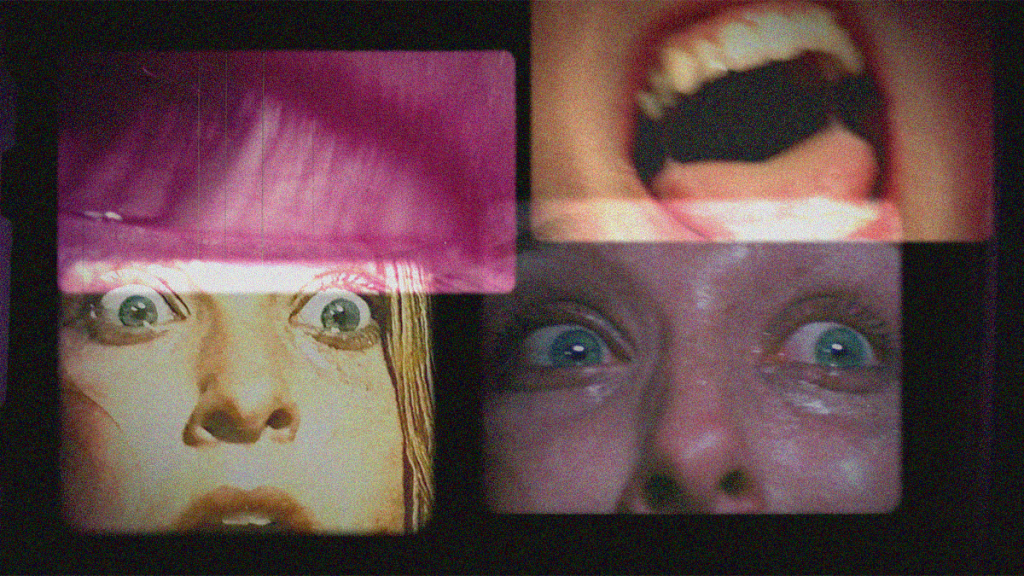
The whole is very inside baseball insofar as its goals and merits go, so definitely know going in that your knowledge and appreciation of Hooper’s film and cinema in general is crucial to the academic (albeit anecdotal) exercise Philippe has put together. His ability to splice relevant clips (mostly mentioned by the interviewees, but sometimes included on his own impulse) from Nosferatu, Wake in Fright, House, and others is impeccable. And the shifts from high definition to grainy celluloid to mangled VHS for Massacre‘s own clips and outtakes is great.
My favorite part, however, is the thoughtful commentary on Leatherface himself from all participants. His anxiety and child-like instincts are perhaps an easy thing to recognize for fans, but it’s a nuance that people who never watched the film and only know of the character as a chainsaw-wielding monster would never think to consider. Heller-Nicholas says it best: “It’s a home invasion movie from Leatherface’s point of view.” He’s working through a trauma response as those he’s been taught to fear threaten his sanctuary.
It reveals how our worst monsters are often the ones we understand. Those we could feasibly become ourselves under specific circumstances. But you must remember that sympathizing with the reasons they lost their humanity doesn’t excuse their actions. You must still condemn them while seeking ways to fix the cause. You can pity a MAGA supporter for their inability to comprehend reality and want to destroy the mechanisms (conservative media disinformation) that drove them insane, but don’t forget their words and deeds remain purely evil.
Marilyn Burns collage; courtesy of Exurbia Films, photo by Daniel Pearl.




 jaredmobarak.com
Leave a comment