
Rating: NR | Runtime: 82 minutes
Director(s): Eimi Imanishi
Writer(s): Eimi Imanishi
Patience is the key to mercy.
It starts with an arrest. Mariam (Nadhira Mohamed) has been living in Spain well past her visa and the authorities finally caught up with her out at a club. The next thing we see is her in a Moroccan prison wherein the guard is berating her for following in her father’s footsteps before telling her to leave because he doesn’t care whether she returns to Western Sahara alive or dead. That’s when Mariam’s drug dealer brother Alwali (Suleiman Filali)—he really did follow in dad’s footsteps—arrives to pick her up and take her home.
But it’s not home and all she wants to do is go back. Mariam calls a well-to-do Spanish friend to raise money for her return. She visits her fisherman uncle (Chekh Mehdi’s Abdallah) to see if he’ll transport her across the water like he did so long ago. She even begs her younger sister (Khadija Najem Allal’s Selka) to get her a job where she’s interning to start raising capital for her own legal travel. But Mariam isn’t a child anymore. Her family isn’t going to give her the benefit of the doubt. She tried to escape and failed. Now is time for acceptance.
As writer/director Eimi Imanishi reveals during her feature debut Nomad Shadow, however, it’s time for shame and blame too. Most of Mariam’s Sahrawi family who remain hold her and Abdallah responsible for her father’s death. They see her as selfish and manipulative. They correctly presume her motivation for every action she takes is solely to get back to Europe. And they grow tired of her refusal to remember that she isn’t currently there. The clothes. Nose ring. Tattoo. Attitude. Her presence is causing them undue strife.
It does the same for her friend Sidahmed (Omar Salem). His camel herder traveled with Mariam during that first crossing and her desire to never go back to Africa inevitably made it so he was thrown to the wolves. Sidahmed is a pariah now in Western Sahara and tells her it’s all her fault. Should he accept some of the blame too? Sure, but it’s difficult to separate the fact that Mariam’s dream has left so much pain in its wake. Especially because it often doesn’t appear as though she feels any guilt. In her mind, you either assist her goal or become an “asshole.”
The film is thus an awakening of sorts both to her complicity in so much sorrow and the reality that she’s become a pariah too regardless of her inability to let anyone treat her like one. That headstrong nature begins to get her into trouble as the political statement of her existence ruffles the feathers of acquaintances and strangers alike. It’s one thing to engage in such rebellion if you’re a part of the community. It’s another to seemingly exploit it as a steppingstone to leave. Because Mariam wasn’t living in exile. Her exile was being forced to return.
It’s a fascinating subject considering the cultural backdrop and Mariam’s specific familial history. Selka isn’t against her sister’s autonomy (she witnessed their mother’s struggle as a wife without love), but context cannot simply be thrown out the window. Alwali enjoys his sister’s brashness, but the tenuous nature of his work isn’t conducive to the extra attention it brings. And while Sidahmed would love to put their past behind him and enjoy his friend’s company, this world will not allow it. His reputation has become a constant reminder of her betrayal.
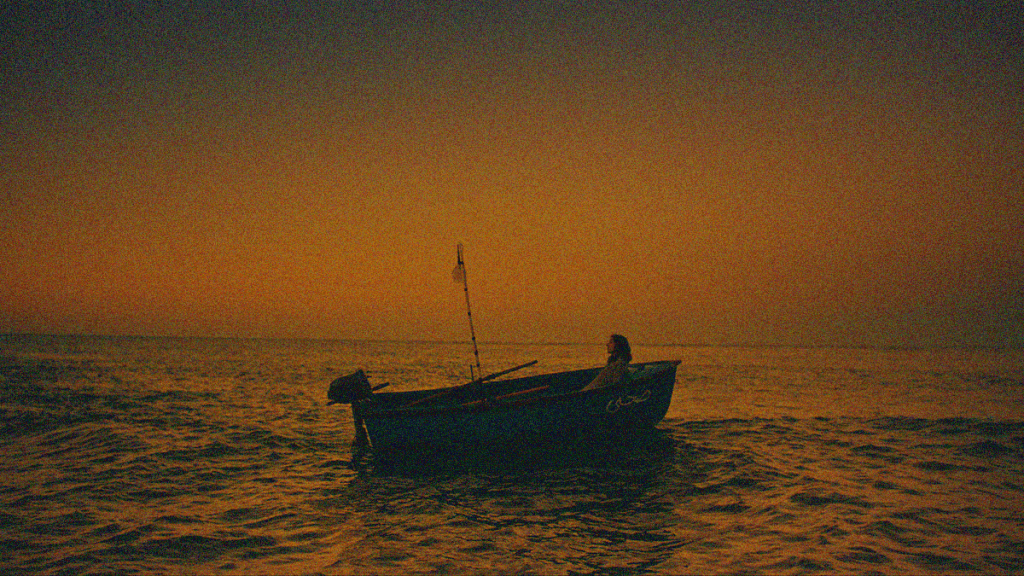
Mariam’s dreams unsurprisingly find her bobbing alone in a boat. Not because everyone abandoned her, but because she abandoned them. Don’t assume that means Imanishi is making an example of the character, though. This truth is more about the complexity of the situation and the impossibly oppressive nature of being a woman within a conservative patriarchal culture and of an ethnic group forced to live between nations. It’s why she gravitates towards her brother’s secret Moroccan girlfriend (Ghizlane Lkoucha’s Ghalia) to keep one foot in both worlds.
Set during Eid to bring the conflict between Mariam’s warring halves to the forefront, Nomad Shadow ultimately becomes a reminder of the cost of our actions. That nothing we do occurs in a vacuum. That forgiveness isn’t easily won when all involved have the visible and invisible scars to remind them of the pain. Mohamed delivers a captivating performance, gliding through these disparate realms to better position herself for an escape only to end up causing more trouble to those around her. Mariam doesn’t belong here anymore.

Nadhira Mohamed in NOMAD SHADOW; courtesy of TIFF.



 jaredmobarak.com
Leave a comment