

Rating: NR | Runtime: 107 minutes
Director(s): Ted Evans
Writer(s): Ted Evans
I feel like I’m the one who needs waking up.
Chilmark is introduced as a haven upon Eva’s (Anne Zander) arrival from Berlin. The headmistress—for lack of a better term—Mia (Sophie Stone) welcomes her with open arms and a promise to provide the comfort and inclusivity she knows from experience has been difficult to come by. Everyone living within this sprawling mansion’s walls has endured the trauma of growing up amongst the hearing. They’ve each followed Mia through a process called “The Way” to cope with their past and dismantle the labels thrust upon them. They reject the use of “Deaf” as a descriptor because they refuse to willingly other themselves. Here they can simply exist. Here they are “normal.”
As Eva settles in amongst this isolated community (specifically populated and sustained solely by the non-hearing so CODAs and newly conceived children with the possibility of hearing don’t siphon funds away from their central mission), Ted Evans’ Retreat (born from a 2013 short of the same name) reveals one person at Chilmark is different. You see, Matt (James Joseph Boyle) arrived as an orphan at four years old. So, he knows nothing of the outside world or the isolation and anguish that comes with bigotry, abandonment, and abuse. For Mia and the others, he epitomizes this place’s potential as well as its success. He proves they aren’t beholden to society’s ills.
What not even Matt fully understands, however, is that you can’t gatekeep trauma. Sure, he doesn’t know what it’s like to be hated by family or let down by the government. But he also doesn’t know what it means to experience anything beyond Chilmark’s borders. He doesn’t even know what it means to experience “The Way” since it was built to deprogram and assimilate—two things he doesn’t need. Isn’t that also a form of “othering,” though? How should the one person everyone aspires to be feel when he isn’t allowed to participate in their emotional and psychological healing? To live as a symbol can be just as dehumanizing as what they’ve withstood.
Well, he’s been awoken to finally ask these questions now that Eva chose him to be a member of her “The Way” support team. Mia’s right-hand Tracy (Anna Seymour) warns it’s a risk, but she believes it’ll work if he understands the process is about Eva and Eva alone. What Matt doesn’t realize is that this means he will be relegated to a position once removed from the others. He will be reduced to that symbol of purity and dismissed as not having the same scars as everyone else. So, he must fight to be heard and explain how their utopia hasn’t left him unscathed. He’s merely been scarred in other ways. But no one is listening.
A sudden shift occurs. What began as Eva’s story gradually slides towards Matt’s perspective. As her stranger weaves herself into this place’s fabric, the treatment he endures by their refusal to see him as an equal unwittingly plucks him from it. His character shaking free allows us to realize things aren’t quite as they seemed. Certain aspects of their lives become colored with their own sense of oppressive indoctrination. This haven promising protection devolves into a bunker driven by fear. Why is Mia scared? Why is knowledge of the world beyond their walls forbidden? When does a sanctuary start becoming a cult?
Evans masterfully wields Eva and Matt as a spiritually tethered duo forever separated by the contrast of their worlds (Zander and Boyle are fantastic). As she crosses into his, he’s forcibly displaced into hers. For Eva to understand the promise of Matt’s life, he’s exposed to the allure of what she’s giving up. That doesn’t mean he begrudges her decision or implores her to stop. No, he wants her to experience the all-encompassing love and familial bond he’s always known. What he notices, however, is that she’s granted permission to choose. Everyone has. Matt isn’t therefore forsaking their kindness. He only asks to be granted the dignity to choose as well. He wants his Rumspringa.
There’s a reason he can’t, though, and it’s a wholly authentic yet chilling one that’s coming to light at the worst time considering Chilmark risks more than just having their idyllic bubble burst. As such, connections to M. Night Shyamalan’s The Village are unavoidable insofar as what it means to strip away a person’s autonomy under the auspices of protection. By flipping that revelation’s impetus, Evans increases the tension and dread. Because this escape isn’t born from the ticking clock of saving a life within. No, Matt’s escape is a requirement for saving himself by finally contextualizing the identity foist upon him.
What makes Retreat so great is its disinterest in reducing the complexities of life into a binary equation. While something good can be built on the back of a heinous act, it cannot hope to ignore the damage wrought forever. Because that truth will fester until eventually revealing itself—a revelation that grows more unforgivable the longer it’s suppressed. The best-case scenario is manipulating it again to buy more time. The worst is watching it become the destruction of everything and everyone. That’s the trouble with totalitarian rule for the greater good. Its violence always turns inwards in self-defense.
While ensuring the film is completely told via British Sign Language by non-hearing actors is a crucial victory for representation, Evans (who is also Deaf) bakes this inclusionary tactic and its inherent challenges into the script too—especially as it concerns hearing audiences once the score becomes its own character augmenting the silent dialogue and expressive body language. The added suspense from this sound design and action is noticeable throughout, but you can’t ignore that it’s building towards something bigger. Unsurprisingly, the explosive finale born from the heavy cost of its central role reversal isn’t easily shaken as a result.

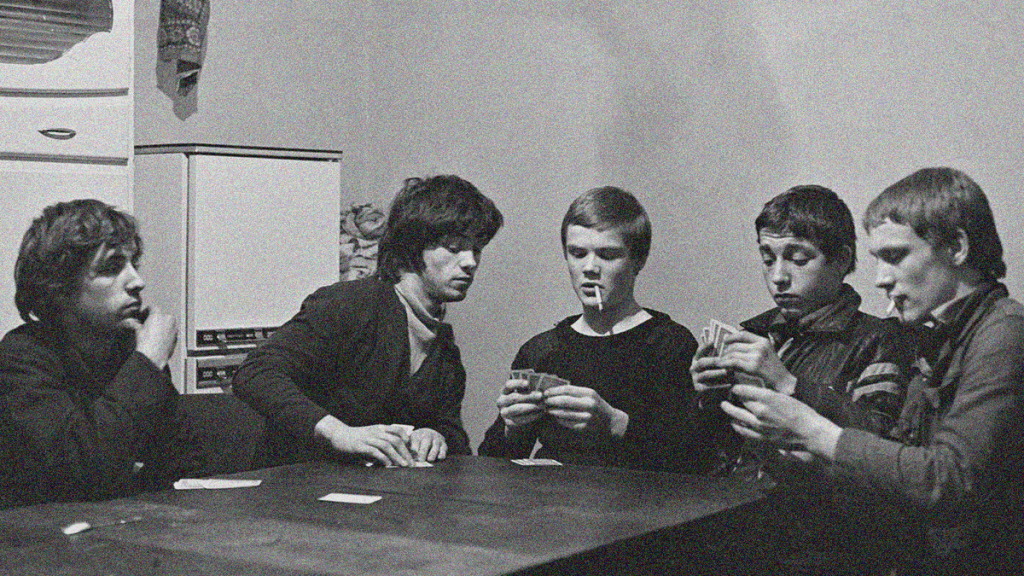
James Joseph Boyle, Sophie Stone, Naomi Postawa-Husar, and Anna Seymour in RETREAT; courtesy of TIFF.



 jaredmobarak.com
Leave a comment