

Rating: NR | Runtime: 99 minutes
Release Date: March 28th, 2025 (USA)
Studio: Drafthouse Films
Director(s): Alex Braverman
I’ve never told a joke in my life, really.
I was only two years old when Andy Kaufman passed, so my exposure to his comedy would always carry hindsight. Re-runs of “Taxi” on Nick At Nite gave me my first taste. Here was a funny actor doing a funny “foreign man” schtick. I didn’t know the context or the avant garde nature of his stage act. I assumed Andy was playing a character he would then shed off-camera. So, I was surprised when searching for more work showed “foreign man” was one of many long-running bits built to intentionally blur the line between reality and performance. It’s one thing if you watched Kaufman pivot his counter-culture popularity to the mainstream. It’s another to learn Latka Gravas wasn’t just “some role.”
The rabbit hole I would eventually fall into—”Saturday Night Live” gags, Tony Clifton, intergender wrestling, etc.—is pretty much the same one that director Alex Braverman leads us through with Thank You Very Much. It’s a lot more comprehensive than my own journey considering the internet of the 1990s wasn’t quite what it is now. It’s also a lot more personal thanks to the decision to only interview people who knew Andy personally and could speak from first-hand experience (Bob Zmuda, George Shapiro, Lynne Margulies, Marilu Henner, Danny DeVito, and the Iranian college roommate who offered up his speech patterns as a gift to exploit in his act). Unless Kaufman does suddenly appear to say he faked his death, this is about as complete a biography as we’ll get.
It’s funny that Zmuda prefaces his answer to the question of whether Andy did fake his death by cancer at age thirty-five with the words “I have to be careful what I say” because it shows how committed they all are to a good bit. Why ruin the possibility of the unknown by just flat out saying you watched him take his last breath? It won’t make him more dead. So, evade it a bit. Reminisce about the time you two joked about actually faking his death over and over again to ensure no one would ever know if his real death was real. Kaufman’s entire career was built off awkward silences and off-putting confrontation to the point where we as an audience needed to believe it was a joke just to not despise him. Why not sustain that same human desire for hope an awe regardless of the truth?
Not that everyone possessed hope or awe once Andy pushed the envelope further and further towards exposing the fact that life itself was an act. People did hate him too. You can’t be as good as he was without conjuring just as much vitriol as love when walking that “man behind the curtain” tightrope of persona. It’s no coincidence that Braverman pretty much asks every woman in this film what they thought of Kaufman’s heel turn wrestling women. They all explain how they understood the joke and might have even laughed, but not one of them shied away from admitting they didn’t like it. Because, as one says, this calculated act was just as misogynist as it was feminist. It was just as cruel and exploitative and violent as it was funny. That contrast was key.
Braverman does well to provide history for this truth whether the unfortunate trauma his parents bestowed upon him as a child when his grandpa died, the adoration for professional wrestling and the knowledge that the heel always got the biggest reaction his grandmother instilled, or the intrinsic place contrast plays in Andy’s devoted practice of transcendental meditation. He takes us through the angles to show the impetus of the comedian’s tonal shifts as well as the yearning to blow everything up. As one interviewee states, Kaufman was a mirror upon humanity and not everyone looking back appreciated what they saw. He forced audiences to judge him. He allowed them the space to hate him. And they were helpless from sitting with the person they became as a result.
While the biographical details, psychological through lines, and anecdotes are a huge part of the film’s success, however, the big draw is the footage. Braverman got his hands on everything. Home movies. Behind-the-scenes shots. Reactionary audio recordings. Stand-up performances (including from Carnegie Hall). Wrestling matches. And a plethora of media clips you’ve never seen (and many you have). It’s a time capsule of a man who refused to be anything but himself. A man who doubled down whenever the choice to unflinchingly commit seemed to only make things worse. Andy Kaufman was an icon to laugh at, share in his embarrassment, and abhor—often all at once. He was a singular talent who broke the rules and paved the way for much of what entertainment has become. Thank You Very Much provides the biographical foundation so you can draw the lines.
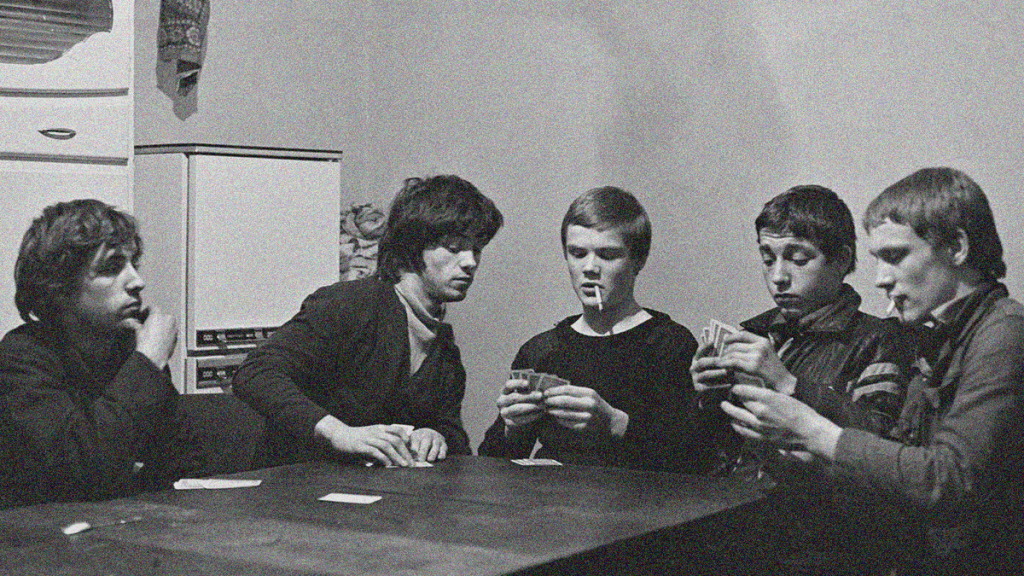
A photograph of Andy Kaufman and Bob Zmuda from THANK YOU VERY MUCH; courtesy of Drafthouse Films.

 jaredmobarak.com
Leave a comment