
Rating: NR | Runtime: 91 minutes
Release Date: February 14th, 2025 (USA)
Studio: Doppelganger Releasing
Director(s): Alex Thompson
Writer(s): Alex Thompson & Christopher Thompson
Something bad is happening right now.
It’s difficult to believe your own eyes about what occurs during the prologue of Alex Thompson and co-writer Christopher Thompson’s Rounding. Not just because the lead character is an unreliable narrator, but because the film intentionally obfuscates the circumstances surrounding this initial event. We’re pretty sure Dr. James Hayman (Namir Smallwood) is euthanizing a patient considering the clandestine way he goes about procuring the medicine he injects into her IV. That plus the pointed “Are you sure this is what you want.” all but guarantee it. Where things go awry is her plea for him to save her while flatlining. Did she change her mind? Did he do it without her permission? Was it a mistake?
The latter proves the safest answer since James faints in the hallway and ultimately requests a transfer to a rural hospital to finish his residency with a “fresh start.” His new supervisor, Dr. Harrison (Michael Potts), seems ecstatic that he chose their facility and confirms the previous department filled him in on everything that happened. Suddenly those thoughts of suicide gone wrong dissolve because there’s no way James would still have a license let alone freedom if that were the case. We must therefore assume it was in his head. Perhaps that whole prologue was a nightmarish recollection of his actions filtered through a malicious lens to better hate himself about the result. James’ quick return to insomnia, paranoia, and obsession only helps to confirm it.
This is why I call him an unreliable narrative force in the film. James is our focal point and we see everything through his eyes—including the time skips and confusion that keep him off-balance and five steps behind the rest of the hospital. He’s not sleeping, barely eating, and eventually battling a severe ankle injury he refuses to treat all while submerging himself in the implausible case of a nineteen-year-old asthma patient whose chart shows no sign of asthma (Sidney Flanigan’s Helen Adso). Does James become infatuated with the mystery of her continued presence in the emergency room because he needs to ensure he doesn’t lose someone too soon again? Is it to distract himself from the obvious trauma he’s suffered? Or could it be that he’s about to get her killed by looking for something that isn’t there like before?
Thompson has crafted a visually intriguing film depicting this man’s descent into the dark abyss of his own guilt and shame. The lost hours and days are expertly rendered via seamless cuts to him still being where we left him while his surroundings have been repopulated by different people. And that idea of James fending off his perceived sins becomes manifested as twisted religious iconography. First there’s a broken cross his mother reminds him to fix. Then weird illustrations of death and monsters hanging on the hospital walls. Finally, there’s a hydra with flaming horns seemingly hunting him through the halls. James screams and falls or screams and braces for impact, but everything is normal upon opening his eyes. He’s still breathing and Helen is still sick.
A lot ends up being introduced to simultaneously keep us off the scent of what’s really going on (although the earmarks are ever-present) and augment that truth via comparison points and metaphor. James wonders if Helen’s mother (Rebecca Spence) is the culprit via Munchausen by proxy thanks to some amateur sleuthing and knee-jerk assumptions. He revolts against being mandated to attend a bedside manner training class meant to help him better handle his truth when he’s desperately trying to suppress it. And all the while he’s chasing made-up ghosts to escape the real ones at his heels. The hope is that it will all connect for a rousing third act of new discoveries and/or answers we haven’t already connected the dots on ourselves.
Sadly, that isn’t what happens. It’s not that Rounding loses potency by being exactly what it is on its surface, but that it misses an opportunity to give meaning to its message by providing a payoff rather than an admission. Things ratchet up so high that we prepare for a roar yet receive a whimper considering the result is other characters knowing what we already did where James is concerned. Yes, there’s a payoff to Helen’s story and the complexities behind the disparity that arises between action and desire, but it feels more about closing her chapter than adding to the whole. Smallwood is very good at presenting the terror and fatigue driving James into the ground, but the script’s choice for him to admit the truth as though he’s been actively lying rather than subconsciously hiding undercuts its emotional impact.
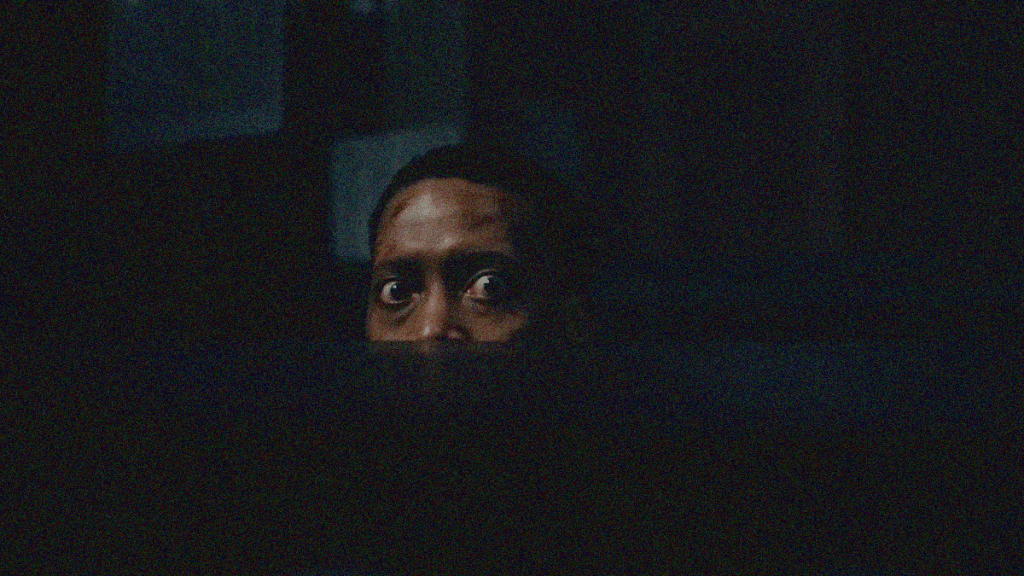
Namir Smallwood in ROUNDING; courtesy of Doppelgänger Releasing.




 jaredmobarak.com
Leave a comment