
Rating: R | Runtime: 97 minutes
Release Date: November 1st, 2024 (USA)
Studio: Lionsgate
Director(s): Vaughn Stein
Writer(s): Sam Scott & Lori Evans Taylor / Sam Scott (story)
It’s not worth the price.
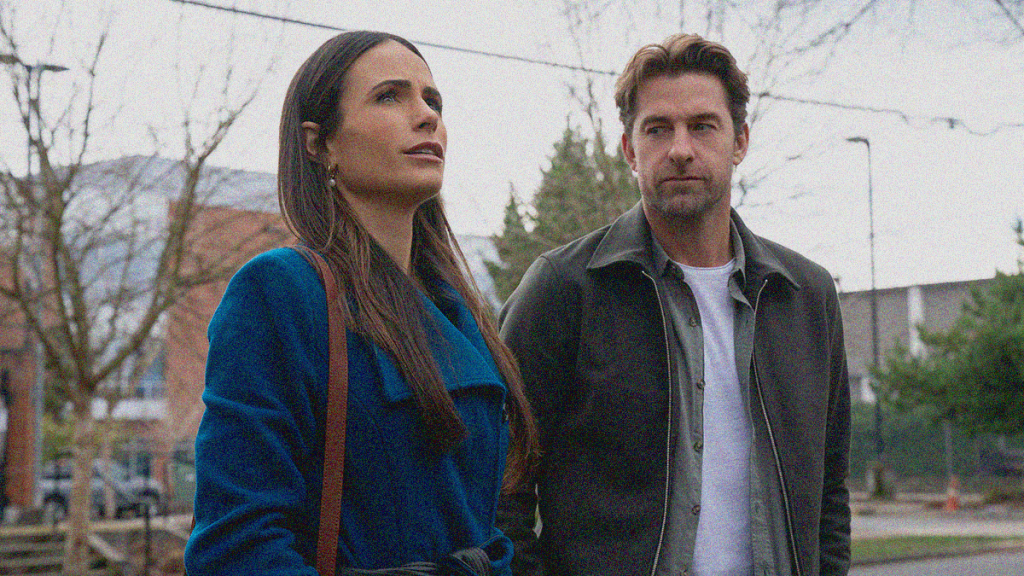
When IVF fails and John (Scott Speedman) and Sera (Jordana Brewster) are left to grieve in the home they made for the child of their dreams, the decision to leave is instant. Yes, their lives and careers are based in the city, but something about the country calls to them for a fresh start … if only they could find the perfect home within their modest price range.
Enter Emmett (Laurence Fishburne). Introduced by their realtor as a “matchmaker” where it comes to pairing families with the real estate, he promises he can steer them in the right direction over dinner at his beautifully restored mansion. What they couldn’t have expected, however, is that the direction he’d point was down. He wants to give them this house—one that’s well outside their budget, but perfectly attuned to their sensibility—for free. If they agree to never open the cellar door.
A simple premise with expansive possibilities as written by Sam Scott and Lori Evans Taylor, director Vaughn Stein presents the setting of Cellar Door as a mirror reflecting the secrets John and Sera hide within themselves. Think of the door as both representative of their own dark truths as well as a distraction away from them. Because if John can obsess about what might be in the basement, he can forget about the fact that everyone else is obsessing about what’s going on inside his soul.
The suspense is thus two-fold. Will John risk their happily ever after to reveal what Emmett has sealed away, against his wife’s wishes? Will Sera discover that this new compulsion of his isn’t the first time he was willing to risk their love for personal satisfaction? Because the specter of his co-worker Alyssa (Addison Timlin) looms large. We’re told she and John dated “a long time ago,” but the tension between them and the feeling of close proximity being akin to a threat makes us think otherwise.
Therein lies the theme that the struggle to keep a closed door closed pales in comparison to both the need to close one and the potential nightmare hidden away. Is it all a test? Maybe. There’s the notion of self-control. The fear of the unknown. And the fact that it’s none of John and Sera’s business. Except that it probably should be. Because it’s not that far a distance between allowing your bliss to be built upon the bodies of innocents killed by a stranger killer and doing so upon those murdered by your own hands.
So, don’t necessarily get caught up in what you think is happening at the expense of what could be happening. It’s easy to paint John as the villain considering we already know his morality is skewed and his desires destructive. To watch him flirt with taking an axe to the door is to feel the guilt in his own heart, but also to realize he’s not so lost that he’s ignorant to his potential complicity in covering up a crime. Sera might not have done anything horrible herself, but being able to turn a blind eye without hesitation carries its own gray areas.
I would have liked the film to delve into that psychological duality more, but I can’t deny the way it exploits it to enhance the theatrics isn’t effective. I’m simply always wary of a script that screeches to a halt to explain its climactic reveal via alternative perspectives of what we thought we already knew. Sometimes it exposes the filmmakers as one-dimensional manipulators turning the table at the eleventh hour to trick audiences and other times the table turn itself is a means towards letting the audience dig deeper within themselves.
Cellar Door definitely straddles that line, but I do believe it ultimately finds its landing spot with the latter.
Jordana Brewster and Scott Speedman in CELLAR DOOR; credit: Scott Green; courtesy of Lionsgate.



 jaredmobarak.com
Leave a comment