
Rating: NR | Runtime: 90 minutes
Release Date: October 18th, 2024 (USA)
Studio: Freestyle Releasing
Director(s): Haroula Rose
Writer(s): Haroula Rose & Coburn Goss
I think we need to stop wasting time.
Change is happening for the Landry family all at once. Mom (Becky Ann Baker’s Sue) is retiring. Dad (John Ashton’s Roy) is struggling with new technology putting his gambling addiction a click away on his phone. Rob (Rob Huebel) has placed himself in hot water personally and professionally without possessing the capacity to ever look inward at the reasons why. His transgender daughter (Ivy O’Brien’s Evie) has just come out and given him permission to tell the rest of the clan. And Graham’s (Josh Radnor) forty-year-long arrested development is either on the cusp of ending or doubling down into permanence.
Director Haroula Rose and co-writer Coburn Goss start All Happy Families off with the knowledge that these changes are usually experienced and repressed alone. It’s not that they can’t talk to each other about what ails them, they’ve simply never done it to realize they could. None of them make it easy, of course. They all seem to have a foot perpetually stuck in their mouths wherein epiphanies only come after they’ve already made matters worse, so they retreat and/or deflect. It takes a week like this one—where they have no choice but to confront decades of unhappiness and frustration—to finally allow themselves vulnerability.
It’s a nice sentiment at the back of familiar familial strife that’s ripe for a comedic treatment. Everyone is so intent on helping to fix the others without them asking that they ignore the fact they should be helping themselves first. Add an overt metaphor through the Landry’s childhood home (needing a lot of fixing—especially rotten pipes that have been neglected too long by hiding out of sight just like the family’s emotions—before Graham can rent out the first floor) and you know the dam is going to break sooner than later. That the climax can unfold without easy answers and concrete resolutions is a plus because it spotlights the complexity of constantly being disappointed in those we love.
That doesn’t mean there isn’t a lot going on, though. Or that it’s not very much a film about “white people problems” with two Black characters standing patiently on the edges to help guide Graham firmly away from his father and brother’s toxicity (Chandra Russell’s love interest Dana and Antoine McKay’s scene-stealing plumber Phil Love). Picking All Happy Families apart isn’t going to be difficult for those who wish to do so, but I also don’t think audiences should dismiss the underlying message of finding the time and space to reinvent yourself in your own image instead of trapping yourself in that of another. Despite the clichéd manner of its delivery, there is resonant truth to that.
Baker is the unquestionable highlight. Radnor does well to give his introvert the sympathy necessary to care about his upward trajectory despite the failings of the other men in his family, but her Sue is quite literally staging a jail break that’s thirty or more years in the making. Yes, it’s a role mired in stereotypes like the others (exploited at home and at work, creatively stifled, sexually abused, always left to apologize for the men in her life), but there’s an authentic anger in the performance that forces you to perk up whenever Baker comes on-screen. There’s an intent to her actions that can inspire anyone desperate to believe more remains possible. You only need the courage take it.
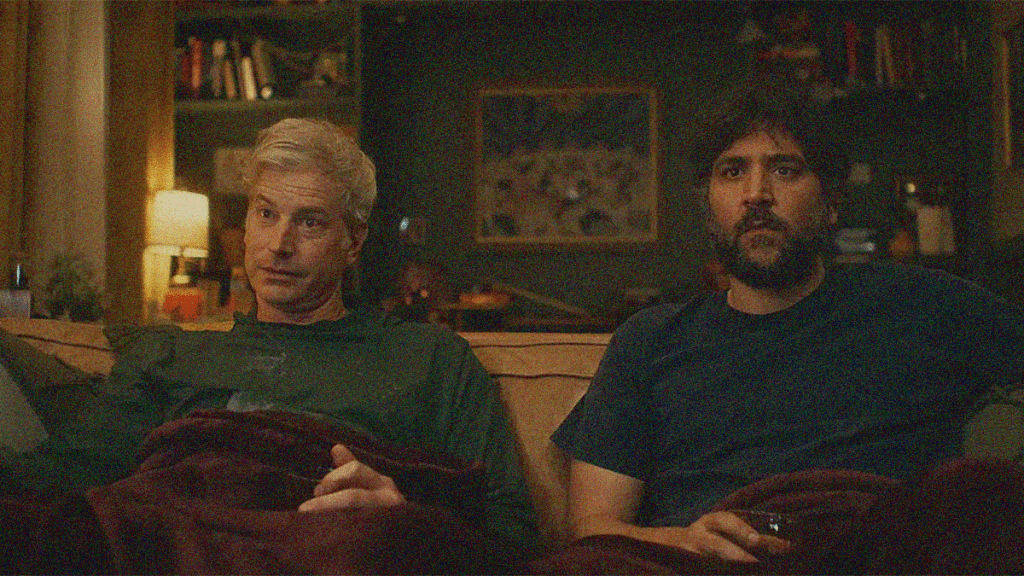
Rob Huebel and Josh Radnor in ALL HAPPY FAMILIES; courtesy of Freestyle Releasing.




 jaredmobarak.com
Leave a comment