
Rating: NR | Runtime: 84 minutes
Release Date: May 16th, 2025 (Turkey)
Director(s): Belkis Bayrak
Writer(s): Belkis Bayrak
I’m happy to have a life of my own.
It’s supposed to be a joyous time as Gülizar (Ecem Uzun) readies to marry Emre (Bekir Behrem) in a week. The plan is to take the bus with her mother from Turkey to Kosovo and meet him on the other side before getting the wedding details in order. Before they can cross the border, however, Gülizar’s mother is told she cannot pass because of an expiring passport. Not wanting to disrupt the very tight window in which they are working, the bride-to-be tells her mom to go home and get her paperwork in order. She will continue forward alone to ensure there are no delays and await the entire family’s arrival for the ceremony.
You cannot fault Gülizar for making this decision. In many respects, her mother still being on the bus probably wouldn’t have prevented what occurs. Because in a panic to retrieve the necklace her sister made her, Gülizar returns to the secluded bathroom she had just exited minutes prior without incident. Tragically, someone else was there this time seeking to take advantage of her haste. Regardless of whether Gülizar successfully fends him off to escape back to the bus, the incident remains a violent assault with lasting emotional and psychological scars. Add ingrained conservative traditions hinging upon “innocence” and admitting what happened feels like more of a liability than a necessary avenue towards healing.
Belkis Bayrak’s feature debut Gülizar is very intentional in its expression of this reality. Not only does Gülizar not admit what happened, but she also tries to pretend like it never did in the hopes nobody will find out and ruin the wedding. Except there are bruises and obvious signs of PTSD. So, while she can hide it from Emre’s family (letting the crippling fear of being locked inside a changing room get their minds reeling about a cause), she cannot hide it from him. And when he tries taking matters into his own hands, his policeman uncle Bilal (Hakan Yufkacigil) reminds him their laws state that Gülizar wasn’t injured enough for serious action. Retribution only harms them.
Here in the US, the man who assaults Gülizar would be put in jail. There in Kosovo, he’d simply be outed in such a way that would mark her as being abused. What is there to therefore do but try and forget? And how can you forget when the crime can’t help but linger between these newlyweds whenever the prospect of romantic touch arises? Bilal does what he believes is his only course of correction: tell the couple everything has been taken care of and they’ll never have to worry about this random guy again. He hopes peace of mind sparks healing, but Gülizar runs into her assailant on the street anyway. And he isn’t just some random man.
The result is a tense affair that Bayrak orchestrates to perfection. Will someone get revenge? Will the assailant end up coming to the wedding? Will the rest of the family find out what happened? Will Gülizar and Emre ever be able to start their life together without it getting in the way? We’re dealing with systemic misogyny not only in the lax laws but also in the desire for blood. Because Emre’s anger is just as much a cause for their thus far unhappy union as Gülizar’s shame. What happens next should be her decision, not his. He should be listening to her needs and she should be provided more choices than just silence.
At only eighty-minutes, there’s little time to waste as far as letting events run their course against this celebratory backdrop. While the rest of the family smiles without a shred of suspicion, Gülizar and Emre rack their brains to figure out what’s next. Impulse gets the better of both—but more so him considering he chooses to bring her along as though to “prove himself” to her. Don’t think this fact is solely a product of machismo, though. Bayrak is careful to include another bit of back story that supplies Emre’s actions purpose beyond selfishness. The film is thus less about giving these characters closure than it is about exposing the audience to a grave cultural injustice.
The only way to move forward is for Gülizar to find a way to shut that door. Confronting Bayram (Ernest Malazogu) isn’t enough. Neither is allowing him to beg for forgiveness. And since there are no legal roads to satisfy this need, she must create one outside the law. Because something must give and suicide as a means of letting their families maintain the “dignity” of never discovering her pain isn’t an option. This struggle provides effective drama that gets to the heart of the character’s emotional core with Uzun beautifully portraying a sense of being lost alongside the fight to reclaim her life. It all culminates in an act that just might bring healing after all.

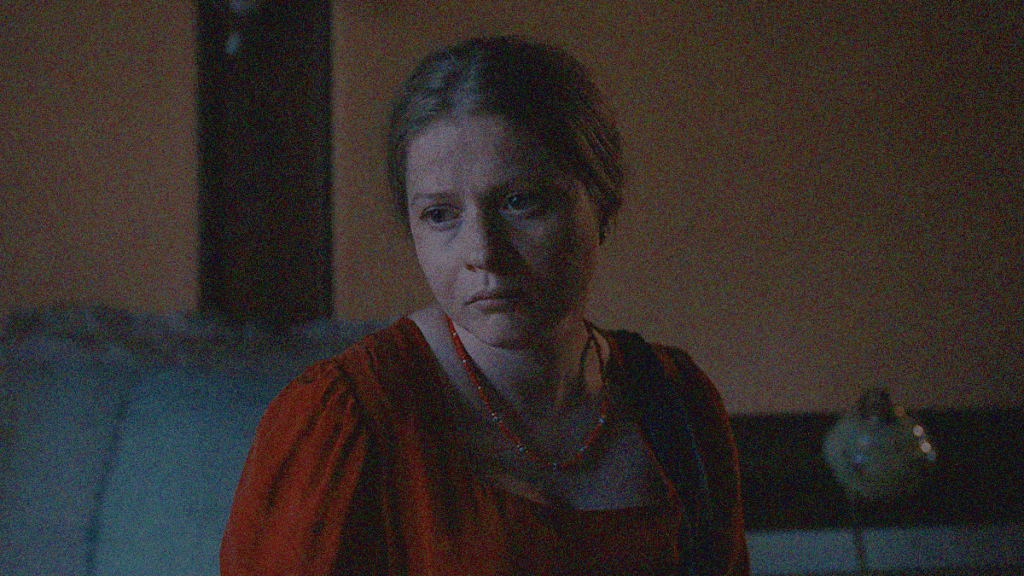
Ecem Uzun in GÜLIZAR; courtesy of TIFF.



 jaredmobarak.com
Leave a comment