
Rating: NR | Runtime: 110 minutes
Release Date: March 14th, 2025 (USA)
Studio: Mongrel Media
Director(s): Ann Marie Fleming
Writer(s): Ann Marie Fleming
How much time is enough?
The premise of Ann Marie Fleming’s Can I Get a Witness? holds a ton of intrigue. Set in the not-so-distant future, humanity has figured out a way to solve Earth’s sustainability issues by rewinding the technological clock and placing a cap on life at fifty years. As such, those who work to keep communities going through equitable labor are the young—including those serving as witnesses to their elders’ “end of life” or EOL. Ellie (Sandra Oh) was one such witness in her youth and now her daughter Kiah (Keira Jang) is following in her footsteps. It’s neither glamorous work nor easy emotionally or physically, but it is necessary.
What I liked about the first half is that Fleming feels no need to explain anything beyond this premise. The dialogue given to Ellie as Kiah readies for her first day allude to the next two days being as much a beginning as it is an end and the events that transpire as Daniel (Joel Oulette) teaches his new partner the ropes provide all the implicit knowledge we need to understand their present is a product of our own. Every human being utilizes the smallest carbon footprint possible via a government quota of “credits” that ensure nobody impacts nature more than anything else. It’s a true egalitarian existence: living creature to living creature.
That level of implicit exposition unfortunately takes a hard turn towards the explicit once Daniel and Kiah end the first day with a group therapy session meant to help these teens cope with the heavy burden placed upon their shoulders. They are ostensibly grief counselors for the dying and undertakers for the dead who tell themselves they aren’t actually doing anything but standing witness despite their presence being what starts the process of benevolent suicide. Whereas you would expect this session with experienced witnesses to get to the heart of the philosophical nature of the job, however, it ends up being a sermon for us instead.
I don’t exactly begrudge the film for deciding to beat us over the head with what anyone with common sense knows just by looking out their window. That’s the message this sci-fi fable seeks to provide—an education about where we’re headed as a planet and the sacrifices that must be made to reverse course. My issue arrives from the narrative choice of making it so Kiah and all the other young teens alive in this new world also need that education. The back half of Can I Get a Witness? is therefore an overt bullet point session explaining what someone who grew up in that world should already know solely for the audience’s benefit.
I’d argue this is the type of art that won’t be viewed by those who would benefit from its lesson, so rendering it a “preaching to the choir” piece that asks us to believe those living through it aren’t said choir makes matters even worse. Because it’s one thing to talk to us like we can’t understand the very obvious truths laid out by Kiah and Daniel’s job. It’s another to force us to suspend disbelief far enough that they are ignorant too. Maybe Fleming is attempting to bake in the lesson that it’s easy for us to turn a blind eye to what’s right in front of our faces, but the way she does so on-screen means Ellie (and other parents like her) learned nothing.
Because this is a woman who knows what life was like when you could own a car and fly across the globe in an airplane. She’s a woman who has witnessed countless people dying at fifty at a time when the new constitution had just been ratified and thus probably found a lot more push back than the “greater good” sentiments of today. And she’s a woman who raised a child under that rule with full knowledge of the path her very birth has set forth. We’re to believe Ellie didn’t prepare Kiah by teaching her what was and why it can never be again until right now? When we know what’s coming? At the literal eleventh hour? Sorry, I checked out.
And it’s not just because of the script. It’s also because I have no clue what the actual lesson being taught is as a result. Sometimes the film makes us consider that their world is a utopia because of everything they can still have. But most times it feels very dystopian in its reveal of what they can’t have. Ever. The end credits may have a blurb about going to the website to learn about ways you can help curb global warming and other issues plaguing our ability to stay alive, but my biggest takeaway from what occurs to these characters is that it’s better to have the freedom of destruction than the promise of peace.
I don’t think that’s what Fleming or anyone else involved were striving for, but that’s where I’m at. Rather than see the tough choices as a means to slow down and build a world where extinction is postponed, I see a nightmare that makes me wonder if we shouldn’t just speed things up. Because the lack of awareness on behalf of Kiah and Daniel makes me believe there’s no middle ground. Survival is about going cold turkey and embracing Marvel’s Thanos snap. So, rather than feel hope, I only have despair. Because I’d like to think the world is worth saving so our children’s children can live. Not to merely go through the motions and die.

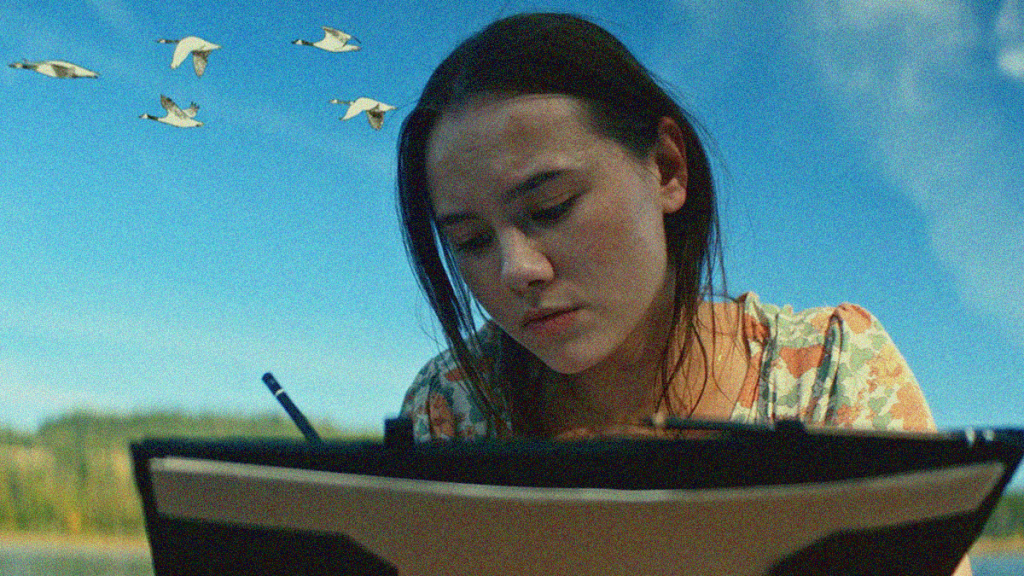
Keira Jang in CAN I GET A WITNESS?; courtesy of TIFF.




 jaredmobarak.com
Leave a comment