
Rating: NR | Runtime: 98 minutes
Release Date: July 26th, 2024 (USA) / September 2nd, 2024 (UK)
Studio: British Film Institute / Brainstorm Media
Director(s): Daniel Kokotajlo
Writer(s): Daniel Kokotajlo / Andrew Michael Hurley (novel)
Let’s expel our demons.
When Richard (Matt Smith) and Jules’ (Morfydd Clark) son dies, it’s as though their world stops. That’s to be expected when losing a child so young. Especially at a time of flux and unanswered questions surrounding a newly formed violent streak implausibly sprung from the past. Because hearing the boy talk of a man named Jack whistling to him isn’t simply a development for the present. Richard knows that name. It’s one his abusive father and their neighbor Gordon (Sean Gilder) used to talk about when he was younger. A product of folklore. Perhaps of the occult. A memory he’d hoped would never return.
Based on the novel by Andrew Michael Hurley, Daniel Kokotajlo’s adaptation of Starve Acre is born from the optimistic hope that Richard could give his son the life his father never gave him. It’s partly why they moved to this country estate two years prior. A fresh start, fresh air, and a reclamation of sanity amidst the deranged turmoil of his past. So, of course Richard blames Gordon for telling the boy about Jack. For clouding his mind with nightmarish possibility. He seeks to prove it was always a bedtime story by digging into the land to find the remains of the giant oak tree those tales say was the entrance to the spirit realm.
The result is intriguing in the way it doesn’t simply hinge upon the deteriorating mental state of grieving parents. Yes, they prove to be vessels for the events to come, but their actions spring forth from the legend rather than give it false life inside their minds. We’re watching an awakening through their newfound capacity to see beyond the walls constructed by science and logic. No matter how much Jules’ sister Harrie (Erin Richards) tries to coax her back to the here and now, both she and Richard have allowed something otherworldly in. Maybe because they lost the strength to stop it. Or maybe because fate always knew they would.
So, when a hare’s corpse that Richard digs up during the archeological exploits he engages in to distract his mind starts to grow muscle and skin, we aren’t afforded the luxury of assuming it’s all his imagination. He’s too much of a skeptic. Jules is too desperate to move on. Only through reality could they accept what’s happening and still to come. Not because they will it, but because their acquiescence provides meaning to their loss. It’s not therefore enough to accept their son’s death. They must know that it was in service of something greater. Not because they believe in it or want it. But because it’s what allows everything to make sense.
Smith and Clark are so good because they understand this necessity. The fact they are skeptics with no stake in the game Richard’s father attempted to restart is what makes their actions that much more disturbing. It’s not a matter of want but need. They participate because they have no choice. Those pained looks of conscience are thus real even if they can never be potent enough to prevent them from progressing forward. Because once you join this game, the only thing you can do is keep playing until the end. Anything less wakes you up to a worse result since our brains can only comprehend tragedy and evil in service of something more. They break upon realizing it was truly all for nothing.
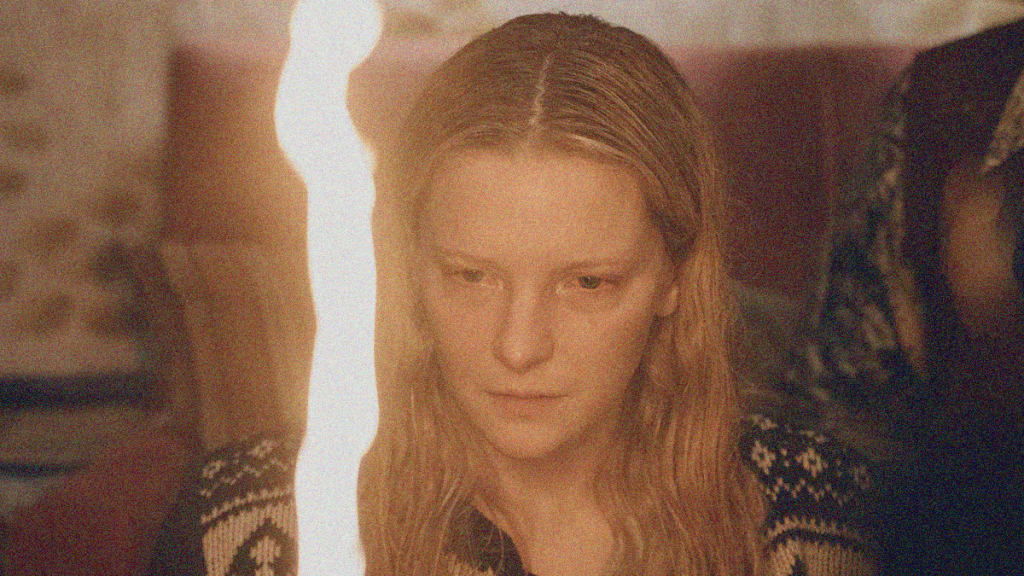
Morfydd Clark in STARVE ACRE; photo by Chris Harris, courtesy of Brainstorm Media.




 jaredmobarak.com
Leave a comment