

Rating: NR | Runtime: 103 minutes
Release Date: May 3rd, 2024 (USA)
Studio: Oscilloscope
Director(s): Ethan Hawke
Writer(s): Shelby Gaines & Ethan Hawke
I try to turn the other cheek, but my tongue is always in it.
Similar to his previous directorial effort Blaze, Ethan Hawke approaches his biopic Wildcat from an angle that allows co-writer Shelby Gaines and him to bring Flannery O’Connor to life through the work as well as the person. He’s using the art as a means to understand the artist, shifting between reality (daughter Maya Hawke’s Flannery returning home to Georgia just prior to discovering she has the same form of lupus that killed her father years ago) and fiction (stories of comeuppance, cynicism, and dark humor). There’s Flannery and her mother (Laura Linney’s Regina) arguing about faith and decorum while her characters act out similar grievances upon the page.
Both Maya and Linney play their respective counterparts in each literary iteration brought to life from O’Connor’s short stories. Sometimes they are poor farmers. Other times staunchly entrenched in the bourgeoisie. It’s the men who change faces, if not also flaws: the tramp (Steve Zahn), the drunk (Rafael Casal), and the snake (Cooper Hoffman, recalling his father’s mannerisms a lot more here than in Licorice Pizza). They embody Flannery’s complex relationship with God, faith, and humanity—her rejection of outlines in lieu of letting the story guide her ensures her imagination and, perhaps, contempt drives them to unforgivable ends via opportunism, self-pity, or violence.
It’s an intriguing dance between “fact” (real life is approximated through research and the writer’s own diaries) and fiction that plays with the idea that each influences the other in myriad ways. Regina encouraging a white child in church suddenly conjures a different woman’s very pointed and racially motivated interaction with a Black boy on a bus. Flannery’s troubles with love courtesy of the never fully available (emotionally or otherwise) Cal (Philip Ettinger) giving birth to the aforementioned trio of “good” men forever marked by sin and duplicity. I loved each time Hawke lets us see Flannery smiling wryly at the witty yet scathing turn of events she’s concocted.
The film does a good job introducing the writing as much as the writer as a result. Whatever Wildcat may lack in true biography (save the two-year period depicted as scaffolding to breathe life into the words), it certainly makes up for with its many avenues towards spiritual and philosophical introspection. The real backbone here is Flannery’s existence at the border between intellectualism and religion. Her desire to find answers not through the Bible, but through the actions of those who wield it as a prop (genuinely or not, intentionally or not). What do her characters say about salvation? What about O’Connor’s unavoidable mortality?
Her experiences shape her imagination and her art inspires her choices in life. She pushes her mother away, challenges her priest (a brief cameo from Liam Neeson), and yearns for a love from someone who will never give it back. And we watch as her characters warp and twist those desires and hopes into the often disappointing yet unsurprising selfishness of a species hellbent on destroying itself through division and an ignorance towards their own complicity in it. Hence the conversation surrounding O’Connor’s own relationship with race considering the contrast between her anti-racist messaging in fiction and racist speech in letters.
Hawke doesn’t really broach this complexity much on-screen, choosing to instead lean into the anti-racist messaging by having Flannery’s literary stand-ins always admonish “Regina’s” bigotry. We don’t hear her say much on the subject at all in the real-life portions of the film besides a defense of her characters using the “n-word” as a means of honest authenticity. I don’t know how Hawke and Gaines could have put more of the idea that Flannery, like many white people, was a “recovering racist” absolving her actions through her words—a notion described at length in the press kit—on-screen, but its absence is noticeable considering everything I see online about the movie seems to mention it now.
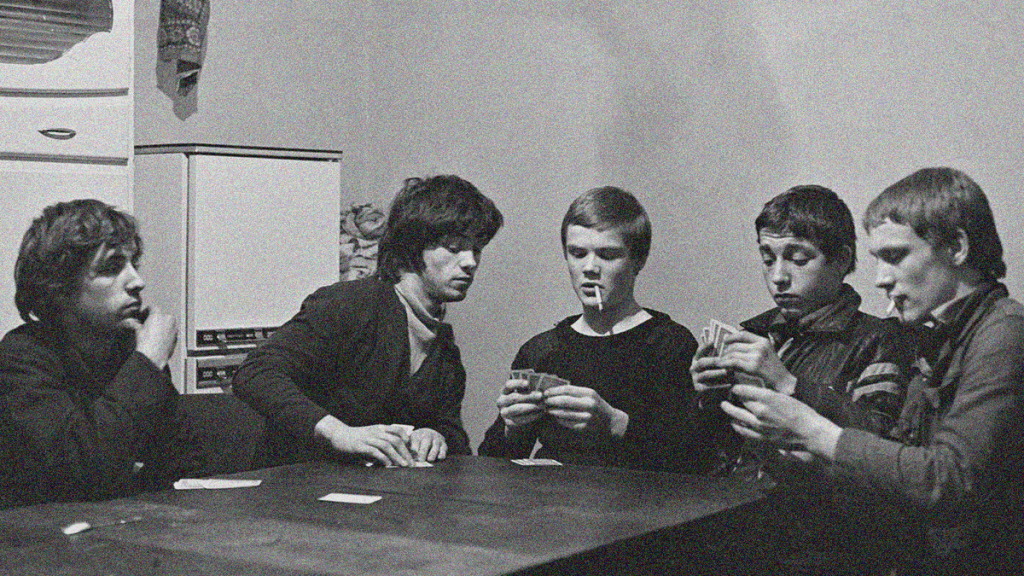
Maya Hawke in WILDCAT; courtesy of Oscilloscope.


 jaredmobarak.com
Leave a comment