
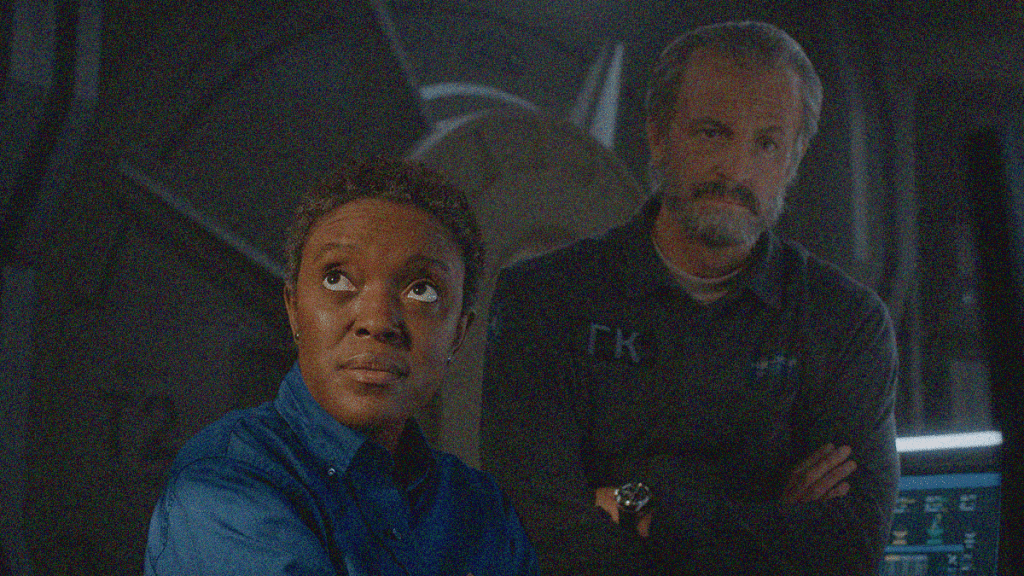
Rating: TV-MA | Episodes: 10 | Runtime: 60 minutes
Release Date: November 10th, 2023 (USA)
Studio: Apple TV+
Creator(s): Ronald D. Moore, Ben Nedivi & Matt Wolpert
We are so back.
That’s not to say Season 3 of “For All Mankind” was bad. It simply didn’t match the excellence of the first two. Whereas they really leaned into the ways in which politics, capitalism, and ego change the course of history, Season 3 decided to put everything on the shoulders of one man: Danny Stevens. And despite Casey W. Johnson playing this horrible character very effectively, Danny’s perpetual sabotage rendered the whole into soap opera melodrama. Yes, we got some fun discoveries and WTF moments, but his constant presence (and that of his brother on Earth) really ground momentum to a halt.
I won’t therefore lie and say I didn’t breathe a sigh of relief to discover Danny has passed away (the circumstances of which will be revealed in a later episode). A weight was definitely lifted—with another melting away courtesy of a quick mention of Jimmy (David Chandler) closing the Stevens family chapter for good. Finally, we can get back to the historical and political implications of the continuing space race and its unlikely M7 collaboration making it so the Soviets, Americans, and North Koreans all have a place at the table. The new mission: capturing an asteroid to mine its resources in space.
It’s a simple and plausible concept that possesses myriad opportunities for things to go wrong—especially when you add the fallibilities of those humans tasked to implement the mission. Ed Baldwin (Joel Kinnaman) is old now, saddled with a tremor that he’s hiding from everyone and a fear of returning home to die without purpose. Danielle Poole (Krys Marshall) is as diplomatic and level-headed as ever and once more thrown to the fire when asked to take command of Happy Valley and all the chaos that will soon transpire. And then there’s newcomer Miles Dale (Toby Kebbell) seeking a payday for his family only to discover conditions and compensation are nowhere near what he was promised.
So, assume something goes wrong because something always does. This show is at its best when it’s fixing problems as opposed to creating them (or, better yet, creating new problems by fixing old ones). If there’s no asteroid to mine, there’s no bonuses to be paid. The disgruntled engineers already treated as second class citizens compared to the astronauts are thus knocked further down the ladder. Enter black market economies. Talk of unions and strikes. Maybe even some espionage to hijack control from the politicians looking for nothing but stock increases and votes. We’re getting back to the push and pull between diplomacy and innovation. Who should really be making these decisions?
And we’re also going back to the question of war. Maybe the Soviets and Americans are buddy/buddy now, but will it last? Will either let North Korea have their presence without taking steps to counteract their own fears about what might be happening in the shadows? How many spies are already amongst this international crew, hiding in plain sight until their governments agree to activate them? The potential for an all-out revolution on Mars is palpable and allegiances will be formed from unlikely places. But, just as turning a blind eye can be a means to an end, so too can opening them wide. The question is whether the personal sacrifices that must be paid for the future are worth it.
Add a new NASA chief (Daniel Stern’s Eli Hobson), a new ROSCOSMOS chief (Svetlana Efremova’s Irina Morozova), and the heavy PTSD and nihilism stemming from what the returning pieces to the board experienced eight years ago (Coral Peña’s Aleida Rosales and Wrenn Schmidt’s Margo Madison). Lines will blur even further as Dev Ayesa (Edi Gathegi) is brought back into the fold with help from Kelly Baldwin (Cynthy Wu). And friendships will sever once truth and safety become compromised by hubris and vanity (Ed and Danielle going toe-to-toe a few times). It’s a powder keg ready to blow on Mars and Earth with money always driving the bus.
Along with the geopolitics, however, is also a fantastic late season plot line that transforms this early-Aughts speculative fiction arc into a heist film. And why not? If money is driving innovation rather than the other way around and those doing the legwork are being paid much less than those setting the rules, why not try and alter the playing field? If that asteroid is the key to everything, whoever controls it controls everything. Is the future therefore about sustaining colonies in space or merely exploiting resources? Is this amazing opportunity for mankind about solidifying nationalistic power or fostering the possibility for true peace and collaboration via a new world?
This is the crossroads between truly evolving as a species or reverting back to the insular, xenophobic mindsets that created the Cold War in the first place. That’s the drama we want out of “For All Mankind”. Real stakes that put the notion of human extinction on the table. Season 3 let that breadth take a backseat to petty jealousies that simply couldn’t sustain the weight of an entire ten-episode arc. Season 4 rights the ship by shifting the dynamic back so the characters must once again react to the big issues thrust upon them instead of the other way around.

Krys Marshall and Joel Kinnaman in FOR ALL MANKIND, now streaming on Apple TV+.




 jaredmobarak.com
Leave a comment