

Rating: NR | Runtime: 110 minutes
Director(s): Jack Begert
Writer(s): Jack Begert & Dani Goffstein
Kudos to Gaby Hoffmann during the Q&A for getting me to consider that there is meaning to the scattershot, dual narrative that is Jack Begert’s Little Death. When asked about what she saw in the script and about her process playing a role that was also being played by someone else, she mentions how the material’s biggest draw to her was its inherent sense of confusion. That the characters were confused as much as the narrative itself. Her putting intent on that feeling did somewhat change my impression of the whole. Not enough to recommend it, but enough to respect its attempt.
Because even if these people are confused in our current chaotic times, they don’t have to regurgitate every obvious political and cultural taboo ad nauseam to prove it. More than the AI artwork (I really hated it—worse once a character talks about it later in the film), it was the simplistic nature of using these roles as bullhorns for the most unoriginal mindsets that frustrated me. The conversations that happen in the first half surrounding our presumed lead Martin (David Schwimmer) could have been cribbed from any random Twitter rant that refuses to acknowledge how screaming louder doesn’t suddenly help manifest a point.
Begert and co-writer Dani Goffstein aren’t therefore saying much. They’re just putting stereotypical words into the mouths of stereotypes without the intrigue or complexity necessary to look past the obnoxiousness of it all. The dialogue is so pointed and didactic that it sheds all meaning the moment it’s spoken. Because as Jena Malone’s Jessica states, “It’s not like you’re curing cancer.” Martin agrees he’s just cashing a paycheck, but that this new script is important (it’s not). Add his pills and her bowling (the addiction she uses to replace food after losing weight) and it’s an uninspired circle en route to Angela Sarafyan—a plot device/distraction whose involvement is mostly for a last-second Easter egg punchline.
Thankfully, the second half is much better. Maybe it’s the lack of AI rendering the first into a weird curio of artificiality keeping us at arm’s length, but I’d like to believe it’s because Karla (Talia Ryder) and AJ (Dominic Fike) are simply written as real people and not caricatures. I think the film should have used parallel trajectories rather than a full-stop shift in focus that makes both halves feel incomplete (only Sante Bentivoglio’s drug dealing pharmacist carries over—which is great since he’s easily the best part of the whole), but at least we move from hollow to poignant and not the other way around.
That’s not to say Karla and AJ’s desperation isn’t without its own issues, they just aren’t so glaring. Because despite falling into their lives midstream, we actually get to know who they are and what their history is in a lot more detail than Martin and Jessica. Probably because they are closer to who Begert is and the people he knows. There’s an authenticity to their tragic story whereas the creative bankruptcy of Hollywood is more a gag based upon hyperbolic exaggeration. And maybe that’s why I hated the AI as much as I did. Begert treats Martin’s “art” as a similar mode of hackery that can be manipulated for profit and thus possesses zero impact.
In some respects: yes, the industry is like that. But that industry is where you’re currently making your own film. You’re also exploiting what you think the audience wants, skewering wokeness in one scene and centering inclusion in the next. Too much of Little Death feels like having your cake and eating it too, leaving all the good aspects to be canceled by the bad ones so the audience is left with nothing but a shallow promise and wasted potential. I only hope that those good parts are what Begert ultimately carries forward. That this is a debut jumble of ideas clearing the path for a more cohesive and memorable follow-up.

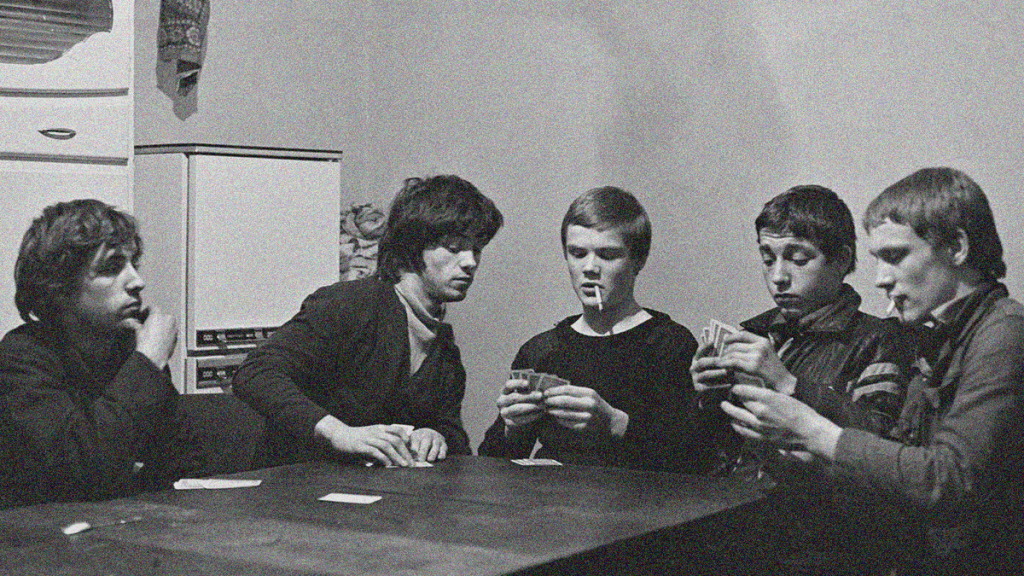
David Schwimmer in LITTLE DEATH; courtesy of Sundance.


 jaredmobarak.com
Leave a comment