

Rating: R | Runtime: 89 minutes
Release Date: August 9th, 2024 (USA)
Studio: Metrograph Pictures
Director(s): India Donaldson
Writer(s): India Donaldson
Then you can’t even remember what the bad thing was.
The thing that strikes me most about India Donaldson’s Good One is just how effective the script is at building towards its final act of rebellion. Because we don’t assume one will come at the start. Sam (Lily Collias) isn’t being dragged onto this camping trip against her will. She genuinely seems excited to go even if that excitement is more about the routine and tradition behind the excursion than the excursion itself. Her presence is therefore more as an observer than doer. A passive vantage point into the more active drama unfolding between her father (James Le Gros’s Chris) and his long-time friend (Danny McCarthy’s Matt).
As such, we’re seeing what she sees. Their avoidance through sarcasm. Their inability to recognize vulnerability or discomfort. Their frustrated silence born from a refusal to admit wrongdoing. And, of course, the ways they use Sam as a weapon against the other—with and without intent. The first two-thirds is thus a potent look at the ways in which toxic masculinity affects the lives of men who may not superficially seem or act like your prototypical toxic male. These are fathers who love their kids, but also flawed men alternating between self-pity and self-righteousness when it comes to acknowledging complicity.
Then comes the moment you feared but began to think wouldn’t. This is where Donaldson excels because she’s shifting the dynamic without needing to shift the perspective. We’re still watching events unfold from Sam’s eyes, but those eyes are no longer able to quietly observe. Sam can no longer worry about hurting these men’s feelings at the expense of her own, knowingly chastising and/or comforting one or the other when they inevitably attack with seemingly innocuous language that cuts deep due to the context of their inherent lines of comparison. Suddenly Sam is brought into their pity party in a way that demands a response.
It’s a subtle yet powerful transition that recolors everything in the lead-up by revealing the circumstances surrounding Sam’s passivity and role as referee. This was supposed to be a foursome with Matt’s son joining, but he doesn’t come as a consequence of his parents’ recent divorce—one whose fault lies at Matt’s feet. Sam went through the same experience herself, so she understands that emotional tumult in the face of uncertainty. She knows what it’s like to blame her parents for uprooting her life as well as the toll it takes on them as they deal with their regrets through a mixture of contrition and indignity.
Collias’s nuanced performance is the linchpin as a result because she’s caught in the middle regardless of her desire to be forced into that position. She understands Matt’s pain and questions Chris’s indifference to it, calling out the latter’s own mistakes as a means to remind him of his hypocrisy. Is she therefore choosing sides? No. She’s simply pointing out that both men share a side, one that demands remorse rather than superiority. And with their struggle to admit that arrives a problematic banter that cannot help spilling over into the sort of rhetoric that cannot and should not be taken lightly.
And therein lies the potency of the title: Good One. Yes, it’s about Sam being a “good” child opposite Matt’s “bad one.” But it’s also gendered. She’s a “good one” for being a lesbian and thus not making Chris have to worry about boys. She’s a “good one” as in not being vindictive like both men see their ex-wives to avoid shouldering any guilt themselves. She’s a “good one” because she doesn’t talk back or cause a scene. But she’s no longer a child. She no longer has to work so hard to keep the peace for her own sake. So, the moment being the “good one” today becomes allowing them to be bad is the moment she finally sheds that role.
They made their beds and it’s no longer (nor should it ever have been) her job to fix the sheets before it’s time to lie in them.

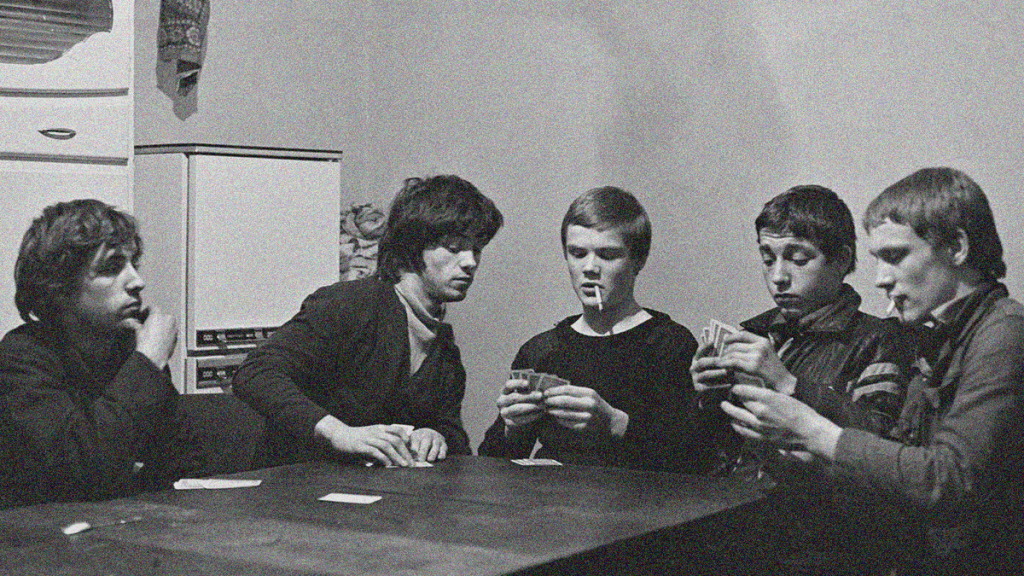
Lily Collias in GOOD ONE; courtesy of Sundance.


 jaredmobarak.com
Leave a comment