
Rating: R | Runtime: 97 minutes
Release Date: December 1st, 2023 (UK) / December 8th, 2023 (USA)
Studio: Universal Pictures International / Neon
Director(s): William Oldroyd
Writer(s): Luke Goebel & Ottessa Moshfegh / Ottessa Moshfegh (novel)
And the other people, they’re just there filling the space.
I should have known William Oldroyd’s Eileen would eventually prove a pulpy thriller due to the old school Hitchcock era title card and score, but it’s easy to find yourself lulled into forgetting those touchstones once Ottessa Moshfegh (adapted from her novel) and husband Luke Goebel’s script gets going. Sure, Eileen’s (Thomasin McKenzie) father (Shea Whigham’s Jim) is a loose cannon with a gun the camera just loves and her place of work (a private prison for violent juveniles) is a powder-keg of misogyny and chaos, but that’s all an afterthought to romance.
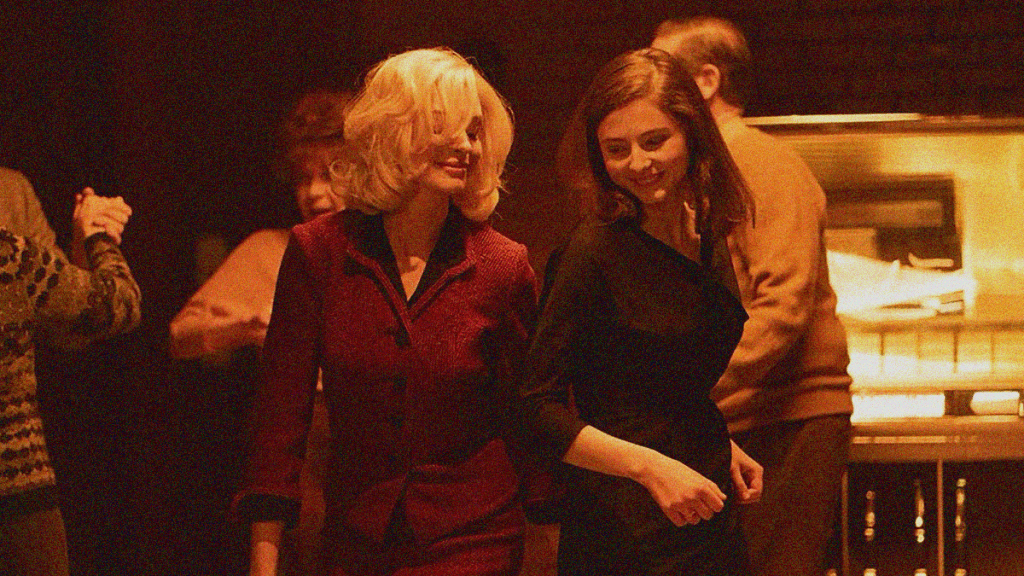
Not that new prison psychiatrist Dr. Rebecca Saint John (Anne Hathaway) reciprocates Eileen’s obvious affection. She flirts and makes the younger woman’s crush blossom simply by listening and treating her like a human being unlike her coworkers and cruel father, but whether love exists is in the eye of the beholder. Oldroyd helps us lean that way by focusing on touch, but the laughter and playful nature always subverts Eileen’s impression to intentionally keep us on edge. That’s where the suspense lies. Half with questioning if Rebecca will facilitate Eileen’s fantasies and half with what Eileen might do if she doesn’t.
Add numerous daydreams and Eileen’s candid frustrations (“All children want to kill their father.”) and the atmosphere is forever pregnant with a destructive anticipation. Who will become the target and who will find themselves as collateral damage remains up in the air, but the more time Eileen spends with Rebecca means the tighter things are wound due to everyone wielding the former’s change in demeanor as a weapon against her. So, it doesn’t come as a surprise that the climax arrives as a result of Rebecca inviting Eileen over for Christmas Eve. Her motives, however, will.
Eileen takes a turn so wild (and yet believable when looking back at all the things happening in the background of Eileen’s rose-tinted vantage point) that I let out a loud enough laugh to catch myself off-guard. It’s not that the film isn’t otherwise funny either. There’s some wonderfully subtle comedy in the ways this chauvinistic era is depicted and how Rebecca confidently fights back (and subsequently empowers Eileen to do the same). But the way Hathaway delivers the line that changes everything is so earnestly serious that you can’t help but think you have become the butt of the joke.
You aren’t, though. Not entirely. You’ve just been expertly distracted by the endearing desire of a young woman desperate for attention to have not fully grasped just how dark the story has always been (it’s easy to laugh at Whigham’s Jim despite the potential his condition mixed with a loaded gun presents). Moshfegh and Oldroyd have merely reached the point where the curtain must be lifted to show the scars this world has etched upon the bodies of those we’d like to believe still maintain a semblance of innocence. Suddenly all those little moments (a hand on a knee) can no longer be laughed away.
It’s a frenetic final act with Marin Ireland stealing the show from the equally brilliant McKenzie and Hathaway. Once the rug is pulled, the fantasy dies and becomes replaced by pragmatism. It’s now about escape—physically and mentally. Maybe Eileen won’t brutalize her father like the infamous Lee Polk (Sam Nivola), but her choice might still prove damning since leaving him with nothing but his own bile is as good as a death sentence. The main difference, though, is that his fate is an afterthought. The real person Eileen must kill is herself. She’s done “filling space.” It’s time to make some moves.
Anne Hathaway and Thomasin McKenzie in EILEEN; courtesy of Neon.



 jaredmobarak.com
Leave a comment