

Rating: NR | Runtime: 135 minutes
Release Date: October 5th, 2022 (Belgium) / September 15th, 2023 (USA)
Studio: Kinepolis Film Distribution / Yellow Veil Pictures
Director(s): Adil El Arbi & Bilall Fallah
Writer(s): Adil El Arbi, Bilall Fallah, Kevin Meul & Jan van Dyck
I’m just filming here.
I’ll admit I’m probably focusing on the wrong thing here, but it’s very weird that Adil El Arbi and Bilall Fallah’s latest film Rebel centers itself as being about the war in Syria. Yes, it plays a role—a big role—in tearing the Wasaki family apart, but the screenplay by Adil & Bilall, Kevin Meul, and Jan van Dyck never actually talks about it. Not what’s going on. Not who’s fighting who. Nothing. So, to have the final on-screen text be about the war and how many people have been harmed seems somewhat disingenuous since the film completely ignores the Syrian people.
Not only is the family at the heart of this film Belgium, but they hail from Morocco instead. The reason Kamal (Aboubakr Bensaihi) finds his way to Syria is because he’s looking for redemption after forfeiting his late father’s garage to the authorities and leaving his mother (Lubna Azabal’s Leila) to fend for herself and his little brother Nassim (Amir El Arbi). He goes there to help Arabs like him, Arabs who are being displaced by a war fought between ISIL and the Russian-backed Bashar al-Assad regime. I think Kamal joins the white helmets to help save these Syrians caught in the middle, but he isn’t there long enough to find out for sure.
That’s when ISIL takes him by force to fight on their side. Call Kamal a coward if you want, but he decides to try and survive as best he can by telling those in charge he’s good with a camera. The hope is that this task will save him from having to pick up a gun—that he can bide his time until a chance for escape arrives. But the longer he’s there and the more enemies and friends he makes, the odds of that result grow slimmer. Because those who like him are worse than those who don’t. The latter might put a bullet in his head. The former will take him under wing and see exactly how deep his dedication to the cause goes.
And while he’s losing his soul in Syria, Nassim is left wondering who his brother is. A rapper? A drug-dealer? A terrorist? It’s tough to truly know when all he has to go on is hearsay, so it’s no surprise when a local named Idriss (Fouad Hajji) tells him Kamal is actually a hero. Throw enough propaganda Nassim’s way that tells him exactly what he wants to hear and the indoctrination happens fast. Suddenly the boy is clamoring to join his brother on the frontlines. To participate in a jihad that will earn him a place in Paradise. All without ever actually speaking to his brother to try and figure out the truth. Because truth can’t compare to fantasy.
What follows is an intense thriller that moves in time between past and present as well as place between Belgium and Syria. A spark of uncertainty arises courtesy of a mass execution video online before Adil & Bilall start peeling back the layers to contextualize just how wrong preconceptions can prove. Because it’s not just Nassim at risk of being brainwashed. We are too. To see what we see is to think like everyone else in black and white. And we should—don’t get me wrong. The act itself is inexcusable no matter the reasons. Wearing a Nazi uniform only because you don’t want to die doesn’t stop you from being a Nazi.
The complexity of Rebel’s story is thus less about absolving Kamal than it is presenting the tragic ease of recruiting disaffected and displaced youths to a cause in direct opposition to who it is they should be. Even adding a subplot with a kidnapped wife (Tara Abboud’s Noor) doesn’t necessarily make us forgive Kamal for not shooting himself in the head. It’s simply another way to highlight how much worse this nightmarish situation and ISIL’s brutality can get. The notion that Adil & Bilall are throwing everything at us to coax an emotional reaction out is why I’m not harping solely on the ways they exploit Syria to tell that tale. This is a sensory experience to hopefully get you wanting to learn the details elsewhere.
It’s a powerful one too. With long-takes and stunningly choreographed music video-esque interludes, the filmmakers are using every cinematic trick in the book to overwhelm us into investing in the Wasakis’ plight. And it works since we do care about what happens. Yes, a lot of their troubles are a product of their own actions in a “you control your own luck” sort of way, but the world they live in does them no favors. I might have liked a bit more of that (like Leila accusing the police of letting ISIL recruit because it means less Arabs for them to worry about), but Adil & Bilall stick to their hands off treatment to stir us into action and leave our self-initiated education for later.
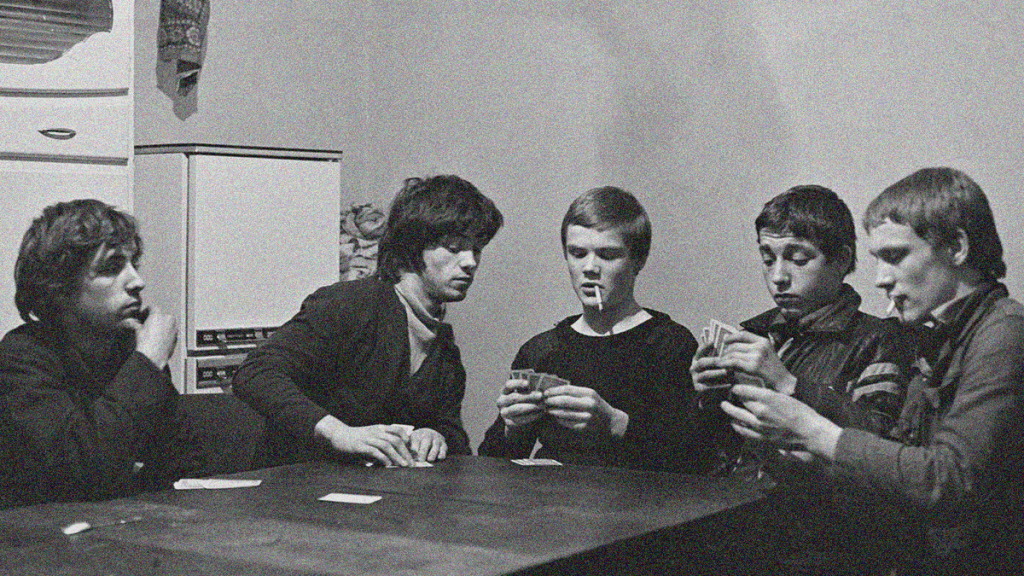
Aboubakr Bensaihi in REBEL; courtesy of Caviar.


 jaredmobarak.com
Leave a comment