

Rating: NR | Runtime: 96 minutes
Release Date: May 31st, 2024 (USA)
Studio: Oscilloscope Laboratories
Director(s): Christopher Wilcha
Writer(s): Joe Beshenkovsky, Adam Samuel Goldman & Christopher Wilcha
That’s not Dan, but it is Dan, which is even more confusing because his name is Dan.
It’s interesting that the opening lines to the synopsis for Christopher Wilcha’s latest documentary Flipside mentions a quest to save a record store. Not because it’s not about that, but because that being the impetus for what we receive is probably its smallest part. We don’t even hear about the place until almost fifteen minutes in. I honestly started to wonder if I was watching the wrong movie.
And when we do eventually meet Dan and see his cramped flea market of used vinyl, it isn’t long before he disappears again. Suddenly Herman Leonard is on-screen. Then Ira Glass. Judd Apatow. David Milch. Starlee Kine. The assumption is that the thing connecting all these people will somehow be revealed as Flipside Records no matter how unlikely. That’s just how these things work. Unless, of course, the subject isn’t the subject at all.
So, rather than think about Wilcha’s feature as a quest to fulfill his initial goal or even a love letter to it, go in knowing it’s actually an essay film about himself. And art. Creativity. Nostalgia. Eventually he recognizes that the records aren’t even the product Dan is selling. If they were, he’d have done something when his small town of rapidly shuttering Mom & Pops implausibly opened a competitor. Dan is selling an experience instead. He jokes that he’s more archivist than salesman, but what he’s preserved is this place and its long extinct feeling of belonging.
All those other people talking with zero rhyme or reason to the original conceit are thus repositioned as floating heads waxing on about what it is to create and the tireless work and dedication it takes to leave something of worth behind. It doesn’t matter if it’s only worth something to one person either. The fact that it’s remembered at all is a testament to its success regardless of any monetary or cultural value. Flipside means something to Chris and that’s enough.
What Wilcha has done is therefore closer to Kirsten Johnson’s Cameraperson than any kind of showcase or memorial. His discovery that Dan’s store is perfect despite its vast imperfections (the likes of which make people admit it’s simply too dirty to want to darken its door) expands out to encompass his own clutter of ephemera in his parents’ closets and unfinished documentaries trapped on hard drives upon his shelves. Rather than choose one record from each of his would-be subjects’ crates, however, Wilcha combines them all into one and lets the stories they tell become about him and, by extension, us.
It can get very circuitous (the number of times he repeats his lamentation about not finishing things and where he puts them is tiring) and its scattershot nature (before an inevitable climactic coalescence) can feel confounding, but the footage itself is undeniable. The Leonard stuff is fantastic (especially considering the unknown reason behind it) and seeing Milch, now in an assisted living facility due to his Alzheimer’s, is both sobering and resonant. In some respects, the pieces prove worth the journey without the need of an overarching theme.
But the whole is made better by one—even if it comes late and after what appears to be an abridged trek through self-indulgence (and not just because the people in Wilcha’s life are so famous). Maybe I’d have liked it better if it announced that goal sooner so I wasn’t treading water as the rapid-fire segues kept interrupting its many incomplete stories. Maybe not. I did like it enough, though, and probably would like it more on a second watch. Not because of its many artistic (wittingly or not) lives, but because of how they ultimately remind me of my own.

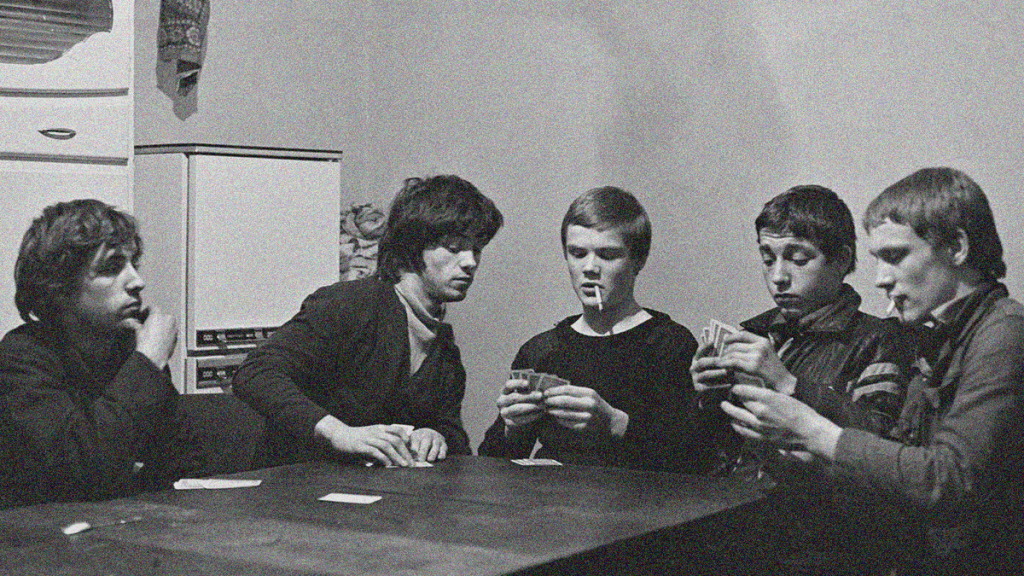
Christopher Wilcha in FLIPSIDE; courtesy of TIFF.


 jaredmobarak.com
Leave a comment