
Rating: R | Runtime: 96 minutes
Release Date: February 2nd, 2023 (Canada) / July 14th, 2023 (USA)
Studio: Elevation Pictures / Lionsgate
Director(s): Hubert Davis
Writer(s): Darril Fosty & George Fosty (book Black Ice: The Lost History of the Colored Hockey League of the Maritimes, 1895-1925)
This is exactly where you’re supposed to be.
So many of the experiences shared during the course of Hubert Davis’ Black Ice can be attributed to Debra Thompson’s perfectly stated definition of “systemic racism” and its hold on the sport of hockey. She explains the error of thinking that befalls too many people when they hear the phrase. That it doesn’t mean hockey is full of racists. It means that even if hockey had no racists at all, its culture and traditions would still adversely affect the people of color within the sport when compared to their white establishment counterparts.
Just listen to Kirk Brooks talk about his experience building youth teams and how most of the young Black children who get involved admit no one had ever asked them if they wanted to play hockey before. Why? Because people operate under the racist assumptions that hockey is a “white sport” and Black kids aren’t interested. And by never trying to bridge the divide, the assumption ultimately widens the gap.
Beyond those social implications and the numerous first-person accounts describing so-called “isolated incidents” that the powers that be refuse to label a pattern despite them happening for over a century (shared by the likes of Wayne Simmonds, Blake Bolden, Matt Dumba, Sarorya Tinker, and Akim Aliu, the first player to truly call out the hate and prejudice occurring behind closed doors in the insular world of hockey), the film’s crown jewel is its breadth of history.
Not just the obligatory inclusion of Willie O’Ree or an education on Herb Carnegie’s impact before him, but also the Colored Hockey League of Nova Scotia—an entity that some descendants of those who played in it didn’t even know existed. This was a league that had connections to land (Africville), heritage, and the sport itself, lasting from 1895 to 1930. And Cecil Harris arrives on-screen to share documented proof that it was Black athletes in the CHL who originated the slap shot and goalies playing the puck decades before such things were seen in the NHL.
That truth can really empower Black athletes in the sport to tell future generations that it hasn’t just been them paving the way. The Black community in Canada has been a part of this sport since the beginning, so anyone telling them they don’t belong has no legs to stand on. To move through the film is to therefore witness that recognition even as the tales of racism grow more and more disturbing (the youngest player interviewed is currently still in juniors talking about an incident—yet to be rectified months later—involving another teenage boy who refused to shake his hand their entire shared careers).
Davis does well to never let the good or bad overpower the complexity of the full picture so his audience can realize things are simultaneously moving in the right direction while still being a long way away from “fixed.” It takes a lot of courage for his subjects to tell their stories too, but giving voice to their struggles along with the hope of their subsequent successes cannot be undervalued in the broader sense of finally instilling real change.
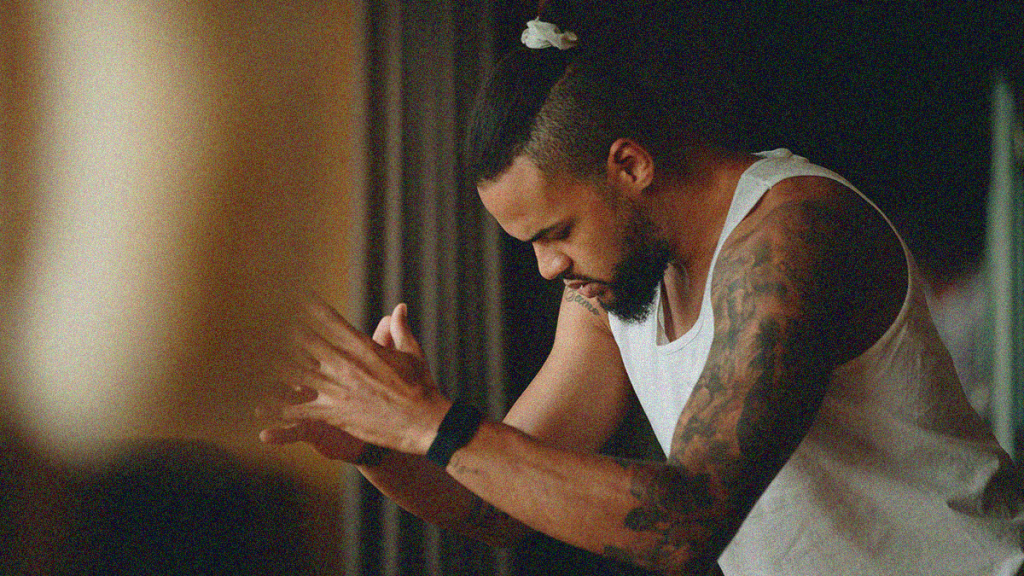
Akim Aliu in BLACK ICE; courtesy of Roadside Attractions.


 jaredmobarak.com
Leave a comment