

Rating: TV-MA | Episodes: 10 | Runtime: 60 minutes
Release Date: January 26th, 2023 (USA)
Studio: Peacock
Creator(s): Rian Johnson
You gotta revisit the past to get past it.
It’s a great gimmick: Charlie Cale (Natasha Lyonne) knows when someone’s telling a lie. She doesn’t guess. It’s not a hunch. She knows. It’s an infallible involuntary action to the point where it’s ruined her ability to maintain long-lasting relationships with friends and family due to humans not being able to stop lying. Is it a white lie, though? An intentional lie? One lie mixed between multiple truths?
Deciphering the difference is where things get interesting thanks to confusion (although the writers generally clarify things quickly) and humor. It also adds a bit of variety insofar as where each episode’s story can go while allowing for nuance in situations often devoid of all subtlety. And ignoring the lies proves impossible. Charlie is physically unable to walk away. She’s a puzzle solver—even if the puzzle risks her own wellbeing. To hear circumstantial evidence of a crime is to pursue it with patently unorthodox methods to uncover something concrete.
It’s that curiosity and morality that puts Charlie on the road in the first place so creator Rian Johnson and his collection of writers and directors can build “Poker Face” into a collection of ten unique murder mysteries. The season opener and finale are obviously connected to bookend the whole, but even they become their own journeys ignited by a character’s death.
“Dead Man’s Hand” is unsurprisingly the closest to her heart, leading Charlie to perhaps bite off more than she can chew where consequences are concerned. So, she flees in her blue Barracuda to travel city-to-city in search of under-the-table cash jobs and respite, hoping her pursuer (an old acquaintance out for revenge) will remain one step behind. Unfortunately, her “gift” always seems to throw her into the limelight in such a way that none of these stops last long enough to actually see the conviction.
This might be my favorite part of the show’s writing. None of the scripts belittle our intelligence. None are determined to spell things out. All we need is an acknowledgment of guilt or the tease of justice to close the chapter and move on. There’s no need for Charlie to gloat or loved ones of the victim to praise her. She doesn’t have time for either anyway since she knows a clock has started the second she makes her identity visible.
The moment she pursues a lie and works to uncover its origins is the moment her stay concludes. Because the people chasing her (personified by Benjamin Bratt’s Cliff) have the kind of resources that mean any technological or media-driven ping will give her position away. So, she can’t call the police for help or even use a credit card. Everything she has is courtesy of a bottomless wealth of charisma that most folks can’t resist.
Every episode follows a similar formula wherein the first portion (sometimes five minutes long, sometimes half the runtime) shows the murder from the perspective of the murdered and/or murderer. We therefore always know who is to blame (eventually, since some curveballs are thrown to keep our expectations in check) before Charlie even appears on-screen.
The next portion is therefore often a replay of those same events from her perspective. The camera pulls out or changes vantage to show Charlie was there in the background or soon to arrive. And finally comes the resolution wherein she bounces from lie to lie to discover what really happened. Sometimes it’s easy. Sometimes it’s hard. It all depends on how savvy the culprits are in choosing their words in a manner that allows them to circumvent her lie detector.
With a fun premise, fantastic lead (Lyonne is a delight), and impressive guest stars (from Nick Nolte to Judith Light, Stephanie Hsu to Tim Meadows, and Johnson regulars Noah Segan and Joseph Gordon-Levitt), there’s little to dislike. The effectiveness of the episodes may vary (“Time of the Monkey” is my favorite, “The Orpheus Syndrome” and “Exit Stage Death” have some of the most memorable performances, and “Escape from Shit Mountain” is well-written if disappointing visually with what seems to be a perpetual green screen), but the trajectory is purposeful and consistent.
The crimes get more complex with Charlie’s involvement growing more crucial until almost becoming a victim herself. And while Bratt only appears sporadically to remind us of the bigger picture (Charlie only really remembers it out loud once without him triggering it), we do ultimately want to see how things end so as not to simply kick her fate down the road.
So, know that there is closure. There’s a “cliffhanger” too as far as setting up a second season, but not one steeped in desperation. If NBC were to decide not to move forward, nothing is lost since the initial arc is finished. That’s not to say we don’t want to know what happens afterwards, just that Johnson and company do well to pique interest without shoving their breadcrumbs down our throat.
To finally learn something about Charlie’s past in “The Hook” is to add complexity to her emotional state in the moment more than tease some grand mystery. Everything toes that line to serve its purpose and open a door without getting us angry that we didn’t walk over the threshold. Does it leave things two-dimensional in the moment? Maybe. Plot-wise, at least. Not character-wise. For only spending forty-minutes with most, each supporting player feels authentic.
And as an added bonus for pop culture enthusiasts, there’s a wealth of detail in each joke from a The Conversation reference that goes over someone’s head in an early episode and gets recognized in a later one to a running “Burn Notice” gag. Just wait until Blues Traveler’s “Hook” gets an entire verse sung in spoken word by an unlikely singer too. It’s that quirk that makes “Poker Face” entertaining enough to feel like it’s more than “just” a solid mystery comedy. I may not have *loved* as much as some, but I do get their enthusiasm.

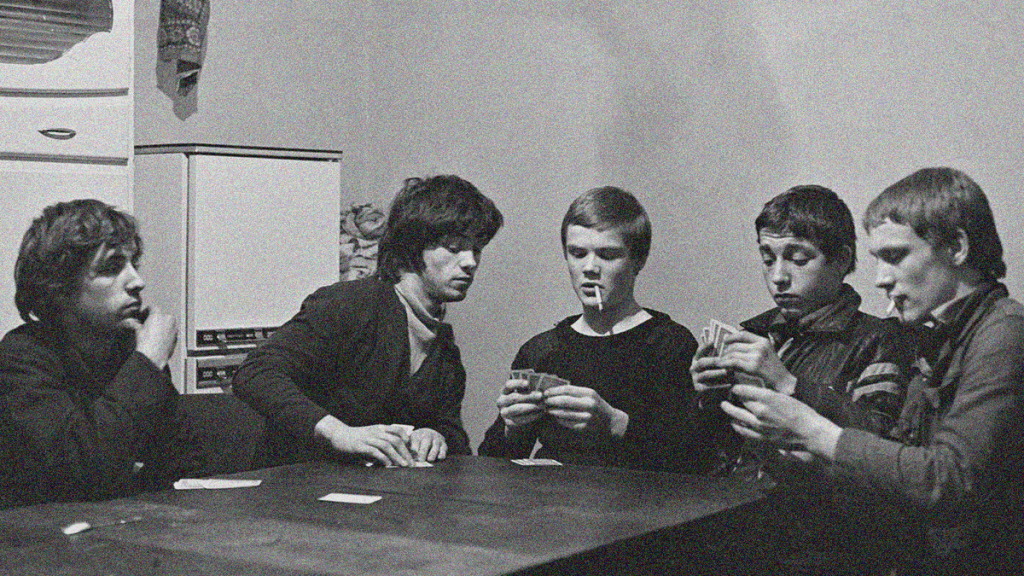
Natasha Lyonne in POKER FACE; courtesy of Peacock.


 jaredmobarak.com
Leave a comment