
Rating: NR | Runtime: 94 minutes
Release Date: January 26th, 2024 (USA)
Studio: Magnet Releasing
Director(s): Barnaby Clay
Writer(s): Barnaby Clay
I can take care of you.
It’s a simple concept: seeds are nothing without fertile land in which to grow, land that is made fertile by death. Push out from the science and into the visceral horror of what that means in a cruel world populated by humans at their most depraved and you get Barnaby Clay’s The Seeding. As such, it’s not necessarily surprising how things unfold. The title kind of puts the idea behind the truth of Wyndham Stone’s (Scott Haze) desert cavern prison into focus straight away.
The question is therefore less about whether he might survive his ordeal and more about the complicity of his cellmate Alina (Kate Lyn Sheil). Because her position as “mother” in this wasteland could have been won in two ways. Out of necessity or duty. Deciding which is worse proves a bit of a litmus test. Do you want her to be a pawn forced to give birth to the strays that become her captors? Or a monster pulling their sadistic strings?
Is the core conceit misogynistic as a result? I’m not sure. To hear Clay talk about the origins of his film is to learn he came up with it while walking through the desert with his pregnant wife. He explains how the act of giving birth is a brutal experience and how the father becomes little more than an appendage watching and waiting, helpless and disposable after conception.
So, I think the depiction on-screen is less about making this woman a victim of rape or a monster and more about exposing his own insecurities and vulnerabilities as a bystander to the process of creating life. To witness Wyndham’s slow descent towards insanity as his selfishness, indifference, and desire for control are chipped away is to see a father coming to grips with the reality that he has no real power. Will he accept his role or fight against it? Will he choose to remain or escape?
To say the violence on-screen is a very personal metaphor for the filmmaker seems strange, but here we are. Clay has taken the concept of childbirth to its extreme by way of feral boys serving the process and unsuspecting men trapped to maintain it. I’m not therefore sure there’s much in the way of depth considering the theme itself is so overtly drawn. Beyond that is a survival nightmare steeped in intentionally cryptic rituals via unknown (and unexplained) languages and traditions.
The Seeding’s success is thus dictated by how well you believe Wyndham’s defiance works in the face of Alina’s compliance. The whole is mostly two characters in close quarters reacting to their dark fate while their jailers hoot and holler above. Even the repetition of opportunities for Wyndham to choose captivity seem fruitless after a line of dialogue explains his purpose was set the moment he arrived. If that choice isn’t legitimized, it’s all empty, if effective, terror.

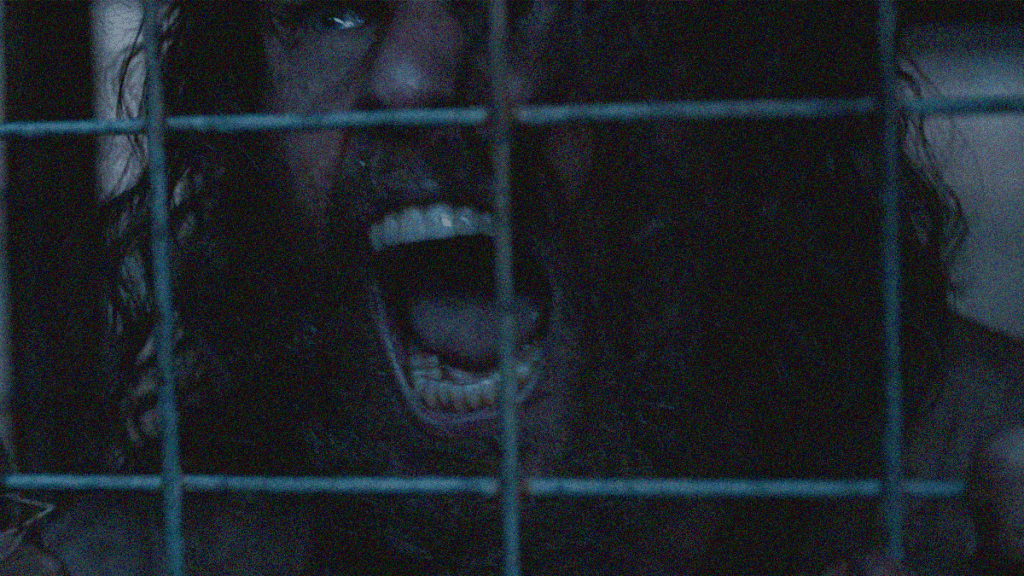
A scene from THE SEEDING; courtesy of Tribeca.




 jaredmobarak.com
Leave a comment