
Rating: R | Runtime: 90 minutes
Release Date: August 10th, 2023 (Israel)
Studio: Menemsha Films
Director(s): Noam Kaplan
Writer(s): Noam Kaplan
Your future is already behind you.
Yafa (Samar Qupty) shouldn’t have been able to assassinate Israel’s Minister of Space and Tourism. Not because security should have stopped her or because she shouldn’t have been able to pull the trigger, but because the not quite real world on-screen should have known she would. That’s what the government pays Dr. Nurit Bloch (Reymonde Amsellem) to do, after all. They fund her research to perfect an algorithm that’s able to mine the population’s data and compare it to the historical markers of terrorist acts.
So, she of course wants to meet with Yafa and find out what went wrong. Was it the program? Had Yafa somehow tricked the system? Or, as we easily assume and she eventually discovers, was it the premise behind predicting the future itself? The word “terrorist” says it all since Yafa considers her act to be one of Palestinian “resistance” instead. Nurit’s presumptions have created a blind spot.
What starts with the desire to fix the algorithm ultimately becomes Nurit reevaluating her engagement with the world around her. Because she can’t go back. She can’t make tweaks and keep repeating things until Yafa fails. Noam Kaplan’s The Future is therefore actually a film about the present despite its title. It seeks to reconcile a subjective past with a hypothetical future by shaking Nurit awake to truly see what’s happening in the here and now.
Her past defined a rigid, clinical outlook on human behavior that makes it possible to imagine a future of controlled peace. The safety and comfort of opportunity provided her a template from which she could create that utopia. It was her purpose. It was her right. To rid her nation of its ills. Prevent its enemies from ruining its home without ever thinking deep enough to remember that it had to ruin theirs first.
Yafa is her polar opposite as a result. Rather than resent her mother, she loves her. Rather than live with the notion of having a future, she’s long since accepted a fate where one wasn’t guaranteed. That’s what it is to live under occupation. There’s no room to dream. So, Nurit can’t simply provide a laundry list of friends turned “accomplices” and expect regret. Yafa didn’t recruit those who unwittingly helped her. Their actions didn’t possess intent.
When Yafa’s reply to Nurit telling her that she should be ashamed of using these men who will now go to prison is to turn the table and explain how it was actually Israel’s fault for choosing to project the blame upon them as a means for revenge, you can see that this interrogation is going nowhere. Because it isn’t Yafa that has something to hide. It’s Nurit. The only thing the latter can therefore hope to learn about is the breadth of her own privilege.
Kaplan builds this gradual understanding on the backs of multiple metaphors. The backdrop is Israel launching a shuttle to the moon (another example of colonization/occupation). Nurit is interviewing a potential surrogate to carry hers and her husband’s baby (a life overseen by a stranger with the power to dictate whether it lives or dies). There’s the warmth and love of Yafa wanting to see her mother opposite the disinterested obligation of Nurit’s interactions with her own.
An Arab herb flourishing in a Jewish garden and a joke about Jewish women only needing a man to “buy them an Arab’s house.” The messaging is clear, but it’s never so overt that it ruins the authenticity of the dialogue being shared. This is a world dictated by science and driven by conquest that cannot understand why a promising young woman could throw her life away because it refuses to understand that becoming a murderer was the only job it allowed her to have.

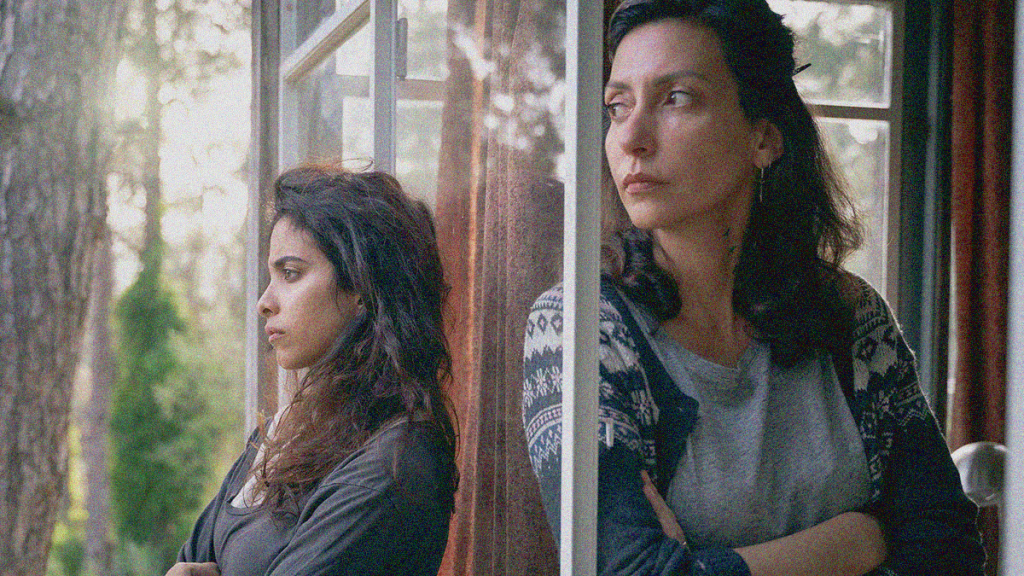
Samar Qupty and Reymonde Amsellem in THE FUTURE; courtesy of Tribeca.




 jaredmobarak.com
Leave a comment