
Rating: NR | Runtime: 100 minutes
Release Date: June 9th, 2022 (Mexico) / May 26th, 2023 (USA)
Studio: Cine Canibal / Altered Innocence
Director(s): Joaquin del Paso
Writer(s): Lucy Pawlak & Joaquin del Paso
We’ll fix all those bad habits you brought from outside.
No matter how vicious you might assume the metaphor for contemporary Mexican society Joaquin del Paso’s The Hole in the Fence will get, he and co-writer Lucy Pawlak can always take things further. It’s depiction of young children from wealthy families spending a summer at a religious camp run by strict men who call themselves an “order” deals in both the subtle and overt ways that white supremacy rule our power structures.
From the fear-mongering and “other-izing” of native villagers with darker skin than their own European bloodlines (including those “lucky” enough to walk amongst them as “scholarship” tokens of assimilation and subservience like Yubah Ortega’s Eduardo) to the indoctrination by way of God that trains a sense of ownership and permission to protect oneself as an “elite” from those animalistic monsters who would destroy you for sport, Professor Monteros (Enrique Lascurain) and company will do whatever it takes to ensure those in his image remain in control.
The film does a wonderful job at disseminating its gradual reveals. What starts as your usual portrayal of domineering adults and impressionable children acting in their image soon devolves into a cabal of ritualistic lessons that spiral out-of-control. Safety from a malevolent force of violence is soon revealed as purposeful manipulation to teach a warped form of self-sufficiency that rewards the sort of tribalism that sees minorities turning against their own without thinking far enough into the future to understand the mascoting and exploitation that follows.
Because people like the graduates from this camp aren’t looking for allies. They’re looking for scapegoats and foot soldiers. The Jordis (Valeria Lamm) of this world don’t offer a hand to the Eduardos at their feet. They offer ultimatums and weapons. Fight for me and I’ll spare you. Kill your brethren in my name and you may enjoy the scraps of my spoils.
Watching Eduardo devolve within the image of these white “elites,” however, isn’t the only commentary on-screen. There’s also Diego (Eric David Walker) trapped in casts with a crutch who’s forever being left behind and forgotten. It doesn’t matter that he looks like them and comes from their socio-economic background. By slowing them down and/or diverting their attention because he needs extra help, he becomes weak and expendable. Not maliciously so. Not intentionally.
That’s the insidious nature of white supremacy. Its tenets are baked into its DNA. And it escalates from the involuntary act of leaving one of your own behind to an intentional brutality in his name. These boys aren’t therefore being taught to protect. They’re being taught to destroy. The blindness towards their complicity is therefore a byproduct of their bloodlust for “justice.” The Diegos amongst them are only important through their absence—martyred justifications to murder the innocents they’ve been taught to dehumanize as Satan’s spawn.
It all leads to a rather unforgettable sequence of events wherein fear becomes hijacked and weaponized to uncontrollable lengths. The adults start to separate the strong from the weak. They choose those willing to fight over those who go crying to their parents regardless of what they thought beforehand. A programmed Eduardo is worth more to their cause than a rich wuss because the former would become a dangerous adversary otherwise as the latter simply tries harder to buy his way back in.
The artifice of the entire camp subsequently comes into focus as Monteros’ lessons become more target-driven and exacting in their “us versus them” construction. So, when things unfold that make it seem the tables might be turning—that the adults finally have something to fear—ask yourself what it is they’d be most scared about. Is it having to explain a child went missing? Or facing the potential fallout of what that missing child might say upon being found?
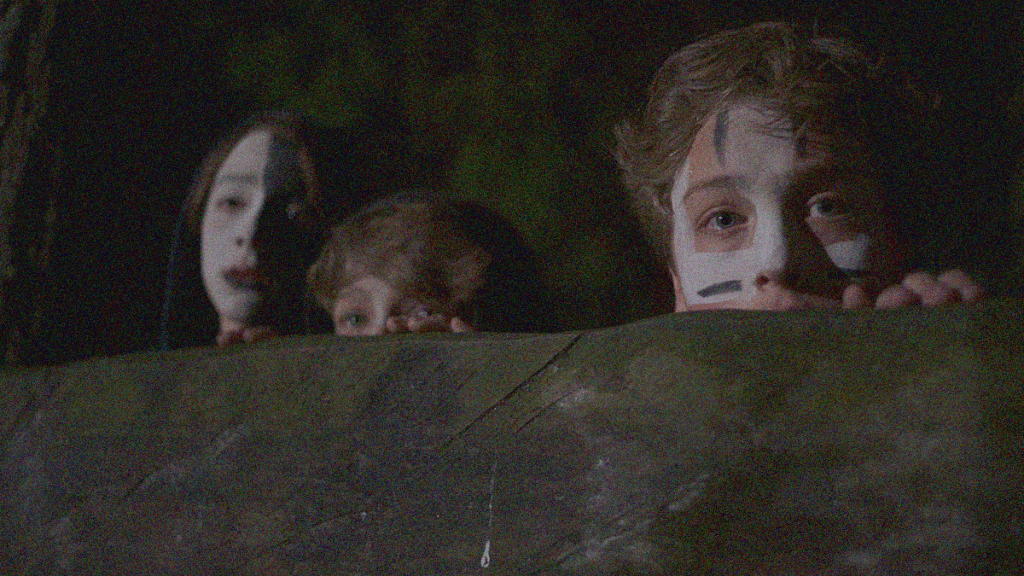
A scene from THE HOLE IN THE FENCE; courtesy of Altered Innocence.


 jaredmobarak.com
Leave a comment